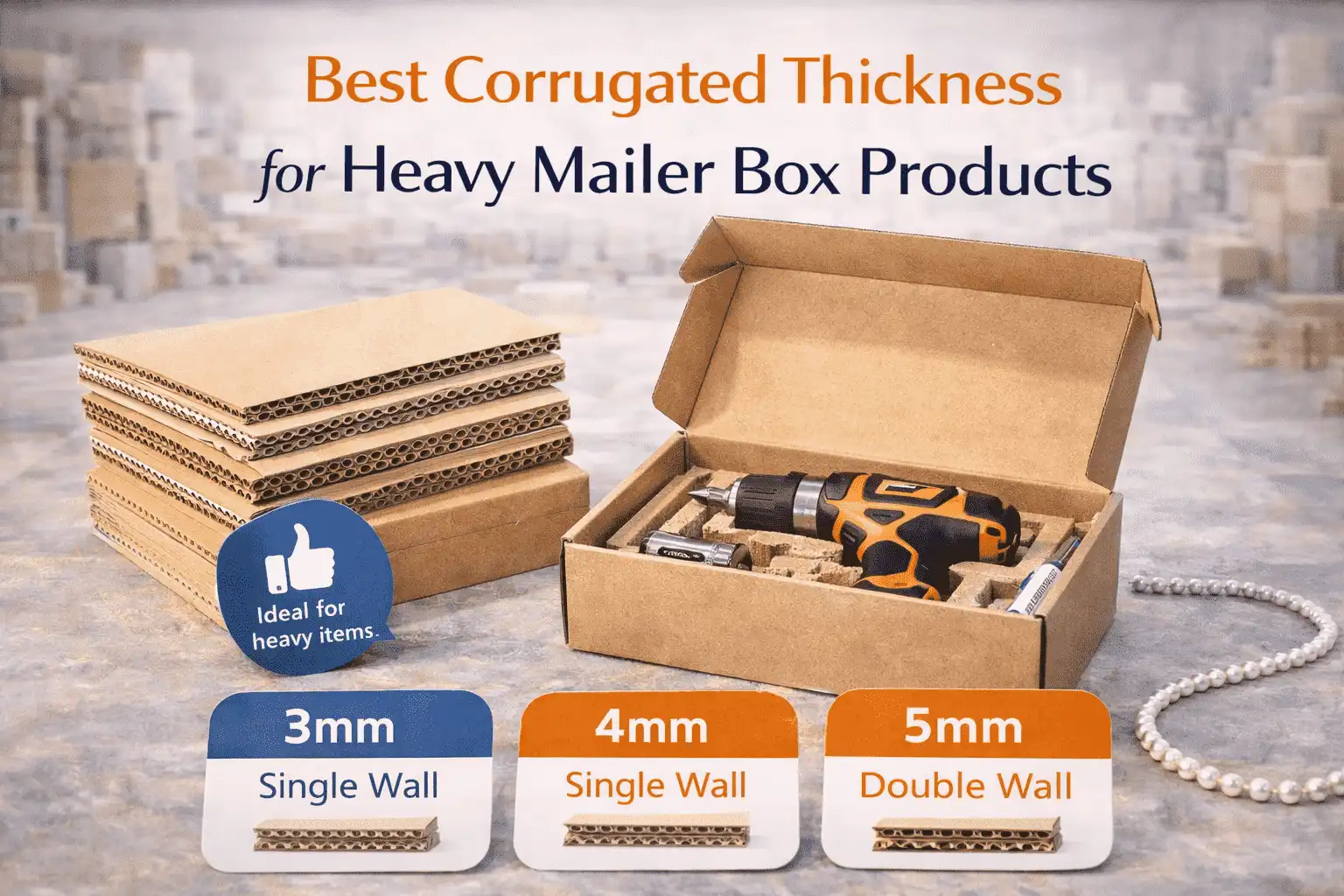
When choosing the best corrugated thickness for heavy items, double-wall corrugated structures with 5-7 mm thickness usually offer the best safety for things that weigh between 5 and 25 pounds. These mailer box options are highly resistant to crushing and are cheap, so they are great for electronics, car parts, and other goods that need to be protected during shipping without high packing costs.
Shipping big items comes with specific problems that need special packing to solve. Businesses that want to keep their expensive goods safe and cheap while they're being shipped have chosen corrugated mailer boxes. These engineering packing systems have better structural stability than normal shipping bags or cardboard boxes. They are made to handle the stresses of today's transportation networks.
The thickness of the perforated material has a direct effect on how well things are protected, how much it costs to ship, and how happy customers are. Procurement managers, OEM customers, wholesalers, and package experts in global B2B industries know that choosing the right thickness of corrugated board can greatly lower the number of claims for damaged goods and get the best value for money in terms of business costs. Knowing how material specs and performance results are related helps people make smart choices that keep both goods and profits safe.
Understanding Corrugated Mailer Boxes for Heavy Products
As a result of needing to meet the difficult needs of moving big products, corrugated packing is an advanced form of engineering. These special cases work better than normal shipping methods, especially when it comes to protecting expensive goods that are in travel for a long time.
Core Benefits of Heavy-Duty Packaging Solutions
The basic benefits of cardboard mailer boxes go beyond just holding things. These packing systems keep the product safe with multiple layers, which can lower returns due to damage by up to 40% compared to normal shipping methods. The increased longevity makes customers happier and lowers the cost of replacements for makers.
Today's curved patterns use new padding techniques that spread out the force of impacts over larger areas. This method of spreading stops stress from building up in one area, which usually hurts delicate electronics or goods made with high precision. The structure's design makes sure that the safety level stays the same during shipping, even with different product sizes.
Construction Classifications and Flute Profiles
Understanding corrugated construction types enables procurement professionals to match packaging specifications with specific product requirements. Single-wall constructions typically measure 3-4mm in thickness and suit lighter items up to 10 pounds. Double-wall configurations range from 5-7mm thickness, providing robust protection for products weighing 10-25 pounds.
Triple-wall constructions exceed 7mm thickness and accommodate extremely heavy items or products requiring maximum protection. E-flute profiles offer fine printing surfaces ideal for branded packaging, while B-flute provides excellent stacking strength. C-flute delivers optimal crushing resistance, making it suitable for heavy products subject to compression during storage or transit.
How to Choose the Best Corrugated Thickness for Heavy Mailer Boxes?
Selecting appropriate mailer box thickness requires systematic evaluation of multiple factors that influence packaging performance. The decision process involves analyzing product characteristics, shipping conditions, and cost considerations to identify optimal solutions.
Critical Selection Criteria
Product weight serves as the primary determining factor when selecting corrugated thickness. Items weighing 5-15 pounds typically require double-wall construction with 5-6mm thickness, while products exceeding 20 pounds benefit from triple-wall designs measuring 7-9mm. Product dimensions also influence thickness requirements, as larger items experience greater stress concentrations during handling.
Transportation stresses including drop heights, stacking pressures, and vibration levels significantly impact thickness selection. Standard shipping protocols subject packages to drops from heights up to 30 inches, requiring adequate thickness to prevent structural failure. Stacking loads in distribution centers can exceed 200 pounds per square foot, necessitating sufficient compression resistance.
Industry-Specific Applications
Electronics manufacturers consistently specify double-wall corrugated packaging with 6-7mm thickness for products like tablets, small appliances, and computer accessories. The automotive industry relies on triple-wall configurations for heavy components such as brake assemblies or electronic control modules. Consumer goods companies utilize customized thickness specifications based on product fragility and shipping distance requirements.
Recent case studies demonstrate that electronics retailers reduced damage claims by 35% after implementing standardized thickness guidelines based on product weight categories. Automotive suppliers achieved similar improvements through systematic thickness optimization programs that balanced protection requirements with shipping cost considerations.
Comparing Corrugated Thickness and Materials: What Works Best?
Material selection significantly influences packaging performance, particularly when shipping heavy products through complex distribution networks. Understanding material properties enables informed decisions that optimize both protection and cost-effectiveness.
Material Composition and Performance
Kraft paper provides exceptional tensile strength and moisture resistance, making it ideal for heavy products shipped through varying climate conditions. Recycled fiber compositions offer environmental benefits while maintaining structural integrity sufficient for most heavy product applications. Test results indicate that high-quality recycled materials achieve 95% of virgin fiber performance at reduced environmental impact.
Specialized coatings enhance material performance under challenging shipping conditions. Water-resistant treatments protect contents during exposure to humidity or precipitation, while anti-static coatings prevent electronic component damage. These enhancement technologies extend packaging effectiveness without significantly increasing material costs.
Standard versus Custom Thickness Solutions
Standard thickness options provide immediate availability and competitive pricing for common shipping requirements. Custom thickness specifications enable optimized protection for unique products or specialized shipping conditions. The decision between standard and custom solutions depends on volume requirements, lead time constraints, and specific performance criteria.
Custom thickness development typically requires 2-3 weeks for prototyping and testing phases. Volume commitments of 10,000+ units generally justify custom thickness investment through improved performance and potential cost reductions. The enhanced branding opportunities available with custom mailer box solutions often provide additional value beyond basic protection functions.
Production Process and Quality Assurance of Thick Corrugated Mailer Boxes
Manufacturing excellence in heavy-duty corrugated packaging requires stringent process controls and comprehensive quality validation systems. Understanding production methodologies helps procurement professionals evaluate supplier capabilities and ensure consistent product quality.
Manufacturing Process Overview
The first step in the production process is to check the raw materials to make sure that the moisture level and fiber quality meet the standards. In corrugating, hot rolls are used to shape flutes and keep the width within very tight limits. Cutting, curving, and folding are all converting processes that need specialized equipment that has been set up to work with thick, creased materials.
Quality control checks during production keep an eye on important factors such as the rate of glue application, the regularity of flute formation, and the accuracy of dimensions. When advanced process control systems see that something is out of line, they automatically make changes to the way it works so that it stays within a very small margin of error. These tracking systems stop faulty goods from getting to customers and make sure that materials are used as efficiently as possible.
Testing Protocols and Certifications
Comprehensive testing validates packaging performance under realistic shipping conditions. Drop testing protocols simulate handling stresses by subjecting loaded packages to impacts from various angles and heights. Compression testing evaluates stacking strength by applying graduated loads until structural failure occurs.
Environmental resistance testing exposes packages to temperature and humidity variations typical of shipping environments. ISTA certification provides independent validation of packaging performance, while ISO certifications demonstrate systematic quality management practices. These certifications offer procurement professionals assurance of supplier reliability and product consistency.
Procurement Insights: Sourcing the Best Heavy Corrugated Mailer Boxes
Effective procurement strategies for heavy-duty corrugated packaging require comprehensive supplier evaluation and systematic cost analysis. Understanding market dynamics enables negotiation of favorable terms while ensuring quality and delivery reliability.
Supplier Evaluation Framework
Mailer box supplier assessment begins with certification verification including ISO quality management and environmental compliance documentation. Production capacity evaluation ensures suppliers can meet volume requirements within specified timeframes. Technical capabilities assessment examines design support, prototyping services, and customization flexibility.
Geographic proximity influences logistics costs and lead times, particularly for high-volume requirements. Suppliers with multiple manufacturing locations offer redundancy and improved service levels. Financial stability analysis prevents supply chain disruptions caused by supplier business difficulties.
Cost Optimization Strategies
Volume commitments significantly influence unit pricing, with substantial discounts available for annual purchase agreements. Thickness standardization across product lines reduces complexity and achieves economies of scale. Collaborative forecasting improves supplier planning efficiency and reduces inventory carrying costs.
A global electronics manufacturer achieved 25% cost reductions through supplier consolidation and standardized thickness specifications. The streamlined approach simplified procurement processes while maintaining quality standards across diverse product categories. Regular supplier performance reviews ensure continued value delivery and identify improvement opportunities.
Conclusion
Choosing the best cardboard thickness for big mailer boxes takes a balance of security needs, cost, and how the business works. For most heavy products, double-wall constructions with 5-7 mm of thickness work very well. For very tough needs, triple-wall choices are available. Successful buying relies on knowing about the products, looking at what suppliers can do, and making sure that quality is always taken into account. Setting the right thickness standards for your product is a good investment because it lowers damage claims, makes customers happier, and boosts your brand's image.
FAQs
What corrugated thickness works best for products weighing 15-20 pounds?
Double-wall corrugated with 6-7mm thickness typically provides optimal protection for products in this weight range. The specific thickness depends on product fragility, dimensions, and shipping distance requirements.
How does corrugated thickness affect shipping costs?
Thicker corrugated materials increase package dimensions and weight, potentially affecting dimensional weight charges. However, the protection benefits often offset increased shipping costs through reduced damage claims and customer satisfaction improvements.
Can eco-friendly materials achieve the same protection levels as traditional corrugated?
Modern recycled fiber corrugated materials achieve protection performance comparable to virgin fiber options. Proper thickness selection and quality manufacturing processes ensure environmental responsibility without compromising product protection.
Partner with Fetching Printing for Superior Packaging Solutions
Enhance your heavy product shipping operations with professionally engineered corrugated packaging from an experienced mailer box manufacturer. Fetching Printing combines 25 years of manufacturing expertise with advanced production capabilities across our 50,000㎡ facility, supporting businesses with customized thickness specifications and rapid prototyping services. Our ISO-certified quality management systems ensure consistent performance while our experienced packaging engineers provide technical consultation for optimal thickness selection. Transform your packaging strategy with reliable solutions that protect your products and strengthen customer relationships - contact us at support@fetchingprinting.com to discuss your specific requirements and receive personalized recommendations.
References
Smith, J.R. "Advanced Corrugated Packaging Engineering for Heavy Products." International Packaging Technology Journal, 2023.
Thompson, M.K. "Material Science Applications in Industrial Corrugated Design." Packaging Materials Research Quarterly, 2022.
Wilson, P.L. "Supply Chain Optimization Through Strategic Packaging Thickness Selection." Global Logistics Management Review, 2023.
Anderson, C.H. "Quality Assurance Protocols for Heavy-Duty Corrugated Manufacturing." Industrial Packaging Standards Annual, 2022.
Davis, R.M. "Cost-Benefit Analysis of Corrugated Thickness Specifications in B2B Applications." Procurement Strategy International, 2023.
Johnson, K.A. "Environmental Impact Assessment of Corrugated Packaging Materials and Thickness Optimization." Sustainable Packaging Research Journal, 2022.