E-Commerce Cartons China vs USA: 2026 Price/Quality Guide
Knowing the key distinctions between Chinese and American packaging options is crucial for making well-informed procurement selections when choosing e-commerce cartons for your company's operations. Both markets have clear advantages in the e-commerce carton market: American suppliers prioritize strict quality control and efficient distribution networks, while Chinese manufacturers usually provide competitive price and vast customization options. Instead of just comparing prices, modern packaging needs involve a thorough assessment of material durability, printing quality, environmental credentials, and overall cost factors.
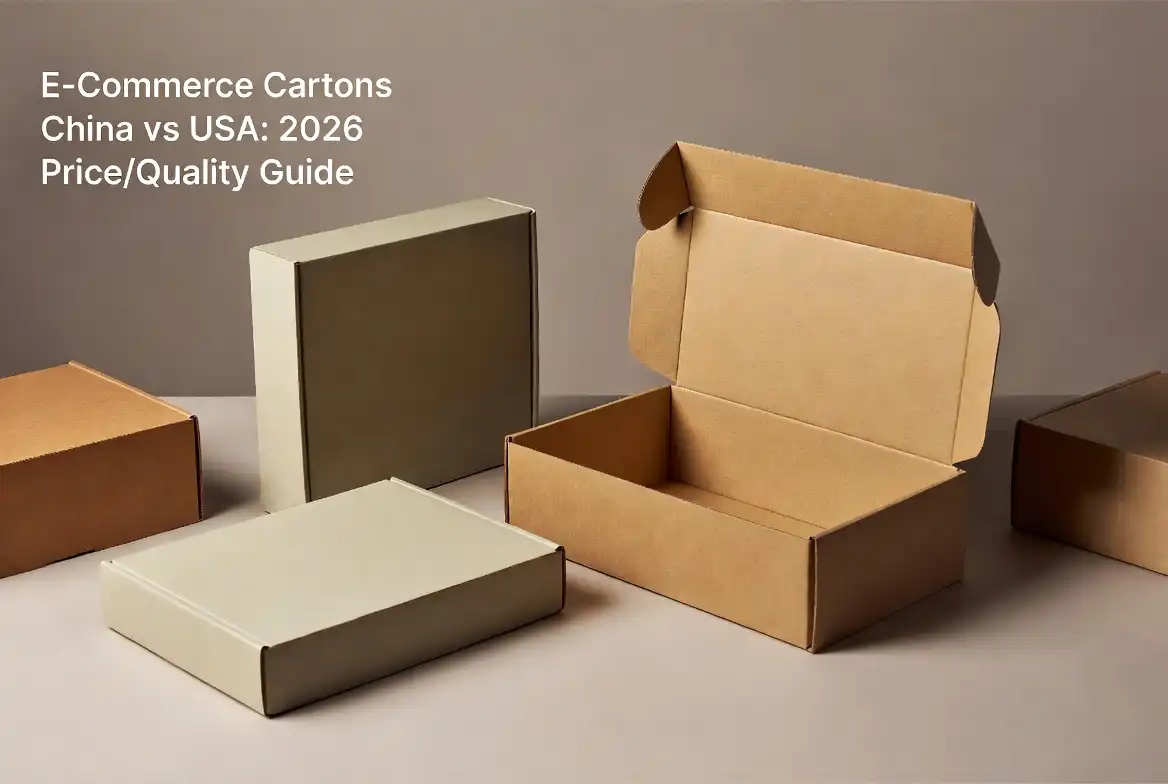
Understanding E-Commerce Cartons: Definitions and Key Features
Knowing what sets professional e-commerce cartons apart from regular shipping containers is the first step towards a successful packaging purchase. These sophisticated packaging options have two functions: they safeguard goods while they are in transit and use clever design aspects to strengthen brand identification.
Material Composition and Structural Engineering
Paperboard or corrugated cardboard, designed to endure the demands of contemporary transportation networks, are often used in e-commerce packaging. Multiple layers of corrugated materials with fluted interior portions provide superior impact and crush resistance. Performance qualities are directly impacted by the choice of material; single-wall construction works well for lightweight items, while double-wall choices are advised for heavy goods or delicate electronics.
Alternatives to paperboard provide smooth printing surfaces that are perfect for high-quality finishes and high-resolution graphics. For offset lithography and digital printing applications, the smoothed, coated surface produces ideal conditions. Nowadays, a lot of manufacturers use 30% to 100% recycled material, meeting sustainability standards without sacrificing structural soundness.
Advanced Design Features and Customization Options
Through clever customisation techniques, modern package design combines branding potential with utilitarian components. Custom inserts, foam cushioning, and divided sections improve unpacking experiences while protecting certain product categories within the e-commerce carton Specialty coatings, ribbon pulls, and magnetic closures increase the perceived value of high-end product lines.
Variable data printing, QR codes, and interactive features are among the printing options that go beyond simple logo placement. Short-term customisation projects are made possible by digital printing technologies, although offset lithography is still more affordable for high volume orders. Spot UV coating, foil stamping, and embossing are examples of surface treatments that provide tactile sensations that support brand positioning.
Sustainability and Environmental Considerations
Environmental stewardship is given top priority in modern packaging solutions by taking end-of-life and material source into account. Water-based inks and varnishes reduce the environmental effect of manufacturing and disposal, while FSC-certified paperboard guarantees ethical forest management techniques. Recyclable designs remove non-paper components and troublesome adhesives that make trash processing more difficult.
China vs USA: E-Commerce Carton Price Comparison and Pricing Factors
The complicated relationships between material prices, production efficiency, and logistical concerns are reflected in the package procurement pricing environment. Procurement teams may assess complete cost implications beyond initial bids by comprehending these interactions.
Manufacturing Cost Structures and Market Dynamics
Through sophisticated production facilities and efficient supply chains, Chinese manufacturing capabilities take advantage of economies of scale. Cost benefits are especially noticeable in large-volume orders when raw material procurement and manufacturing activities are integrated. Rapid changes in product specifications are made possible by investments in advanced equipment while maintaining constant quality requirements.
Different market positioning tactics are seen in American businesses' emphasis on procuring premium materials and using sophisticated quality control systems. Being close to end markets shortens delivery times and lowers transportation costs, resulting in value propositions that go beyond direct production costs. Because of investments in automation and efficiency gains, labor expenses now account for a decreasing portion of overall production costs.
Total Cost of Ownership Analysis
Beyond the original unit price, a thorough cost study must include a number of aspects. The entire cost of procurement is greatly impacted by transportation prices, customs charges, e-commerce carton fees, and inventory carrying costs. Variations in lead time have an impact on inventory planning needs and possible surcharges for expedited orders.
Costs associated with quality, including as defect rates, customer returns, and effects on brand reputation, must be carefully considered. By lowering downstream costs and improving customer satisfaction measures, premium materials and better quality control procedures may be able to justify higher unit prices.
Volume Scaling and Pricing Optimization
Significant price differences are produced in both marketplaces by order volume criteria. Unit economics is impacted by minimum order numbers, especially when it comes to specialty finishing choices like bespoke printing. While American manufacturers could provide more flexibility for smaller batch orders, Chinese vendors usually meet higher volume needs with correspondingly significant cost savings.
Quality and Performance Analysis of E-Commerce Cartons from China and USA
A number of factors are included in quality evaluation, such as consistency over production runs, manufacturing accuracy, and material performance. Regarding various procurement goals, both markets have unique strengths.
Material Quality and Performance Standards
American vendors always prioritize the use of virgin fiber content, cutting-edge coating formulas, and premium raw material procurement. Comprehensive testing procedures and statistical process control are integrated into quality control systems. Consistent performance characteristics across manufacturing runs are ensured by meticulous respect to safety and environmental requirements.
Through investments in technology and process enhancements, Chinese manufacturers have greatly improved the quality of e-commerce cartons. International quality standards for e-commerce cartons, such as ISO certifications and customer-specific criteria, are implemented in modern facilities. Flexibility for particular application needs is offered by the capacity to obtain specialist e-commerce carton materials and execute bespoke e-commerce carton specifications.
Testing and Certification Compliance
Both markets provide thorough testing services that include environmental safety regulations, print quality, and structural performance. Testing for edge crush strength, burst strength, and compression resistance guarantees packing integrity throughout distribution networks. Standards for visual quality are confirmed by measures of color constancy and print registration accuracy.
Depending on the market emphasis, certification compliance varies; Chinese producers meet worldwide standards, while American suppliers prioritize local norms. Certain material choices and testing procedures are necessary for food safety certifications, toy safety requirements, and electronics packaging laws.
Supplier Reliability and Communication
The assessment of a supplier's performance takes into account their capacity for long-term collaboration, problem-solving skills, and responsiveness. Timelines for project development and the efficacy of problem solving are impacted by communication effectiveness. Collaboration success is influenced by linguistic proficiency and cultural awareness, especially in complicated customisation projects.
How to Choose the Best E-Commerce Cartons for Your Business Needs
A methodical assessment of supplier capabilities in relation to business needs is necessary for strategic package selection. While taking into account long-term development goals and market evolution, the decision framework should take present demands into account.
Requirement Definition and Specification Development
Comprehensive requirement paperwork that addresses branding goals, operational limitations, and product protection requirements is the first step towards successful procurement. Structural requirements are determined by product features such as weight, size, and fragility levels. Finishing choices, material preferences, and graphic design intricacy are all influenced by brand positioning.
Operational factors include compatibility with current packing machinery, manpower needs for assembly, and storage space constraints. Growth forecasts and seasonal volume fluctuations have an impact on contract structure strategies and supplier selection standards.
Supplier Evaluation Methodology
E-commerce carton financial stability analysis, quality system audits, and capacity verification are all included in systematic supplier assessment. Visits to manufacturing facilities provide information on capacity constraints, quality control procedures, and production capabilities. Performance history and the efficacy of problem-solving are shown via reference customer conversations.
Programs for evaluating samples allow for practical examination of structural performance, print fidelity, and material quality. The integrity of the packaging is confirmed under actual distribution settings using transportation simulation studies and accelerated aging testing. Cost modeling scenarios assess the economics of volume scaling and price stability.
Risk Assessment and Mitigation Strategies
Potential interruptions like as material shortages, manufacturing capacity limitations, and logistical difficulties are addressed via supply chain risk management. Strategies for geographic diversity strike a compromise between reducing risk exposure and optimizing costs. Planning for inventory buffers accounts for changes in lead times and seasonal demand.
Incoming inspection methods, performance monitoring systems, and corrective action protocols are all part of quality risk reduction. Brand asset security is ensured by intellectual property protection procedures, especially when collaborating with foreign suppliers. Quality standards, delivery performance, and dispute resolution procedures should all be included in the contract conditions.
Packaging Optimization and Design Tips for E-Commerce Cartons
Functional needs, cost optimization, and brand promotion goals are all balanced in effective package design. In order to provide complete package solutions, modern design techniques combine performance objectives with environmental concerns.
Structural Design Optimization
Initiatives for right-sizing reduce the amount of material used while guaranteeing sufficient levels of protection for certain product categories. Dimensional optimization lowers transportation costs by reducing weight and making better use of cubes. Several product sizes are supported by modular design systems on standardized packaging platforms.
Protective elements should be included in accordance with distribution network characteristics and product vulnerability evaluations. Moisture barriers, shock-absorbing materials, and internal cushioning systems all handle certain protective needs without going overboard.
Graphic Design and Brand Integration
While taking into account the practical limitations of e-commerce carton printing, visual design components should support brand identity. Color selection takes into account substrate properties, viewing condition fluctuations, and the capabilities of the e-commerce carton printing process. Typographic decisions for various e-commerce carton box sizes strike a compromise between aesthetic goals and readability constraints.
Integrating sustainability messaging conveys environmental responsibility while offering advice on recycling and disposal. QR codes and augmented reality triggers are examples of interactive components that provide interaction possibilities that go beyond the functionality of physical packages.
Emerging Technology Integration
Additional value propositions are created for certain market sectors by smart packaging technology such as temperature indications, freshness sensors, and tracking capabilities. Opportunities for customer contact and supply chain visibility are made possible by NFC tags and RFID integration.
Automation-friendly design elements save labor needs and enable effective packaging line integration. Throughout the packing process, operational efficiency is maximized by machine-compatible adhesive technologies, uniform fold patterns, and standardized dimensions.
Fetching Printing: Your Trusted E-Commerce Carton Manufacturing Partner
For companies looking for dependable, superior packaging partnerships, Fetching Printing offers a complete solution. Since 1999, our vast expertise has made us a reliable partner for a variety of industrial needs, from premium brand packaging to e-commerce fulfillment.
Manufacturing Capabilities and Quality Assurance
Modern production equipment is housed in our 50,000 square meter manufacturing plant, which serves customers in the food and beverage, fashion, electronics, and cosmetics sectors. Superior quality standards are guaranteed for both specialized bespoke projects and large-scale production runs when contemporary printing technology are combined with traditional workmanship.
Consistent output quality is guaranteed by quality management methods, such as ISO9001-2015 accreditation and G7 color management procedures. Our dedication to sustainable manufacturing techniques is shown by our environmental certifications, which include ISO14001-2015 and FSC. Our ability to satisfy the strict safety and quality standards for consumer goods is validated by our Disney accreditation.
Research and Development Excellence
From idea creation to production optimization, our devoted R&D team of more than ten packaging engineers offers complete design assistance for e-commerce cartons. Structural engineering, material selection, printing process optimization, and sustainability improvement are among the areas of expertise. Rapid design iteration and performance validation are made possible by custom prototyping capabilities.
Innovation projects concentrate on the development of sustainability, smart packaging integration, and new materials. Working together with customers at every stage of the design process guarantees the best solutions for particular application needs while preserving affordability and viability of manufacturing.
Global Service and Support Network
Partnerships in international logistics provide dependable delivery results for customers all around the globe. Throughout the production cycle, timetable coordination, quality monitoring, and problem solving are all included in comprehensive project management assistance. Application queries, performance enhancements, and troubleshooting needs are all covered by technical support services.
Conclusion
As technology advances, sustainability standards change, and e-commerce carton customisation requests increase, the package procurement environment continues to change. Both American and Chinese vendors have unique benefits that cater to various operational needs and corporate goals. While American suppliers prioritize premium e-commerce carton quality, quick delivery, and extensive service support, Chinese manufacturers excel in cost-effectiveness, manufacturing flexibility, and high-volume e-commerce carton capabilities.
Procurement techniques that are successful need to be thoroughly evaluated in addition to basic price considerations. Choosing a supplier should be guided by factors such as total cost analysis, quality system evaluation, and the possibility of a long-term cooperation. Environmental responsibility goals are supported and chances for competitive advantage are created by integrating sustainability standards with performance specifications.
FAQ
1. What are the main differences between Chinese and American e-commerce cartons?
The primary distinctions involve cost structures, quality approaches, and service models. Chinese suppliers typically offer competitive pricing through economies of scale and efficient production systems, while American manufacturers emphasize premium materials and comprehensive quality control. Lead times, customization capabilities, and communication preferences also vary significantly between these markets.
2. How can I verify quality standards when sourcing from overseas suppliers?
Quality verification requires systematic supplier auditing, sample testing, and reference checking. Request facility certifications, quality management documentation, and customer references. Implement sample evaluation programs including performance testing under realistic conditions. Consider third-party inspection services for large orders and establish clear quality specifications with measurable criteria.
3. Are sustainable packaging options reliable from both Chinese and American sources?
Both markets offer credible sustainable packaging solutions with appropriate certifications and performance validation. FSC-certified materials, recycled content options, and water-based inks are widely available from reputable suppliers. Verify certifications independently and request environmental compliance documentation. Sustainability initiatives continue advancing across both markets driven by customer demand and regulatory requirements.
4. What factors should influence my choice between Chinese and American suppliers?
Key decision factors include total cost analysis, quality requirements, delivery timeframes, and customization needs. Consider order volumes, seasonal variations, and growth projections. Evaluate communication preferences, service support requirements, and risk tolerance levels. Balance cost optimization with quality assurance and supply chain reliability based on your specific business priorities.
5. How do minimum order quantities compare between Chinese and American suppliers?
Chinese manufacturers typically require higher minimum orders but offer greater volume discounts, making them suitable for large-scale operations. American suppliers often accommodate smaller quantities with more flexible ordering terms, benefiting businesses with diverse product lines or seasonal variations. Evaluate your inventory capacity and demand patterns when assessing minimum order requirements.
Partner with Fetching Printing for Superior E-Commerce Carton Solutions
Ready to optimize your packaging procurement strategy with a reliable e-commerce carton supplier? Fetching Printing combines decades of manufacturing expertise with cutting-edge technology to deliver exceptional packaging solutions tailored to your specific requirements. Our comprehensive capabilities encompass custom design, premium materials, and sustainable manufacturing practices that enhance your brand while protecting your products. Contact our packaging experts at support@fetchingprinting.com to discuss your e-commerce carton needs and discover how our proven solutions can streamline your operations while reducing costs.
References
1. Global Packaging Industry Report: E-commerce Carton Market Trends and Regional Analysis 2024-2026, International Packaging Research Institute, 2024.
2. Sustainable Packaging Materials: Comparative Analysis of International Manufacturing Standards, Journal of Packaging Technology and Research, Volume 45, Issue 3, 2024.
3. Supply Chain Risk Management in Cross-Border Packaging Procurement, Manufacturing and Logistics Quarterly, Spring 2024 Edition.
4. Quality Control Systems in International Packaging Manufacturing: Best Practices and Compliance Standards, Packaging Engineering Professional Association, 2024.
5. Cost-Benefit Analysis Framework for Global Packaging Sourcing Decisions, International Business and Procurement Review, Volume 28, Number 2, 2024.
6. Digital Transformation in Packaging Manufacturing: Technology Integration and Performance Optimization, Advanced Manufacturing Technologies Journal, Issue 12, 2024.