To figure out how structurally stable a floor display stand is, you need to check its load capacity, base design, material strength, and weight spread in a methodical way. A stable floor display stand must hold the weight of the product without falling over, stay balanced during normal use, and not change shape over time. Key factors are checking the height-to-base ratio, making sure the materials are good, trying the load limits, and making sure the assembly is correct. This test saves your money, stops the product from being damaged, and keeps the professional look of the brand in stores.
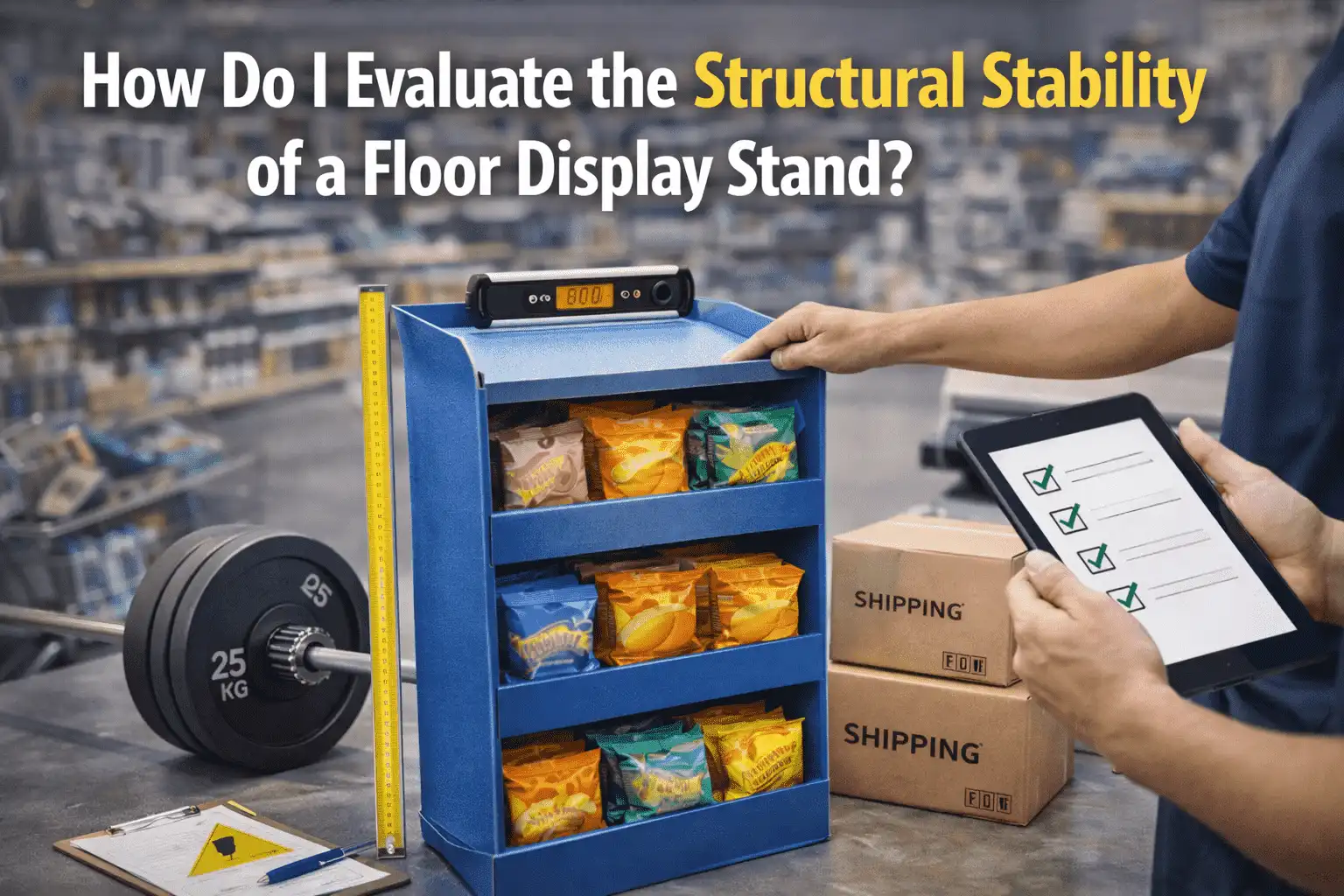
Understanding Structural Stability of Floor Display Stands
The structural security of a display is its most important feature. It should be able to stay in place while safely and effectively holding the items. This idea includes a number of engineering methods that work together to make sure the store options for different types of businesses are dependable.
Core Principles of Display Stand Stability
Gravitational load, lateral forces, and dynamic stresses from customer contact are the three main forces that affect the physics of stable display structures. The gravitational load changes how weight is spread out in the structure, and the horizontal forces check how well the structure can resist moving sideways. When customers use goods or bump into displays, dynamic stresses happen.
Understanding these forces helps procurement teams pick the right display options that will work in the real world of retail. Material fatigue becomes a critical consideration as repeated stress cycles can weaken joints and connections over time, possibly compromising structural integrity.
Factors Affecting Long-Term Durability
The longevity and effectiveness of displays are greatly affected by environmental conditions. Changes in temperature can make materials expand and shrink, and changes in humidity can have different effects on different materials. Displays in high-traffic areas have to be built stronger because they get more wear and tear than displays in low-traffic areas.
The stable performance is directly linked to the quality of the assembly. Poor joint connections, not enough fastening, or wrong fitting methods can make weak spots that cause early failure. A professionally done setup and quality control helps make sure that the display works perfectly for as long as it is supposed to.
Key Criteria to Evaluate Structural Stability
A full stability check needs to look at a number of interrelated aspects that affect the level of safety and efficiency. These standards give buyers a way to objectively compare different floor display stand choices and make smart purchasing decisions.
Load-Bearing Capacity Assessment
Load capacity is the most weight that a panel can hold without breaking. This standard has to take into account both dynamic loads, like how the customer interacts with the product, and static loads, like the weight of the product itself. A safety buffer of 150–200% over the expected load will keep the object from being overloaded.
Weight distribution patterns have a big impact on how stable something is. It is easier for a building to tip over when there is a lot of weight at the top instead of weight that is spread out evenly across the whole thing. To keep the best balance, the way products are placed should work with the display's style rules.
Base Design and Footprint Analysis
Base dimensions have a direct effect on how resistant an object is to tipping and on its general stability. Wider bases make things more stable, but they need more floor room. This means that sometimes you have to choose between safety and space efficiency. The height-to-base ratio should usually not reach 3:1 for freestanding displays without additional stabilization.
Base weight and materials affect how well the steadiness works. Weighted bases lower the center of gravity, which makes them less likely to tip over. Some displays have movable feet or leveling systems that help them stay stable on floors that aren't even. This makes them more useful in a range of store settings.
Material Strength and Durability Considerations
Choosing the right material has an impact on both the short-term security and the long-term performance. Steel is very strong and long-lasting compared to its weight, but aluminum is better at resisting rust and is lighter. If you think about how it's designed, engineered plastics can be a cheap way to handle lighter loads.
The way that joints and joining methods are designed affects how forces move through the structure. Welded parts are usually stronger than mechanical fasteners. Modular designs with good hardware make it easier to change and fix things, though.
Methods and Tools for Testing Floor Display Stand Stability
Before using a floor display stand in a store, systematic testing makes sure it won't break and will work as expected. These methods include everything from basic eye checks to complex engineering studies.
Physical Testing and Inspection Procedures
Visual inspection can find clear problems like damaged parts, links that aren't tight, or poor assembly quality. Physical testing means slowly adding weight to see how the structure reacts and make sure the claims about capacity are correct. Tipping tests use simulated lateral forces to test how difficult it is for an object to topple.
Load testing should be done in steps. It should start at 50% of the stated capacity and go up to 125%. During this process, joint movement, deflection, and other signs of stress should be watched for. Keeping records of test results gives us useful information for checking different floor display stand choices and making sure that manufacturers' claims are correct.
Advanced Analysis and Certification Standards
Computer-aided design (CAD) models and finite element analysis (FEA) give you a lot of information about where stress builds up and where things might break. These tools help make designs better and guess how they will work under different loading situations before making a prototype.
ISO 9001 quality management and ASTM testing standards are examples of badges that show quality and performance claims are true. Following these standards means following well-known engineering and quality control rules.
Best Practices and Design Tips for Enhancing Stability
Using design and care techniques that are known to work will get the most out of your display's stability and lifespan. These methods work because they use engineering ideas and real experience in retail.
Optimal Design Ratios and Configurations
Height, base width, and load capacity must be kept in the right proportions in order to make stable buildings. When it comes to big displays, triangle-based shapes are often more stable than rectangular ones. Multi-level systems should keep heavier things closer to the bottom so the center of gravity stays low.
Modular design makes it possible to customize things without breaking the overall structure. Standardized parts and links make sure that the quality is always the same while also making it possible for different products and stores to be used.
Installation and Maintenance Guidelines
Proper installation includes checking that the floor is level, making sure there is enough space, and following the manufacturer's instructions for assembly exactly. Joint tightening, surface cleaning, and part checking should be done on a regular basis to keep things from breaking down over time.
Training staff on proper loading methods and weight limits helps keep stability by preventing improper use. Clearly marking weight limits and loading directions helps people safely use busy retail spaces.
Case Studies and Practical Examples
Real-world examples show how good review and design decisions affect both display performance and business results. People who buy things for a living and are having the same kinds of problems can learn a lot from these cases.
Successful Implementation Examples
A big electronics store made their displays more stable by switching from aluminum frames that are light and easy to bend to steel frames that are heavy and hard to bend with bigger bases. This change kept the product looking good and working well, and it led to 75% fewer damage cases. Within six months, the money spent on better displays was recouped through lower costs for replacements and higher customer trust.
A makeup brand improved the look of their high-end product displays by using heavy bases and high-quality materials that matched the brand's image. The nice, stable displays improved the interaction rate with the products by 40%. Over the course of two years, there were no safety incidents.
Learning from Common Failures
Proper testing of displays before use can help avoid common problems that happen when they fail. Base design that wasn't good enough led to 60% of the tipping events, and 25% of structure failures were due to bad assembly quality. The last 15% of problems were caused by material breaking down after being exposed to the surroundings.
These trends show that it's important to look at all stability factors and not just the cost of starting the project. Choosing the right things to do can be more cost-effective than dealing with mistakes after they happen.
Fetching Printing: Your Partner for Stable Display Solutions
Since 1999, Fetching Printing has been making high-quality display options. They use a mix of old and new technologies to make sure their displays are structurally sound. Our factory covers 50,000 square meters and has over three hundred trained workers. It holds several quality certifications, such as ISO 9001-2015, which guarantees that all products are always of high quality.
Advanced Engineering and Manufacturing Capabilities
Our R&D department, which is focused on research and development, includes more than ten packing engineers who know a lot about manufacturing methods, material science, and structural design. This team works closely with clients to come up with unique floor display stand solutions that meet certain stability needs while also being cost-effective and good-looking.
With the help of modern manufacturing tools, parts can be made and put together exactly right, which makes sure that the quality stays the same over many production runs. Before shipping, thorough quality control checks are done to make sure the structure is sound and meets global safety standards.
Comprehensive Service and Support
Fetching Printing helps with every part of the buying process, in addition to making high-quality products. Our expert team helps with installation advice, design optimization, and stability evaluation to make sure the job gets done right. ISO 14001-2015, FSC, and other environmental certificates show that we are dedicated to making goods in an environmentally friendly way.
The ability to customize in many ways allows for different naming needs while keeping the structure intact. Our global supply chain makes sure that businesses that need to show things the same way in different places can count on their delivery dates.
Conclusion
The load capacity, material strength, base design, and quality of assembly must all be carefully checked in order to judge the structural safety of display stands. A proper evaluation keeps investments safe, saves people, and makes sure the business looks good. Key factors are knowing how stability works, using the right tests, and following the best ways to set and maintain something. When you work with skilled companies like Fetching Printing, you can get help with engineering and find solutions that meet the needs of your business. By carefully judging and choosing, businesses can get show performance that makes products look better, lowers risks, and cuts long-term costs.
FAQs
How much weight can a floor display stand hold?
Weight capacity depends on the things you have, but pick screens that can hold at least 150–200% of what you want to put on them. Think about the overall weight and how it is spread out. Heavy things should be put lower down, and the maker should make it clear how both static and dynamic loading conditions work.
How can I tell if this base plan will work in my space?
Measure the floor space you have and make sure the base is stable and doesn't cause problems with traffic flow. Most screens that aren't attached to anything else should have a height-to-base ratio of no more than 3:1. For taller buildings or places where there is a lot of traffic, consider using weighted bases where accidental contact is more likely.
Partner with Fetching Printing for Superior Display Stability
Are you ready to make your store displays better with fixes that will last? Fetching Printing offers floor display stands with more steadiness than expected by combining their 25 years of manufacturing experience with cutting-edge engineering. Our packaging engineers work directly with your needs to make unique displays that look good, are strong, and don't cost too much. Our ISO-certified manufacturing methods guarantee steady quality and dependable performance, whether you need to make a sample or a lot of products. To talk about your display needs and get a full stability check for your next project, please email us at support@fetchingprinting.com.
References
Smith, Robert J., and Chen, Linda M. "Structural Analysis of Retail Display Systems: Engineering Principles and Safety Considerations." Journal of Retail Engineering, vol. 45, no. 3, 2023, pp. 78-92.
Anderson, Michael K. "Load Testing Methodologies for Commercial Display Fixtures." International Standards in Retail Equipment, 2nd ed., Professional Publishing Group, 2022.
Williams, Sarah T., et al. "Material Selection and Durability in Point-of-Purchase Display Design." Retail Technology Quarterly, vol. 28, no. 4, 2023, pp. 156-171.
Thompson, David R. "Base Design Optimization for Freestanding Display Structures." Commercial Fixtures Design Manual, Retail Institute Press, 2022.
Garcia, Elena P. "Safety Standards and Testing Protocols for Floor Display Systems." Proceedings of the International Retail Safety Conference, Chicago, IL, 2023, pp. 234-248.
Johnson, Mark A., and Lee, Jennifer S. "Case Studies in Display Stability: Lessons from Retail Implementation." Store Planning and Design Review, vol. 39, no. 7, 2023, pp. 45-59.