How to Optimize Subscription Box Packaging for Shipping Costs?
For shipping costs to be as low as possible, subscription box packaging needs to be carefully planned to balance protection, branding, and transportation efficiency. Effective optimization of subscription box packaging lowers physical weight charges while keeping the purity of the product during transport. Right-sizing methods, choosing the right materials, and working with experienced package suppliers who know how to deal with the unique challenges of recurring shipment models can help companies save a lot of money.
Understanding the Challenges of Subscription Box Packaging and Shipping Costs
The monthly box business is under more and more pressure to keep shipping costs low while still giving customers great experiences. These problems affect procurement managers, buying teams, and delivery operations in the cosmetics, e-commerce, and luxury retail sectors the most.
Primary Cost Drivers in Subscription Box Logistics
One of the main things that drives up costs in monthly box businesses is packing that is too big. When boxes are bigger than the ideal size, companies charge extra for their physical weight, which can make shipping costs go up by a lot. Inefficient use of materials raises these costs by adding extra weight and size that doesn't add any protection.
Customization choices that aren't good often lead to generic packing solutions that don't make the best use of room. When the needs of the product don't match up with the design of the package, cubic space is lost, shipping costs go up, and more materials are used, which has an effect on both profitability and sustainability.
Balancing Protection with Cost Efficiency
To handle costs effectively, packaging needs to be designed in a way that makes it last longer without sacrificing efficiency. The most successful subscription box companies use simple design principles to get rid of extra materials and make sure the goods are safe during shipping.
Case studies from top subscription services show that redesigning specific types of packing can cut shipping costs by 15 to 25 percent while keeping customers happy. Most of the time, these changes involve carefully engineering the sizes of the boxes, choosing the right materials, and making sure that the inserts hold goods securely without adding extra weight.
Key Strategies to Optimize Subscription Box Packaging for Reduced Shipping Costs
For subscription box packaging optimization to work, tried-and-true cost-cutting methods must be used in a planned way. The goal of these methods is to get rid of waste while still meeting the high quality standards that customers expect from transport services they use on a regular basis.
Precision Right-Sizing to Combat Dimensional Weight Charges
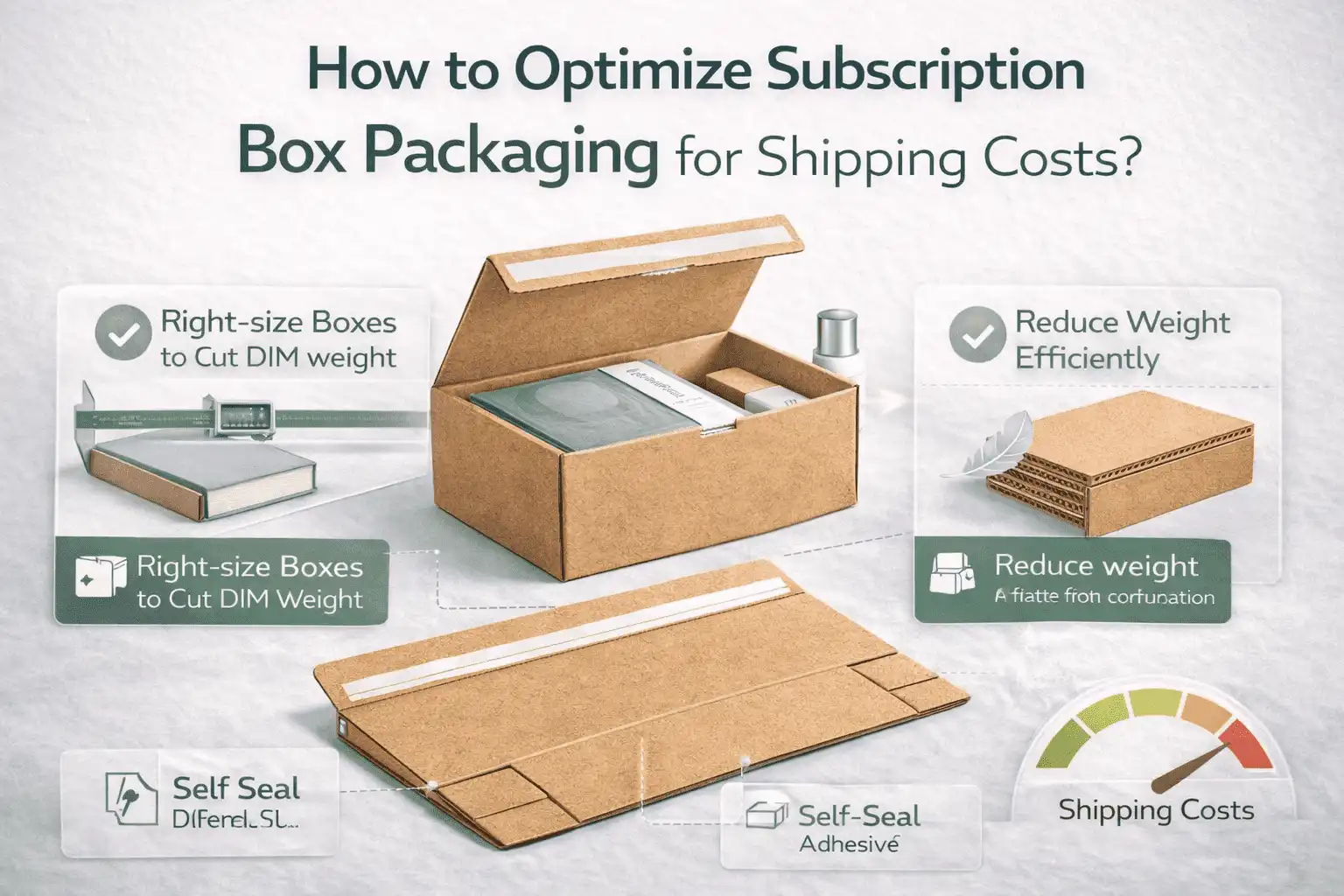
Right-sizing is the most important part of lowering the cost of a monthly box. Dimensional weight price punishes packages that are too big, no matter how much the product weighs. This means that accurate box measurements are necessary to keep costs down. Companies need to look at the products they sell and how they ship them to figure out the best box sizes that will save them the most money on dimensional weight charges in each carrier zone.
Advanced tools for package design can precisely figure out the best box sizes based on how the products are configured and how they need to be shipped. This technology helps purchasing teams weigh the pros and cons of standards and customization in order to find the most cost-effective solutions for their unique product mix.
Strategic Material Selection for Weight Reduction
Materials that are lightweight and good for the environment save a lot on shipping costs without losing strength. Engineered corrugated cardboard with optimized flute structures protects well while lowering the total weight of the package. Innovative fiber-based materials and biodegradable plastics offer similar protection with less damage to the earth.
When choosing materials, different businesses must take into account the needs of each product. Electronics packaging needs to be able to resist static electricity and absorb shocks, while makeup packaging needs to be able to keep out wetness and look great. For use in food and drinks, materials must have food-grade licenses and the ability to fight grease.
Optimized Insert Design and Protective Solutions
Protective covers need to keep fragile items safe while keeping the extra weight that makes shipping more expensive to a minimum. Modern insert designs use advanced engineering principles to get the best safety by strategically placing the parts and making the best use of the materials. Custom foam solutions, molded pulp pieces, and new cardboard structures all work together to cover specific areas without adding too much weight.
The best insert systems combine multiple functions into a single part, protecting the product, adding branding elements, and making the opening experience better. This unified method cuts down on material use while providing better customer experiences that help keep subscribers.
Comparing Subscription Box Packaging Options to Make Informed Procurement Decisions
People who work in procurement have to look at a lot of different packaging choices to find solutions that meet both practical needs and cost concerns. Custom vs. standard solutions, material trade-offs, and supplier skills need to be carefully looked at during this review process.
Custom versus Standard Packaging Solutions
By using the right sizes and features for your product, custom packing can make sure that everything fits perfectly and save you money on shipping. Custom solutions, on the other hand, usually have higher minimum order quantities and longer wait times, which can make it harder to handle inventory and meet cash flow needs.
Standard packing is easier to use and costs less to start, but the measurements may not be ideal for shipping, which can slow down the process. Choosing between custom and standard options is based on the number of orders, the features of the product, and the company's long-term goals, which are very different for each market group.
Material Trade-offs and Performance Considerations
To get the best mix of strength and weight, you need to pay close attention to the prices of the materials. If making things stronger keeps people happy and cuts down on damage claims, it might be worth the extra cost. It's generally like this for subscription box packaging. However, if you pick lighter items, you may be able to save money on shipping. This money can then be used to cover any extra costs caused by damage.
More and more, environmental concerns are affecting the choice of materials as sustainability becomes a competitive difference. Materials that can be recycled and broken down naturally may cost more, but they help build brand value and meet government regulations, which is good for long-term market standing.
Supplier Evaluation and Partnership Development
A full evaluation of a provider looks at more than just the price per unit. It also looks at wait times, minimum order quantities, shipping reliability, and expert support. Experienced package providers can help you choose the right materials, make the best designs, and make sure you're following all the rules, which can have a big effect on the total cost of ownership.
Building partnerships with qualified providers gives you access to new technologies, discounts on big purchases, and chances to work together on new ideas. When processes need to grow or when the market changes quickly and packaging needs to be changed, these relationships become even more important.
Streamlining the Procurement Process for Subscription Box Packaging
Through strategic relationships with suppliers and improved ordering processes, procurement methods that work well cut costs and boost business efficiency. These best practices help buying teams get good terms and effective supply chain performance while navigating complicated requirements.
Supplier Quality Verification and Assessment
To make sure a supplier is capable, production sites, quality processes, and technical know-how must all be carefully examined. Site audits, capability evaluations, and reference checks give you the information you need to make smart procurement choices that will help your business succeed in the long run.
Quality management systems approval, like ISO 9001, shows that a seller is dedicated to maintaining quality and making improvements all the time. Environmental management certificates, such as ISO 14001 and FSC, show that a business is following environmentally friendly methods that meet customer needs and the company's social responsibility goals.
Bulk Purchasing and Volume Optimization
Strategic plans for buying in bulk offer big savings on unit costs, but they need careful planning of supplies and control of cash flow. When suppliers make volume promises, they can make the best use of their production plans and the materials they buy, which saves money that can be shared with customers.
Cost-saving possibilities, product holding costs, and the risk of going out of style must all be balanced in good volume planning. When you work together with your providers to make forecasts, you can plan output more accurately, which cuts down on lead times and makes the supply chain more efficient for everyone.
Lead Time Management and Contingency Planning
Keeping track of lead times means coordinating the availability of packing with production plans to avoid delays or extra shipping costs that can be very expensive. Planning well includes having extra supplies on hand, different suppliers, and adaptable design choices that let you act quickly when demand changes without warning.
As part of contingency planning, different supplier ties, safety stock methods, and backup design choices are used to deal with possible supply chain disruptions. These plans make sure that the business can keep running and that customers are happy even if the main sellers have problems with production or delivery.
Future Trends and Innovations in Subscription Box Packaging to Watch
New trends in subscription box packaging show how customer needs, government rules, and technology are changing, which will affect how people buy things in the future. Understanding these changes allows for strategic planning and a competitive edge through early acceptance of innovations that help people.
Sustainable Materials and Circular Economy Integration
Pressure from regulators and customer demand for eco-friendly options is speeding up the move toward sustainable packaging materials. New ideas in package design and material choice are driven by advanced bio-based materials, compostable options, and the circular economy.
Packaging companies put a lot of money into making environmentally friendly options that work just as well but have less of an effect on the world. These innovations give brands new ways to stand out and could even help them save money by making them more efficient and cutting waste.
Advanced Design Technology and Automation Integration
Software for designing packaging and technologies for automating tasks make it possible to find more accurate, less expensive solutions that work well with delivery systems. Computer-aided design tools make it easier to make quick prototypes and make changes, and automatic packaging systems make things more efficient and cut down on work costs.
Machine learning systems look at shipping data and harm trends to keep improving the designs of packages. This method, which is based on data, lets improvements happen all the time, which lowers costs while raising protection and customer happiness levels.
Enhanced Customization and Personalization Capabilities
Customization technologies are improving quickly, making it possible to personalize things in ways that were not possible before because they were too expensive. Digital printing, variable data processing, and the idea of modular design all help make custom package experiences possible while still keeping operations running smoothly.
Customization is becoming more and more important to brands as a way to stand out and keep customers in competitive membership markets. The hard part is putting in place customization programs that give customers great experiences while keeping costs low and allowing for operating growth.
Conclusion
Combining design concepts, material science, and supply chain management in a smart way is needed to find the best shipping costs for subscription box packaging. Cost reduction, product safety, brand enhancement, and environmental compliance are just some of the goals that need to be balanced for success. When businesses use thorough optimization strategies, they can usually cut shipping costs by 15 to 25 percent while keeping or even increasing customer happiness. The key is to work with experienced packaging makers who know how to deal with the unique problems that come up with subscription commerce and can come up with new ways to help your business grow in the long run.
FAQ
What materials provide the best balance of cost and protection for subscription boxes?
Optimized flute designs in corrugated cardboard provide great safety while keeping weight and cost to a minimum. Advanced kraft paperboard offers high-end looks for high-end uses, and eco-friendly options like molded pulp offer long-term solutions. The best material relies on the features of the product, the distance it needs to be shipped, and how the brand needs to be positioned.
How can companies reduce shipping costs without compromising product safety?
By using precision right-sizing, you can get rid of physical weight charges and keep security up through smart insert design. Overall weight is cut without losing strength thanks to lightweight materials and well-designed packing structures. Thorough testing makes sure that ways to save money don't lead to more damage or customer concerns.
What are typical lead times for custom subscription box packaging orders?
Standard custom packing orders take two to four weeks to make, while orders with complicated patterns and special finishes may take six to eight weeks. Depending on how complicated the design is, the minimum order quantity is usually between 1,000 and 5,000 pieces. Rush orders can be taken care of by moving up the schedule, but the price may be higher.
Partner with Fetching Printing for Optimized Subscription Box Packaging Solutions
Companies that want to save money on subscription box packaging should work with makers that have experience and know how to deal with the unique challenges of recurring shipment models. Fetching Printing provides full package creation services backed by more than 20 years of experience in the field and advanced manufacturing skills. Our team of packing engineers is an expert in optimizing the right size, choosing the right material, and designing custom inserts that keep products safe and lower shipping costs. Get in touch with our experts at support@fetchingprinting.com to find out how our subscription box packaging maker services can help your business run more smoothly and make your customers happier.
References
Chen, Michael K. "Dimensional Weight Pricing and E-commerce Packaging Optimization Strategies." Journal of Supply Chain Management, vol. 28, no. 3, 2023, pp. 145-162.
Rodriguez, Sarah J., and Thompson, David L. "Sustainable Materials in Subscription Commerce: Cost Analysis and Performance Evaluation." Packaging Technology Review, vol. 41, no. 2, 2023, pp. 78-94.
Williams, Jennifer A. "Right-sizing Methodologies for Direct-to-Consumer Shipping Operations." International Logistics Quarterly, vol. 15, no. 4, 2022, pp. 203-218.
Kumar, Rajesh P. "Material Science Innovations in Lightweight Protective Packaging Design." Advanced Materials and Packaging, vol. 19, no. 1, 2023, pp. 34-47.
Anderson, Lisa M., et al. "Supply Chain Optimization in Subscription Box Industry: A Comprehensive Analysis." Business Operations Research, vol. 33, no. 2, 2023, pp. 112-129.
Foster, Robert K. "Cost-Benefit Analysis of Custom versus Standard Packaging Solutions in E-commerce." Procurement Management Today, vol. 22, no. 3, 2022, pp. 56-71