Mailer Box Dimensions Guide: How to Choose the Right Size
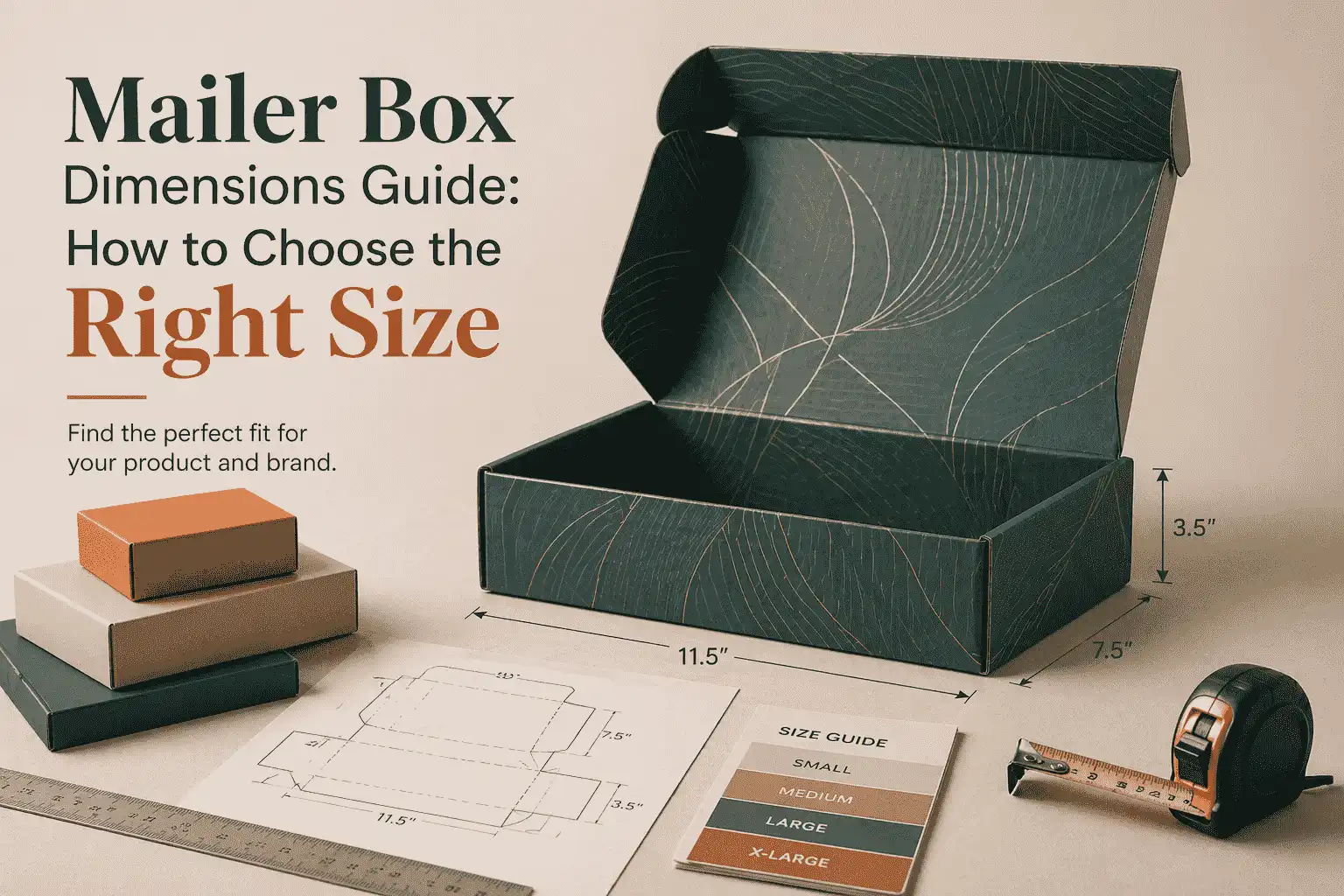
When picking the right mailer box sizes, you need to carefully think about the product specs, shipping needs, and ways to save money. The length, width, and height of an item have a direct effect on how well it is packed, how well it is protected, and how much it costs to ship generally. Businesses can get the most out of their package investment and make sure products get to customers faster if they know how to mix standard and custom sizes. Strategically choosing dimensions cuts down on waste, improves brand presentation, and speeds up logistics operations in a wide range of product groups and businesses.
Understanding Mailer Box Dimensions: A Comprehensive Overview
The dimensions of a mailer box are the basis for smart packing plans that improve both operating efficiency and customer happiness. Length, width, and height are the three basic measures that make up a framework that decides how much material is used, how much it costs to ship, and how safe the product is throughout the whole supply chain.
The Impact of Dimensional Weight on Shipping Costs
Shipping companies today base their prices on both real weight and physical weight. This means that choosing the right box size is a very important part of figuring out how much it costs to ship things. Dimensional weight price means that shipping costs can go up a lot for even light items if the packing is too big. Smart measurement planning lowers these fees by finding the best balance between box size and product volume. This saves a lot of money when shipping a lot of items.
Standard vs. Custom Sizing Strategies
Because of economies of scale in making, standard mailer box sizes are easy to find and don't cost as much. These pre-set measurements work well for most types of products and help fulfill orders faster. Custom size, on the other hand, makes sure that the product fits perfectly, improves the way the brand looks, and cuts down on material waste for unique things. Whether to use standard or custom dimensions relies on the number of orders, how special the product is, and the long-term goals of the packaging strategy.
Material Efficiency and Environmental Considerations
Choosing the right dimensions cuts down on the amount of packing material needed while still protecting the product and keeping the structure strong. Using the right-sized boxes cuts down on the amount of cardboard that is used, lowers shipping emissions by making better use of cargo room, and supports environmental efforts. Environmental concerns are becoming more and more important in B2B purchasing decisions. This makes efficient dimension planning a top goal for both operations and business responsibility.
Key Factors to Consider When Choosing Mailer Box Sizes
Finding the best mailer box sizes means balancing a lot of different things that affect the safety of the product, the speed of operations, and the control of costs. When procurement workers understand these factors, they can make smart choices that support business goals and meet customer standards.
Product Measurement and Protection Requirements
Making good choices about box sizes starts with measuring the object correctly. Using accurate measuring tools to check the length, width, and height makes sure the garment fits right and takes into account any protected materials that are needed. Items that are easily broken need more room for padding, while items that can be stacked may benefit from tighter limits on dimensions. When measuring, different types of products, seasonal packing needs, and potential product line growth should all be taken into account.
Protective inner needs have a big effect on the end box size. When figuring out the right size, you need to take into account the extra weight that foam inserts, air pillows, and custom-molded parts add. Structured security is often needed for electronics and fragile items, which can make the box dimensions 15–25% bigger than the basic product dimensions.
Shipping Carrier Compatibility and Restrictions
Different shipping companies have different size limits and price models that directly affect the decisions about which dimensions to choose. Knowing these limits keeps shipping from being held up, which costs a lot of money, and makes sure that the product works with multiple service networks. Many carriers have standards for preferred sizes that make handling easier and lower the risk of damage during transport.
Major carriers use automated sorting systems that have certain size limits that affect how fast and accurately they can handle packages. When boxes are bigger than certain limits, they may need to be handled by hand, which can take longer and cost more to ship. Aligning box sizes with carriers' automation powers helps procurement teams make sure that processes run smoothly.
Warehouse Storage and Inventory Management
Box sizes affect how well a warehouse stores things by affecting both the keeping of single items and the handling of large amounts of inventory. Standardized sizes that make the best use of shelf space lower storing costs and make it easier to get to goods. Warehouse shelving systems, truck compatibility, and picking speed are some of the things that can help you choose the best dimensions for your internal operations.
Consistent measurement standards make it easier to plan ahead, place orders, and organize room in inventory management systems. Setting dimensional rules for all product lines makes it easier to plan the setup of a warehouse and makes storage operations simpler.
Types of Mailer Boxes and Their Dimension-Specific Uses
There are different kinds of mailer boxes with different sizes that are best for different types of items and shipping needs. Businesses can choose the best packaging style for their needs and practical limitations when they know about these differences.
Sleeve Mailers and Compact Packaging Solutions
Sleeve boxes have slim designs that take up as little space as possible while still protecting non-fragile things well. The length and width of these packing options are usually between 4 and 12 inches, and the height is usually between 1 and 4 inches. Sleeve mailers are great for sending papers, small electronics, jewelry, and light consumer goods that need to be sent quickly and cheaply because of their small size.
Sleeve boxes are good for high-volume e-commerce businesses that need to keep shipping costs low because they are efficient in terms of size. Their standard sizes work well with postal needs and automated handling systems, so they can send packages reliably across a wide range of shipping networks.
Full-Structure Mailers for Enhanced Protection
Because they are strong and come in a variety of sizes, full-structure boxes offer complete security. These boxes can hold items of a wider range of sizes, usually between 6 and 24 inches in length and width and up to 12 inches in height. The higher dimensional capacity can hold heavier items, items with complicated forms, and items that need a lot of protected wrapping.
The ability to make full-structure boxes supports special dimensional standards that exactly match the needs of each product. Because of this, companies can get the most out of their packing while still protecting valuable or fragile items to the highest standards.
Eco-Friendly Options and Sustainable Dimensions
Sustainable mailer boxes are made from materials that are good for the earth and still meet size standards that help businesses run smoothly. Recycled cardboard and organic materials are about as stable in size as regular materials, so the sizes will always work the same way across production runs. Businesses that want to be more environmentally friendly without sacrificing the usefulness of their packaging are growing drawn to these choices.
Dimensional optimization in eco-friendly packaging tries to use as little material as possible while still protecting things and keeping the structure strong. Modern design methods let you build walls that are smaller without losing accuracy in measurements or resistance to crushing, which helps with both practical and environmental goals.
How to Accurately Measure and Specify Mailer Box Dimensions for Procurement?
Acquiring mailer boxes that meet organizational needs and performance standards is made possible by precise measurement and specification processes. Using structured measurement methods cuts down on mistakes, waste, and bad relationships with suppliers.
Essential Measurement Tools and Techniques
Professional-grade measuring tools give you the clarity you need to buy packaging successfully. Digital calipers, precise tools, and measuring tapes make sure that measurements are accurate within acceptable ranges. By measuring more than one sample of a product, manufacturing differences can be taken into account, and the box sizes can be made to fit the whole range of products instead of just a few.
Measurement data should be backed up with thorough models, tolerance guidelines, and any special needs for protection inserts or marking elements. Clear records of measurements make it easier to talk to providers and help with quality control throughout the whole process of buying something.
Supplier Communication and Specification Development
To communicate clearly with packaging sellers, you need to include clear, thorough measurements that avoid confusion and guarantee accurate production. Technical drawings, tolerance standards, and performance specs give providers the details they need to make sure their goods meet the needs of operations. Getting to know a supplier's capabilities, minimum order amounts, and wait times can help you make sure that your buying plans meet the needs of your business.
Before committing to big production runs, sample testing tools make sure that the dimensions are correct and that the product works properly. To make sure the execution goes well, testing should check for uniformity in dimensions, structural stability, and compatibility with automated packing equipment.
Quality Control and Continuous Improvement
Quality control processes are always checking to make sure that measurements are correct and looking for ways to make packing specs better. Regular seller checks, incoming inspection processes, and performance tracking make sure that the quality of the dimensions stays the same throughout the relationship with the provider. Feedback systems let standards be improved all the time based on operating experience and shifting business needs.
Performance metrics, like dimensional variations, shipping damage rates, and cost per unit, give concrete ways to judge how well packing works and find ways to make it better.
Comparison: Choosing Mailer Boxes vs. Other Packaging Options Based on Size
After learning about the sizes and uses of various packaging options, you can make smart choices that match the choice of packaging with the needs of the product and the business's larger goals.
Mailer Boxes vs. Bubble Mailers
Mailer boxes are great for protecting structures and making things look good, especially when the items inside are 6 inches or bigger in any way. When compared to flexible bubble mailers, the stiff design protects better against crushing and impacts. But bubble mailers are more flexible in terms of size, so they can better fit odd-shaped items and soft goods than hard boxes.
Dimensional economy changes a lot between these choices depending on the type of product. Bubble mailers mold to the shape of the item being shipped, which could cut down on the amount of shipping needed for soft or flexible items. It's easy to guess the size of mailer boxes, which helps automatic handling and stacking work more efficiently in warehouses.
Corrugated Shipping Boxes vs. Specialized Mailers
For big or heavy items, traditional corrugated boxes offer the most size freedom and safety, but they may hold too much for smaller items. Mailer boxes usually come in the best sizes for certain types of products, which means less trash and lower shipping costs compared to cardboard boxes that are too big.
The exact measurements of mailer boxes make them perfect for labeled packing strategies that improve the customer experience by making things look more professional and fitting perfectly. Corrugated boxes are great for uses that need special sizes or forms that aren't possible with regular mailer boxes.
Reusable Packaging Solutions and Dimensional Considerations
Reusable mailer boxes are made to meet certain size requirements so they can be used more than once while still looking professional. Careful planning of the dimensions is needed for these options to work with return shipping methods and customer handling needs. To make the investment in better materials and building worth it, reusable choices must last longer than single-use options in terms of dimension stability.
Dimensional requirements for reusable packaging are affected by return operations, since boxes must stay the same size through multiple shipping rounds. Design elements like stronger corners and better closing systems help keep the dimensions stable over time.
Conclusion
To choose the right mailer box measurements, you need to think about the product's features, how it will be shipped, and your business's goals. Dimensions like length, width, and height have a direct effect on the cost of packaging, the safety of the product, and customer happiness in a wide range of businesses and uses. When companies know how standard and custom sizing choices work together, they can get the most out of their packaging expenses while still meeting their operational needs. Strategic dimension planning lowers the cost of shipping, cuts down on material waste, and backs environmental efforts that are becoming more and more important in buying choices.
FAQ
What are the most common mailer box dimensions for e-commerce shipping?
E-commerce mailer boxes are usually between 4x4x2 inches for small items and 12x9x3 inches for medium-sized items. Some common sizes are 6x4x2 inches for papers and books, 8x6x2 inches for clothes, and 10x7x3 inches for tools and accessories.
How do I calculate the right mailer box size for my products?
Add 0.5 to 1 inch to each of the length, width, and height of your item to account for safe packing materials. Think about the total amount, which should include any inserts, padding, or protection elements that are needed. Take into account the different types of products in your line to make sure that all of them fit the same.
What is dimensional weight and how does it affect mailer box selection?
Dimensional weight pricing figures out how much it costs to ship things that are light but big by looking at their package size instead of their real weight. For shipping within the United States, carriers use the formula (Length × Width × Height) ÷ 166. Picking the right-sized boxes keeps you from having to pay extra for being too big and lowers your shipping costs.
Should I choose standard or custom mailer box dimensions?
Standard measurements help keep costs down and make it easier to get standard product sizes. Custom measurements allow for a perfect fit, better branding possibilities, and better use of materials for one-of-a-kind items. When making this choice, you should think about the number of orders, how special the product is, and your budget.
Partner with Fetching Printing for Your Mailer Box Manufacturing Needs
Picking the right mailer box provider has a big effect on how well your packages turn out and how efficiently your business runs. Fetching Printing has been helping businesses improve their packing performance for over twenty years by helping them manage their size requirements. Our team of experienced packing engineers can help you with everything from planning the dimensions to choosing the materials and making a custom design that fits your needs.
Our advanced manufacturing skills and quality control systems make sure that all of our production runs are exact in terms of size. We know how to meet the specific measurement needs of different market groups because we are ISO9001-2015 certified and have worked with the e-commerce, technology, cosmetics, and consumer goods industries for a long time. Email our packaging experts at support@fetchingprinting.com to talk about your mailer box needs and find out how our factory knowledge can help you improve the way you package things.
References
Packaging Technology Handbook: Advanced Materials and Dimensional Engineering for Modern Supply Chains, Industrial Publishing Press, 2023.
Dimensional Optimization in E-commerce Packaging: Cost Reduction Strategies for Online Retailers, Journal of Packaging Science and Technology, Vol. 45, 2023.
Sustainable Packaging Dimensions: Environmental Impact Assessment of Right-Sizing Strategies, Environmental Packaging Research Institute, 2024.
Carrier Compatibility and Dimensional Weight Pricing: A Comprehensive Analysis of Shipping Cost Optimization, Logistics Management Quarterly, 2023.
Mailer Box Engineering: Structural Design and Dimensional Standards for Consumer Product Protection, Packaging Engineering Society Annual Review, 2024.
B2B Packaging Procurement Best Practices: Dimensional Specification and Supplier Management Guidelines, Industrial Procurement Association, 2023.