Mailing Cartons China vs Mexico: Price & Shipping Fit 2026
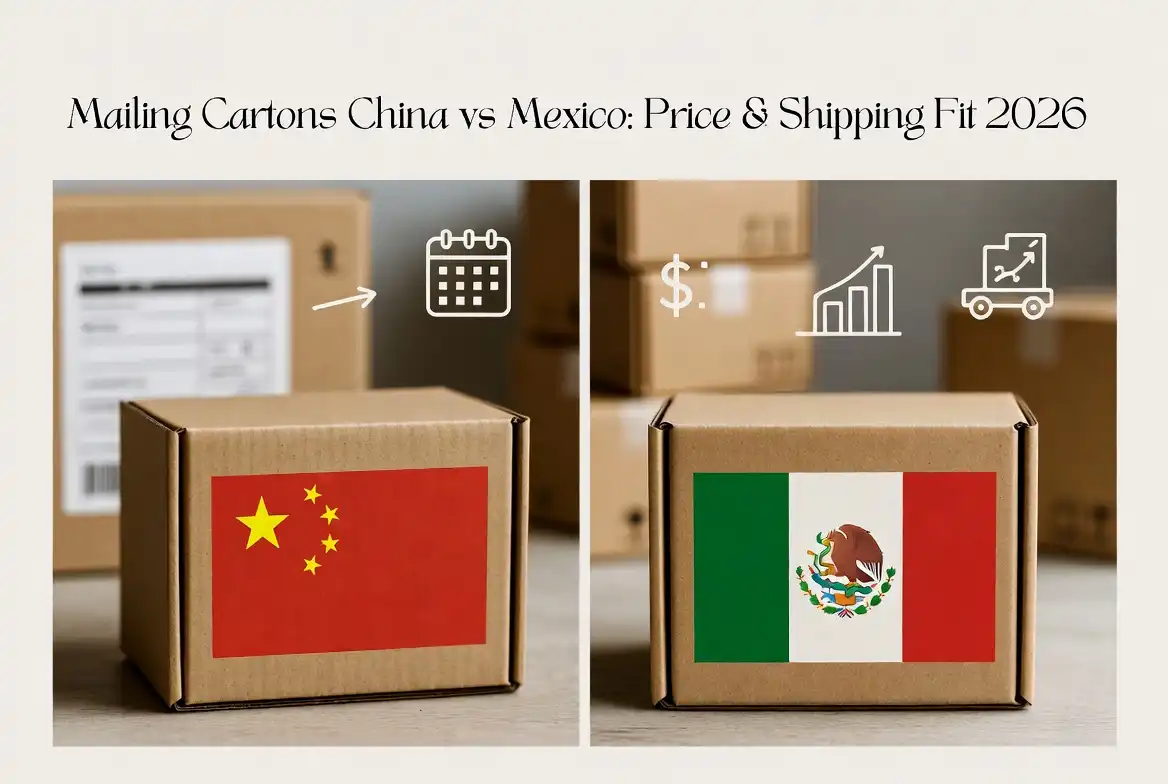
Procurement experts must choose between China and Mexico as their main suppliers when assessing mailing carton sourcing methods for 2026. Mexico provides proximity benefits for North American markets with shorter delivery times and cheaper transportation costs, but China leads with large production capacity and competitive prices for bulk purchases. China excels in high-volume manufacturing, while Mexico offers strategic nearshoring advantages that complement current supply chain resilience trends. Both geographies provide unique value propositions for various company models.
Market Landscape and Cost Factors of Mailing Cartons in China and Mexico
China and Mexico are now the top countries for purchasing mailing cartons, and the global packaging industry is still changing as companies reevaluate their sourcing tactics. Examining many variables that affect total landed costs beyond initial unit price is necessary to comprehend the cost dynamics across different areas.
Manufacturing Scale and Production Capacity
With producers able to process orders totaling millions of units while maintaining constant quality requirements, China's packaging sector functions at a scale never seen before. From heavy-duty shipping containers to lightweight e-commerce mailers, the nation's vast infrastructure enables a variety of carton standards. Thousands of facilities that specialize in corrugated packaging, folding cartons, and custom-printed solutions are located in manufacturing clusters in the provinces of Guangdong, Zhejiang, and Jiangsu.
The packaging industry in Mexico has grown significantly, especially in areas like Tijuana, Guadalajara, and Mexico City. Mexican manufacturers specialize in flexible production runs and quick reaction times, despite having a lower absolute capacity than their Chinese counterparts. Manufacturers are able to efficiently handle shorter lead times and lower batch needs due to their close proximity to important U.S. distribution locations.
Material Sourcing and Raw Material Costs
Pricing structures in both areas are greatly impacted by the availability of raw materials. Integrated supply chains that include pulp production, paperboard manufacture, mailing carton conversion, and conversion activities are advantageous to China. Cost benefits are often the result of this vertical integration, especially for large-volume needs and standard standards.
In order to lessen their reliance on foreign raw resources, Mexican firms are increasingly sourcing commodities from both local and North American vendors. Compared to fully integrated Chinese businesses, this regional sourcing strategy offers more price stability and supports sustainability goals, but it may have an impact on overall cost competitiveness.
Bulk Purchasing Advantages and Volume Pricing
Regional variations in volume-based pricing models are significant. For orders above 100,000 units, Chinese manufacturers usually provide aggressive price levels, with extra savings offered for yearly contracts. Suppliers are encouraged by the competitive environment to provide complete service packages that include logistics coordination, tooling, and design assistance.
Instead than focusing on the lowest unit price, Mexico's pricing strategy often highlights the entire cost of ownership. Manufacturers concentrate on value-added services such cooperative demand planning, just-in-time delivery, and inventory management. These services are especially beneficial to companies that value supply chain agility above the lowest possible cost.
Quality and Performance Evaluation of Mailing Cartons from China vs Mexico
Quality factors include durability, uniformity, and adherence to international standards in addition to fundamental operation. Although their methods reflect differing market interests and regulatory frameworks, China and Mexico have both made significant investments in quality management systems.
Material Standards and Durability Testing
International quality standards, such as ISO certifications, ISTA testing procedures, and customer-specific criteria, are often followed by Chinese producers. Advanced testing facilities assess moisture resistance, edge crush strength, and burst strength in a variety of environmental settings. Numerous establishments have specialized, high-quality labs with advanced testing apparatus to guarantee constant performance indicators.
Similar quality management systems are being used by Mexican packaging plants more often, with a focus on adhering to North American norms. More regular quality checks and cooperative improvement projects are made possible by the close proximity to client markets. Numerous Mexican manufacturers have obtained certificates from well-known merchants and brand owners, proving their dedication to superior quality.
Customization Capabilities and Print Quality
Although their strengths are quite different, both areas provide a wide range of customizing choices for mailing cartons. Complex die-cutting procedures, specialist coatings, and multi-color printing on mailing cartons are areas in which Chinese producers excel. Advanced mailing carton graphic capabilities at competitive price levels are supported by the concentration of printing equipment providers and technological know-how.
Mexican factories often prioritize quicker turnaround times and shorter-run customisation. High-quality output may be produced in small batches at a reasonable cost thanks to digital printing capabilities. Brands that need seasonal package adjustments or regular design changes especially benefit from this flexibility.
Environmental Impact and Sustainability Credentials
As businesses set ambitious environmental targets, procurement choices are increasingly influenced by sustainability concerns. Chinese producers have made significant investments in renewable energy and greener industrial technology. Many businesses use closed-loop water systems to lessen their influence on the environment and achieve remarkable recycling rates.
Mexico's packaging sector benefits from being close to existing recycling facilities and sustainable forestry activities. International shipping's carbon impact is greatly reduced by the shorter travel times to North American markets. Furthermore, a large number of Mexican industries take part in regional sustainability projects that promote the ideas of the circular economy.
How to Choose the Best Mailing Cartons for Your B2B Needs in 2026
Choosing the best packaging options involves juggling many considerations while projecting future market situations. Along with qualitative criteria like supplier relationships and risk management, the decision framework should include quantitative elements like cost and lead times.
Defining Business Priorities and Requirements
Clear criteria that include quality standards, delivery expectations, and volume estimates are the first step in any successful sourcing strategy. While luxury brands place more emphasis on premium look and customisation options, e-commerce companies usually favor cost effectiveness and uniform specs. Manufacturers of electronics often need specific attributes like exact dimensional tolerances and anti-static qualities.
Tooling costs, minimum order quantities, and inventory carrying costs are additional budgetary factors that go beyond unit price. Even at premium price levels, businesses using lean inventory models may give preference to suppliers that provide flexible production schedule and quick response times.
Evaluating Total Cost of Ownership
A thorough cost study includes other expenditure categories, such as the mailing carton, that are sometimes disregarded in first comparisons. Truck freight from Mexico and maritime freight from China have very different transit costs. Lead time variations affect inventory needs and related carrying costs, especially for seasonal goods or marketing initiatives.
Total ownership costs are also influenced by quality-related expenditures like as inspection, returns, and customer satisfaction. By lowering operational complexity and reducing risk, suppliers that provide consistent quality and dependable delivery performance often defend higher pricing.
Industry-Specific Considerations
When assessing packaging solutions, different sectors place emphasis on different performance attributes. Food and beverage firms often specify barrier qualities for product protection and demand adherence to food safety requirements. Cosmetics companies seek quality appearance and aesthetic appeal while keeping prices reasonable.
Manufacturers of electronics need packaging solutions that provide accurate cushioning and protection against electrostatic discharge. In order to fulfill intricate supply chain needs, automotive providers often need sophisticated labeling and traceability capabilities. More efficient supplier assessment and selection procedures are made possible by an understanding of these industry-specific requirements.
Logistics and Supply Chain Considerations for China and Mexico Sourcing
The total performance of the supply chain is greatly impacted by logistical capabilities and transportation infrastructure. Depending on particular company needs and market aspirations, China and Mexico each have unique benefits.
Transportation Infrastructure and Connectivity
World-class ports in Shanghai, Shenzhen, and Ningbo are part of China's vast port network and can effectively handle large quantities of containers. Although ocean travel durations to North American ports often vary from 14 to 21 days depending on destination and itinerary, regular shipping schedules provide a number of weekly departure alternatives.
Large roadway networks that link industrial facilities with important U.S. markets are advantageous to Mexico. For the majority of North American locations, truck transportation allows door-to-door delivery in one to three days. For goods that are not as urgent, rail links provide affordable options with respectable travel times.
Lead Time Reliability and Risk Management
Supply chain interruptions have brought attention to how crucial dependable lead periods and backup plans are. For most mailing carton orders, the overall cycle time is 4-6 weeks since Chinese suppliers usually need 15-30 days for manufacturing lead time + shipping. Nonetheless, reputable vendors often have inventory buffers for mailing cartons, allowing for quicker response times for recurring purchases.
Typically, Mexican producers provide 10–20 day production cycles with short shipping times to North American customers. This closeness lowers the need for inventories and allows for more responsive supply networks. Overnight shipping and accelerated production schedule are often able to fulfill emergency demands.
Inventory Management and Distribution Strategies
Carrying costs and service level requirements are balanced in effective inventory management. Businesses that source from China often set up regional distribution hubs or use outside logistics companies to stage their goods. This strategy maintains quick customer support while enabling affordable bulk shipment.
Just-in-time delivery and vendor-managed inventory initiatives are often highlighted in Mexican sourcing strategies. Leaner inventory models are supported by shorter lead times, which also lower working capital needs. Consolidation services, which combine many product lines for effective receiving and shipping operations, are provided by several Mexican vendors.
Brand and Supplier Landscape for Mailing Cartons in China and Mexico
Both areas' competitive environments include both specialized regional companies and well-established international businesses. Finding the best sourcing partners for certain company needs is made easier by having a thorough understanding of supplier capabilities and market positioning.
Major Players and Market Structure
There are hundreds of firms in China's packaging sector, ranging from specialist converters to huge integrated operations. Leading companies that run many plants and cater to various market niches include Shanying International, Lee & Man Paper, and Nine Dragons Paper. Numerous producers concentrate on certain markets, such luxury boxes, e-commerce packaging, or industrial uses.
The Mexican market is home to both expanding native firms and foreign corporations. Smurfit Kappa, WestRock, and International Paper all have sizable facilities in Mexico that cater to the North American market. In recent years, regional firms such as Grupo Phoenix and Bio Pappel have significantly increased their capacities and market reach.
Supplier Capabilities and Service Offerings
High-volume manufacturing and intricate customisation specifications across mailing carton types are usually areas in which Chinese manufacturers thrive. Numerous facilities provide a wide range of services, such as supply chain management, structural engineering, and graphic design. The competitive landscape promotes ongoing innovation and capability growth in a variety of product sectors.
Mexican suppliers often place a strong emphasis on responsive service strategies and cooperative relationships. Closer working connections and more regular facility visits are made possible by shorter geographic distances. In order to support integrated supply chain operations, several suppliers provide value-added services including inventory management, demand forecasting, and logistics coordination.
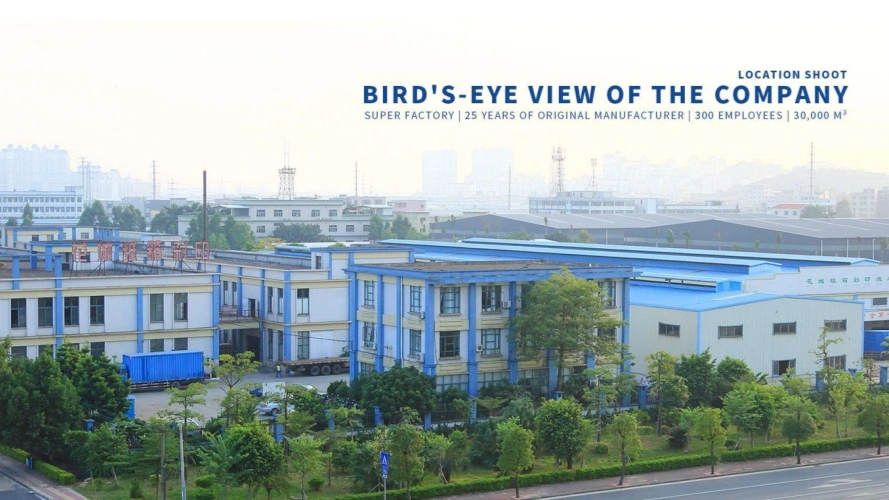
Through our strategic manufacturing connections and all-encompassing service strategy, Fetching Printing combines the greatest features of both sourcing locations. Our 30,000 square meter facility and 25 years of industry expertise allow us to provide cheap prices without sacrificing quality requirements. We provide tailored solutions that satisfy certain performance needs to a variety of sectors, including food packaging, electronics, e-commerce, and cosmetics.
Our skilled group of packaging engineers works directly with customers to improve package solutions for sustainability, cost, and performance. We maintain certifications such as ISO9001, ISO14001, and FSC, guaranteeing adherence to global environmental and quality standards. Whether you need simple shipping boxes or intricate bespoke packaging solutions, our skills efficiently support your company's goals.
Conclusion
In 2026, the decision to get mailing cartons from China or Mexico will be based on how well supply chain agility, risk management goals, and cost competitiveness are balanced. Mexico offers proximity advantages and responsive service models that support lean operations, while China offers unparalleled manufacturing scale and cost advantages for high-volume applications. Effective procurement strategies often strategically combine the two areas, using Mexico for specific applications and quick response demands and China for standard items and high-volume requirements. Careful analysis is crucial for supply chain performance since the best strategy differs depending on the sector, company size, and particular business requirements.
FAQ
1. What are the main cost differences between Chinese and Mexican mailing carton suppliers?
Cost structures vary significantly between regions, with China typically offering lower unit pricing for high-volume orders while Mexico provides advantages in transportation costs and reduced lead times. Chinese manufacturers excel in bulk pricing with aggressive volume discounts, whereas Mexican suppliers often emphasize total cost of ownership including inventory management and logistics services. The optimal choice depends on order volumes, delivery requirements, and specific business priorities.
2. How do quality standards compare between China and Mexico for packaging products?
Both regions maintain high quality standards with ISO certifications and international compliance requirements. Chinese manufacturers benefit from extensive testing facilities and established quality management systems developed through decades of export experience. Mexican facilities often provide closer collaboration opportunities and more frequent quality audits due to geographic proximity. Quality differences are typically negligible when working with established suppliers in either region.
3. What are the typical lead times for mailing carton orders from each country?
Chinese suppliers generally require 15-30 days for production plus 14-21 days for ocean transportation to North American markets. Mexican manufacturers typically offer 10-20 day production cycles with 1-3 days truck transportation. These lead time differences significantly impact inventory requirements and supply chain agility, making Mexico advantageous for businesses prioritizing responsive operations.
Partner with Fetching Printing for Optimal Mailing Carton Solutions in 2026
Ready to optimize your packaging sourcing strategy with a trusted mailing carton manufacturer combining competitive pricing with exceptional service? Fetching Printing brings 25 years of manufacturing excellence and comprehensive packaging solutions to support your business growth. Our experienced engineering team and advanced production capabilities ensure you receive packaging solutions perfectly tailored to your specific requirements while maintaining cost competitiveness and reliable delivery performance. Contact our expert team today at support@fetchingprinting.com to discuss your packaging requirements and receive customized quotations.
References
1. Global Packaging Industry Market Analysis and Regional Manufacturing Trends, International Trade Research Institute, 2024.
2. Supply Chain Resilience and Nearshoring Strategies in North American Manufacturing, Supply Chain Management Review, 2024.
3. Comparative Analysis of Asian and Latin American Packaging Manufacturing Capabilities, Packaging World Industry Report, 2024.
4. Sustainability Trends in Global Corrugated Packaging Production, Environmental Packaging Alliance, 2024.
5. Transportation Cost Analysis for International Packaging Procurement, Logistics Management Association, 2024.
6. Quality Standards and Certification Requirements in International Packaging Supply Chains, Quality Assurance International, 2024.