Environmental Impact of Paper and Plastic Display Stands
Raw Material Sourcing and Production
The journey of both paper and plastic display stands begins with raw material extraction. Paper stands are primarily made from wood pulp, a renewable resource when sourced from sustainably managed forests. On the other hand, plastic displays rely on petroleum, a non-renewable resource with significant environmental implications during extraction.
In terms of production, paper manufacturing has made significant strides in reducing its environmental footprint. Modern paper mills often use renewable energy sources and implement closed-loop systems to minimize water consumption and pollution. Conversely, plastic production is energy-intensive and releases harmful emissions, contributing to air and water pollution.
Energy Consumption and Carbon Footprint
The energy required to produce paper display stands is generally lower compared to plastic displays. Paper production has become increasingly efficient, with many mills utilizing biomass energy from wood waste. This results in a lower carbon footprint for paper stands.
Plastic production, however, is heavily dependent on fossil fuels, both as a raw material and energy source. This leads to a significantly higher carbon footprint throughout the lifecycle of plastic displays. The energy-intensive nature of plastic manufacturing contributes to greenhouse gas emissions and climate change.
Biodegradability and End-of-Life Considerations
One of the most significant advantages of paper display stands is their biodegradability. When disposed of properly, paper stands can decompose naturally within a few months, returning to the environment without leaving harmful residues. This characteristic aligns well with circular economy principles and reduces the burden on landfills.
Plastic displays, in contrast, can take hundreds of years to decompose. Even then, they often break down into microplastics, which persist in the environment and can harm wildlife and ecosystems. The long-lasting nature of plastic waste poses a serious environmental challenge, contributing to pollution in oceans and land.
Functionality and Durability Comparison
Design Flexibility and Customization
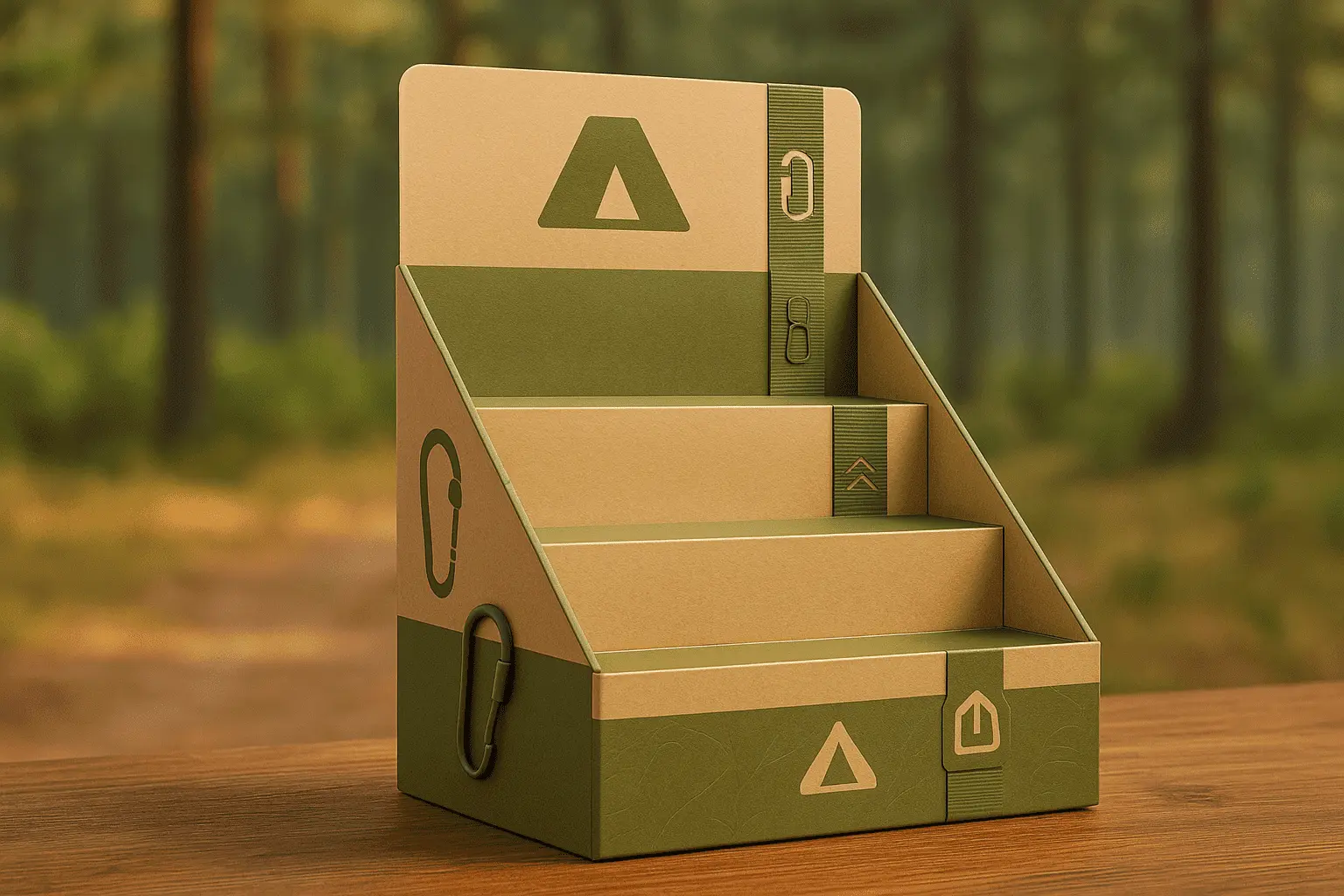
Paper display stands offer remarkable design flexibility, allowing for intricate die-cutting, embossing, and printing techniques. This versatility enables brands to create unique, eye-catching displays that effectively showcase products. The lightweight nature of paper also makes it easier to create larger, more elaborate structures without excessive material costs.
While plastic displays can also be customized, they often require more complex and costly manufacturing processes for intricate designs. However, plastic stands do offer advantages in terms of color consistency and the ability to create transparent or translucent elements, which can be beneficial for certain product presentations.
Strength and Load-Bearing Capacity
Contrary to common perception, modern paper display stands can be surprisingly strong and durable. Advances in paper engineering have led to the development of corrugated structures and reinforced designs that can support significant weight. Many paper stands are capable of holding heavy products securely, making them suitable for a wide range of applications.
Plastic displays are known for their strength and durability, especially in long-term use scenarios. They can withstand more wear and tear, making them suitable for high-traffic areas or outdoor use. However, this durability comes at an environmental cost, as discussed earlier.
Resistance to Environmental Factors
Paper display stands have improved significantly in terms of moisture resistance and durability. Treatments and coatings can be applied to enhance their resistance to humidity and light exposure. However, they may still be more susceptible to damage from spills or prolonged exposure to extreme conditions compared to plastic displays.
Plastic displays excel in environments where moisture resistance is crucial. They can withstand spillage and are often used in settings where frequent cleaning is necessary. This durability in challenging environments is one of the main reasons some businesses opt for plastic despite its environmental drawbacks.
Economic and Practical Considerations
Cost-Effectiveness and Production Efficiency
Paper display stands generally offer a more cost-effective solution, especially for short-term or seasonal promotions. The raw materials are less expensive, and the production process is often more streamlined, allowing for quicker turnaround times. This makes paper stands an attractive option for businesses looking to refresh their displays frequently or test new marketing strategies without significant investment.
Plastic displays, while potentially more expensive upfront, may offer long-term cost benefits in certain scenarios due to their durability. However, the rising costs of petroleum-based materials and increasing environmental regulations may impact the economic viability of plastic displays in the future.
Transportation and Storage Efficiency
The lightweight nature of paper display stands offers significant advantages in terms of transportation and storage. They can be shipped flat and assembled on-site, reducing shipping costs and storage space requirements. This efficiency not only saves money but also contributes to a lower carbon footprint in the distribution phase.
Plastic displays, being more rigid, often require more space for transportation and storage. This can lead to higher logistics costs and potentially larger carbon emissions associated with shipping. However, for businesses with long-term display needs, the durability of plastic may offset these initial inefficiencies.
Recyclability and Waste Management
Paper display stands shine when it comes to recyclability. Most paper stands can be easily recycled through existing paper recycling streams, contributing to a circular economy. Many municipalities and businesses already have well-established paper recycling programs, making it convenient for consumers and retailers to dispose of paper stands responsibly.
Recycling plastic displays can be more challenging. While many types of plastic are technically recyclable, the process is often more complex and less widely available. Additionally, the mix of materials often used in plastic displays (different types of plastics, adhesives, etc.) can complicate the recycling process, leading to a higher likelihood of these displays ending up in landfills.
Conclusion
In the debate between paper display stands and plastic displays, sustainability clearly favors paper. Paper stands offer a more environmentally friendly option, with lower carbon footprints, biodegradability, and easier recycling. While plastic displays have advantages in durability, the long-term environmental costs outweigh these benefits for many applications. As businesses increasingly prioritize sustainability, paper display stands emerge as a compelling choice. They offer a balance of functionality, customization, and environmental responsibility, aligning with both consumer expectations and corporate sustainability goals. Ultimately, the shift towards paper displays represents a step towards more sustainable retail and marketing practices.
FAQs
Are paper display stands strong enough for heavy products?
Yes, modern paper engineering allows for sturdy designs capable of supporting significant weight.
Can paper stands be used in humid environments?
While not ideal for extremely humid conditions, many paper stands can be treated for improved moisture resistance.
Are plastic displays more cost-effective in the long run?
While durable, the rising costs of materials and environmental regulations may impact the long-term cost-effectiveness of plastic displays.
How do I dispose of paper display stands?
Most paper stands can be recycled through standard paper recycling streams.
Sustainable Display Solutions | Fetching Printing
At Fetching Printing, we specialize in creating eco-friendly paper display stands that combine sustainability with functionality. As a leading supplier and manufacturer, we offer customized solutions to meet your specific needs. Our expert team can help you design and produce high-quality, recyclable paper displays that align with your brand and environmental goals. For sustainable display solutions, contact us at support@fetchingprinting.com.
References
Smith, J. (2022). "Sustainability in Retail Displays: A Comparative Analysis of Paper and Plastic Materials." Journal of Sustainable Marketing, 15(3), 45-62.
Green, A. & Brown, B. (2021). "Life Cycle Assessment of Display Stand Materials: Paper vs. Plastic." Environmental Science & Technology, 55(8), 4567-4580.
Johnson, E. (2023). "The Economic Implications of Sustainable Display Choices in Retail." International Journal of Retail & Distribution Management, 51(2), 178-195.
Lee, S. et al. (2022). "Consumer Perceptions of Eco-Friendly Display Materials in Point-of-Purchase Marketing." Journal of Consumer Behaviour, 21(4), 321-338.
Zhang, Y. & Liu, X. (2021). "Innovations in Paper-Based Display Technologies: Enhancing Durability and Performance." Packaging Technology and Science, 34(6), 289-304.
Wilson, M. (2023). "The Role of Display Materials in Corporate Sustainability Strategies: A Case Study Approach." Business Strategy and the Environment, 32(3), 456-472.