Understanding Self-Seal Mailer Boxes and Tape-Sealed Cartons
What Are Self-Seal Mailer Boxes?
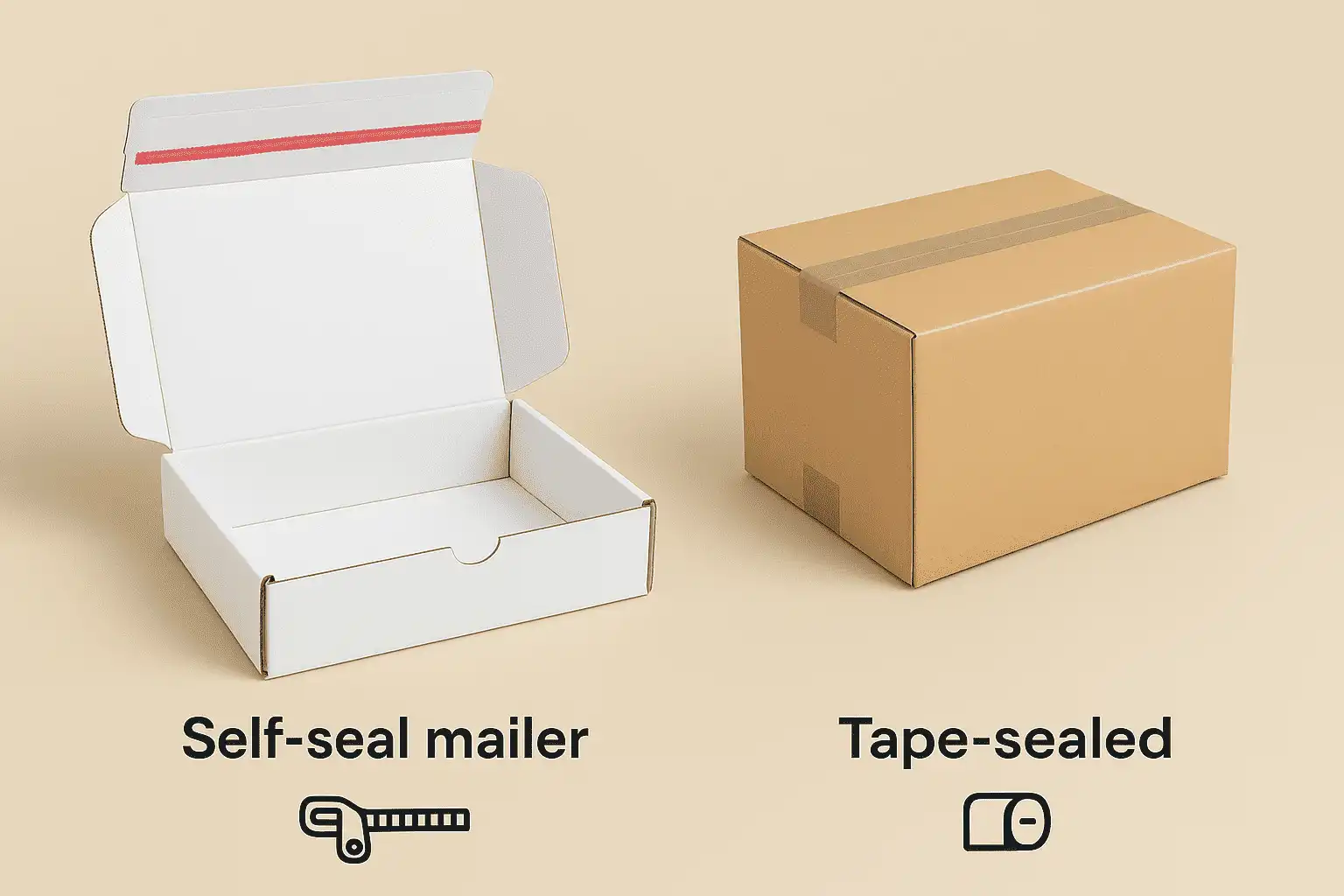
Self-seal mailer boxes are innovative packaging solutions designed for convenience and efficiency. These boxes come with a built-in adhesive strip that, when activated, securely seals the package without the need for additional tape or sealing materials. The adhesive is typically protected by a peel-off strip, ensuring that it remains effective until the box is ready to be sealed.
Key features of self-seal mailer boxes include:
- Quick and easy sealing process
- Uniform appearance due to consistent sealing
- Reduced packaging time and material waste
- Often made from corrugated cardboard for durability
Self-seal mailer boxes are particularly popular for e-commerce businesses, subscription box services, and companies that ship a high volume of products regularly. They offer a professional look and can be customized with branding elements to enhance the unboxing experience.
What Are Tape-Sealed Cartons?
Tape-sealed cartons are traditional shipping boxes that require manual application of packing tape to secure the contents. These cartons come in various sizes and are typically made from corrugated cardboard. The sealing process involves folding the flaps of the box and applying tape along the seams to close it securely.
Characteristics of tape-sealed cartons include:
- Versatility in size and shape options
- Ability to customize tape application for extra security
- Lower initial cost compared to self-seal options
- Widely available and familiar to most shipping personnel
Tape-sealed cartons are commonly used across various industries and are suitable for shipping a wide range of products. They offer flexibility in terms of how they can be sealed and reinforced, making them adaptable to different shipping needs.
Key Differences in Design and Functionality
The primary distinction between self-seal mailer boxes and tape-sealed cartons lies in their sealing mechanism. This difference impacts several aspects of their functionality:
- Sealing Time: Self-seal boxes are generally faster to close, while tape-sealed cartons require more time and effort to apply tape properly.
- Consistency: Self-seal boxes provide a more uniform seal, whereas tape-sealed cartons may vary depending on the person applying the tape.
- Material Usage: Self-seal options eliminate the need for additional packing tape, potentially reducing material costs and waste.
- Customization: Tape-sealed cartons offer more flexibility in how they can be reinforced or sealed for different product types.
Understanding these differences is crucial for businesses to select the most appropriate packaging solution for their specific needs, considering factors such as shipping volume, product characteristics, and operational efficiency.
Comparing the Benefits and Drawbacks
Advantages of Self-Seal Mailer Boxes
Self-seal mailer boxes offer several benefits that make them an attractive option for many businesses:
- Time Efficiency: The built-in adhesive strip allows for quick sealing, significantly reducing packaging time and increasing overall productivity.
- Consistency: Each box is sealed uniformly, providing a professional appearance and consistent customer experience.
- Reduced Material Waste: Eliminating the need for packing tape reduces material consumption and waste, aligning with sustainability goals.
- Enhanced Security: The adhesive seal is typically tamper-evident, providing an added layer of security during transit.
- Improved Unboxing Experience: The clean, tape-free design contributes to a more pleasant unboxing experience for customers.
These advantages make self-seal mailer boxes particularly suitable for e-commerce businesses, subscription box services, and companies that prioritize efficiency and customer experience in their shipping processes.
Disadvantages of Self-Seal Mailer Boxes
Despite their benefits, self-seal mailer boxes do have some limitations:
- Higher Initial Cost: Self-seal boxes are generally more expensive per unit compared to standard tape-sealed cartons.
- Limited Size Options: They may not be available in as wide a range of sizes as traditional cartons.
- Adhesive Reliability: The effectiveness of the adhesive can be affected by extreme temperatures or prolonged storage.
- Less Flexibility: Once sealed, it can be difficult to reopen and reseal the box without damaging the adhesive strip.
These drawbacks should be considered when evaluating whether self-seal mailer boxes are the right choice for a particular business or product line.
Pros and Cons of Tape-Sealed Cartons
Tape-sealed cartons have their own set of advantages and disadvantages:
Pros:
- Cost-Effective: Generally less expensive per unit than self-seal options.
- Versatility: Available in a wide range of sizes and can be easily customized.
- Strength: Can be reinforced with additional tape for heavier items or added security.
- Familiarity: Widely used and understood by shipping personnel and customers alike.
Cons:
- Time-Consuming: Manually applying tape takes more time and effort.
- Inconsistency: Seal quality can vary depending on the person applying the tape.
- Additional Materials: Requires packing tape, which adds to material costs and potential waste.
- Less Professional Appearance: May not provide as clean or uniform a look as self-seal boxes.
The choice between self-seal mailer boxes and tape-sealed cartons often comes down to balancing these factors against specific business needs, shipping volume, and product requirements.
Making the Right Choice for Your Business
Assessing Your Shipping Needs
To determine whether self-seal mailer boxes or tape-sealed cartons are the best fit for your business, consider the following factors:
- Shipping Volume: High-volume shippers may benefit more from the time-saving aspects of self-seal boxes.
- Product Characteristics: Consider the size, weight, and fragility of your products when choosing packaging.
- Budget Constraints: Evaluate the cost difference between self-seal and tape-sealed options in relation to your budget.
- Environmental Goals: If sustainability is a priority, self-seal boxes may align better with waste reduction objectives.
- Customer Experience: Think about how each option impacts the unboxing experience for your customers.
By carefully evaluating these aspects, you can make an informed decision that balances efficiency, cost-effectiveness, and customer satisfaction.
Cost Analysis: Self-Seal vs. Tape-Sealed
When comparing costs, it's important to look beyond the initial price per unit:
- Material Costs: Calculate the total cost including boxes and any additional materials like packing tape for tape-sealed cartons.
- Labor Costs: Factor in the time saved with self-seal boxes versus the time spent applying tape to traditional cartons.
- Long-Term Savings: Consider potential savings in efficiency and reduced material waste over time with self-seal options.
- Volume Discounts: Explore bulk purchasing options for both types of packaging to optimize costs.
A comprehensive cost analysis will help you understand the true financial impact of each option on your business operations.
Environmental Considerations
As sustainability becomes increasingly important to consumers and businesses alike, consider the environmental impact of your packaging choices:
- Material Reduction: Self-seal mailer boxes can reduce overall material use by eliminating the need for packing tape.
- Recyclability: Ensure that both the boxes and any adhesives used are recyclable in common waste streams.
- Eco-Friendly Options: Look for packaging made from recycled materials or sustainable sources for both self-seal and tape-sealed options.
- Waste Reduction: Consider how each option contributes to your overall waste reduction goals.
By taking these environmental factors into account, you can make a choice that not only meets your operational needs but also aligns with your company's sustainability initiatives.
Conclusion
Choosing between self-seal mailer boxes and tape-sealed cartons is a decision that can significantly impact your shipping operations and customer experience. Self-seal boxes offer convenience, consistency, and potential time savings, making them ideal for high-volume shippers and those prioritizing efficiency. On the other hand, tape-sealed cartons provide versatility and cost-effectiveness, particularly for businesses with diverse shipping needs or budget constraints. By carefully assessing your specific requirements, conducting a thorough cost analysis, and considering environmental factors, you can select the packaging solution that best aligns with your business goals and values. Ultimately, the right choice will depend on finding the balance between operational efficiency, cost-effectiveness, and customer satisfaction that works best for your unique business needs.
FAQs
Are self-seal mailer boxes more expensive than tape-sealed cartons?
Initially, self-seal mailer boxes tend to have a higher unit cost. However, when considering labor savings and reduced material waste, they can be cost-effective for high-volume shippers.
Can self-seal mailer boxes be customized with branding?
Yes, many suppliers offer customization options for self-seal mailer boxes, including printing logos, brand colors, and marketing messages.
Are self-seal mailer boxes suitable for heavy items?
While self-seal mailer boxes are generally sturdy, tape-sealed cartons might be preferable for very heavy items as they allow for additional reinforcement with extra tape.
Custom Self-Seal Mailer Boxes for Efficient Shipping | Fetching Printing
At Fetching Printing, we specialize in providing high-quality, customizable self-seal mailer boxes to meet your unique shipping needs. Our experienced team of packaging engineers can help you design the perfect solution for your products, ensuring efficient packaging and an enhanced unboxing experience for your customers. As a leading manufacturer and supplier, we offer competitive pricing, eco-friendly options, and the flexibility to accommodate various order volumes. Contact us at support@fetchingprinting.com to discuss how we can elevate your packaging strategy with our innovative self-seal mailer boxes.
References
Smith, J. (2022). Packaging Solutions for E-commerce: A Comprehensive Guide. Journal of Logistics Management, 15(3), 78-92.
Green, A. (2021). Sustainability in Shipping: Comparing Packaging Options. Environmental Packaging Today, 8(2), 45-59.
Johnson, R. & Brown, L. (2023). The Impact of Packaging on Customer Experience in Online Retail. International Journal of E-Commerce Studies, 14(1), 112-128.
Lee, S. (2022). Cost Analysis of Modern Shipping Materials. Supply Chain Economics Review, 7(4), 201-215.
Wilson, M. (2021). Innovations in Packaging Adhesives: Self-Seal Technology Advancements. Journal of Adhesion Science and Technology, 35(2), 167-183.
Rodriguez, C. (2023). Efficiency in Packaging Operations: A Comparative Study of Sealing Methods. International Journal of Industrial Engineering, 18(3), 289-305.