Subscription Box Packaging Standards for Shipping and Fulfillment
To run a successful e-commerce delivery business, you need to use subscription box packaging. This keeps your goods safe and supports your brand. Subscription services today need boxes that can handle the challenges of shipping around the world, keep the product's purity, and make opening the box a memorable experience. These unique containers, like subscription box packaging, need to keep things safe and save money at the same time. They have to be made from materials that are good for the environment and have design elements that can be changed to help brands stand out in crowded markets. They also have to follow strict rules for shipping to other countries.
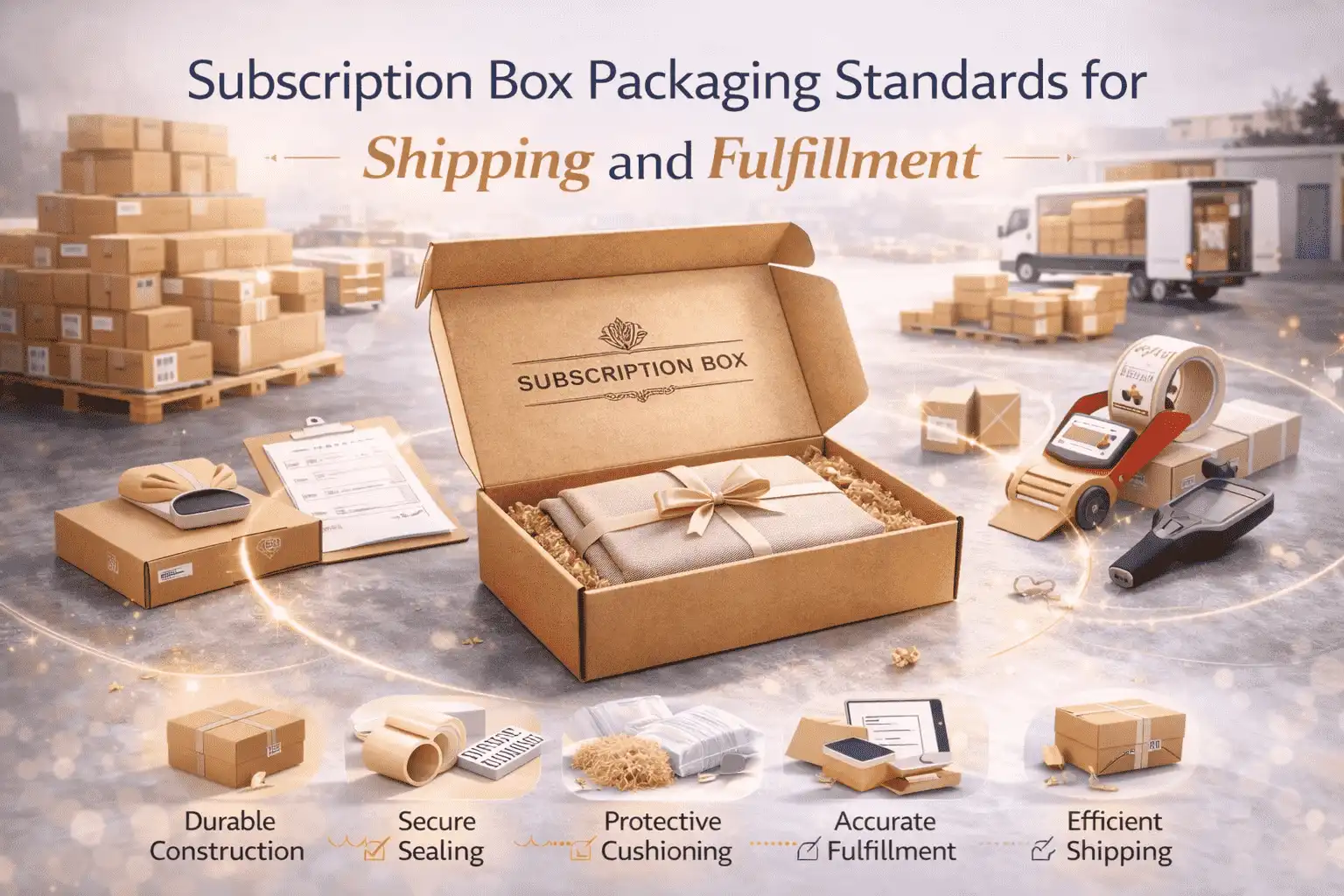
Understanding Subscription Box Packaging Standards
The subscription shopping industry has changed the way packages need to be packed, calling for unique solutions that go beyond normal shipping rules. Unlike regular e-commerce packing, membership boxes have to hold a wide range of products while keeping the brand's look the same from shipment to shipment. 72% of consumers look at the style of the packaging when deciding whether or not to buy a brand. This makes subscription box packaging an important touchpoint for keeping customers.
Core Components of Subscription Box Standards
Professional subscription packing is different from regular shipping cases in a number of important ways. The outer box usually has high-quality printing, the ability to be made to fit any size, and better structural stability to protect the goods during long shipping times. Protective dividers, labeled tissue paper, and compartmentalization systems that keep products from moving or getting damaged are all inside the box.
Specifications for materials are very important for meeting shipping standards. Corrugated cardboard is still the most popular choice. Ratings for the edge crush test (ECT) range from 32 to 44 ECT, which is strong enough to protect most subscription goods. Advanced choices include layers that don't absorb water for food items and materials that don't attract static electricity for sending gadgets.
Regulatory Compliance and Safety Requirements
When it comes to foreign transfers, global shipping rules have specific rules about how subscription boxes must be packed. When sending consumable goods, food-grade licenses are needed, and hazmat rules affect the beauty and tech categories. Major companies put limits on the size and weight of packages. Usually, the length and width of the package must be less than 130 inches for normal shipping rates.
Sustainability approvals are having a bigger impact on package standards. For example, FSC-certified materials are no longer just high-end choices; they are now expected by the industry. To follow environmental rules and customer tastes, many subscription brands now only use materials that can be recycled and use as little plastic as possible.
Essential Criteria for Choosing Subscription Box Packaging
Choosing the right package means carefully looking at a lot of different things that affect both how well the business runs and how happy the customers are. The subscription businesses that do the best at making money come up with detailed criteria systems that balance cost concerns with quality standards and brand marketing goals.
Durability and Protection Standards
The quality of the package has a direct effect on how happy customers are and how many times they return items. This is why figuring out how long something will last is so important when buying something. When checking something, rules should be followed that check how well it holds up against getting wet, being dropped, and being compressed. The minimum burst strength number for expensive subscription services is 200 PSI, and packages must be able to withstand 3-foot drop tests without losing their contents. Subscription box packaging for these services frequently has to meet higher standards.
Protection needs are very different for different types of products. For electronics, anti-static materials and shock-absorbing plugs are needed, and for makeup, designs with separate compartments are needed to keep bottles from breaking. To keep the quality of their food during long shipping times, food orders need materials that don't absorb moisture and don't change temperature.
Customization and Branding Capabilities
Customizing the package to make a brand stand out is now an important part of the success of monthly boxes. High-resolution images, Pantone color matching, and special finishing methods like embossing, metal stamping, and spot UV applications should all be supported by printing quality standards. A lot of brands that do well use interactive features, like QR codes that lead to special content or social media campaigns.
Because designs are flexible, brands can use seasonal changes, limited versions, and unique messages that get customers more involved. To help with marketing and product launches, packaging makers should show that they can do small-batch customization and fast prototyping.
Cost Efficiency and Scalability
Subscription business models are heavily affected by economic factors, which means that quality of packing and running costs need to be carefully balanced. Volume pricing systems should be able to adapt to different growth paths. For example, tier-based pricing can lower costs as order numbers rise. For subscription companies that do well, packaging costs usually make up 10 to 15 percent of the total cost of the goods.
Some of the things that affect scalability are production capacity, consistent wait times, and the ability to distribute goods geographically. Suppliers should show that they can handle changes in seasonal business and the need for quick growth that is common in subscription shopping.
Designing and Optimizing Subscription Box Packaging for Fulfillment
For design optimization to work, you need to know about the whole customer trip, from the first package to the unboxing experience. Modern subscription packaging does more than just protect the product inside. It's also a marketing tool, a brand representative, and an experience booster for the customer.
Structural Design Excellence
With the help of advanced structure engineering, subscription box packaging always works in all kinds of shipping situations, using the fewest materials possible to save money and time. The best designs use corner guards, bottom locks, and compression panels to make the box stronger and keep its shape when it's under stress. With computer-aided design tools, engineers can do precise work that keeps people safe and uses as little as possible.
Dimensional optimization has a big effect on shipping costs, since transport prices are heavily affected by how big the package is compared to what's inside it. A smart design cuts down on the amount of gap filling that needs to be done and the extra weight that comes with being bigger, but it still provides enough safety.
Insert Systems and Protection Methods
Advanced insert systems protect particular products and improve the worth of the presentation. Custom-molded pulp inserts are a great way to protect fragile things while also being good for the earth. Biodegradable and recyclable materials that meet safety standards without harming the earth are alternatives to foam.
Compartmentalization techniques keep products from touching and breaking each other while also making the presentation more organized, which makes unpacking more fun. Designs that work well make it easy to remove products and organize things in a way that makes sense to the customer.
Emerging Technology Integration
Smart package technologies are starting to change the way subscription boxes are made. Features like temperature monitors, freshness indicators, and authentication features are making paid subscriptions more valuable. With QR codes and virtual reality, you can build interactive experiences that keep people interested in your brand after they open the box.
As more distribution sites use robotic systems, automation compatibility is becoming more and more important. The styles of packaging must be able to handle automatic handling while still looking good and protecting things.
Comparing Subscription Box Packaging Options for Procurement
There are a lot of different packaging choices available to procurement workers. Each one has its own benefits for different subscription plans and target markets. Knowing the differences between the benefits lets you make smart choices that improve both business efficiency and customer happiness.
Custom versus Semi-Custom Solutions
Some types of custom packaging, like subscription box packaging, make brands stand out and make sure that goods fit perfectly. However, they require bigger orders and longer wait times. You can choose semi-custom options, which are in the middle. These are standard base designs that can accept custom printing and small changes. With these choices, you can show your business while cutting costs by 30 to 40 percent most of the time.
For new membership services or price-conscious markets, generic packing with custom inserts is a good way to start customizing. This method lets you test and make changes quickly while requiring the least amount of original input.
Material Comparisons and Performance
Corrugated cardboard is still the most popular material because it protects well for its weight and can be printed on. Single-wall construction works best for smaller items, while double-wall construction protects heavy or more fragile items better. Triple-wall choices are used for specific tasks that need the most safety.
Other options include rigid paperboard for high-end presentation, plastic boxes for light items, and hybrid designs that mix different materials to get the best performance. Each choice has its own benefits when it comes to safety, looks, and the environment.
Supplier Evaluation Criteria
For provider partnerships to work, they need to be carefully looked at in more ways than just price. Consistent performance is guaranteed by quality certificates such as ISO standards, color management skills, and output capacity tests. Lead times and shipping prices are affected by how close two facilities are to each other, and having more than one site reduces risk and provides redundancy.
Communication skills and response have a big effect on the success of a project, especially for events that need to happen quickly or during peak seasons. Established providers have a history of working with subscription companies like yours and know what the needs of your industry are.
Sustainable and Eco-Friendly Subscription Box Packaging Solutions
Environmental sustainability used to be a competitive advantage, but now it's a market requirement, and packing choices are becoming a bigger part of how people judge brands. Protection and visual standards must be met by sustainable solutions that also reduce their effect on the environment through material choice, design optimization, and thinking about how to dispose of the product at the end of its useful life.
Advanced Sustainable Materials
Environmentally friendly new materials work just as well as old ones, but they are better for the earth. Cardboard subscription box packaging keeps its power while using less new material because it is made from recycled materials. Plant-based coatings can be used instead of shields made from oil in places where they need to fight moisture and grease.
Biodegradable support materials, like mushroom-based foam and seaweed packages, can be completely broken down in a waste pile without losing any of their effectiveness. With these new ideas, brands can reach their goals of zero-waste packaging while still meeting standards for product safety.
Circular Economy Integration
Circular economy ideas are used in successful environmental plans to make packaging that can be reused, recycled, or composted. Modular designs separate parts so that trash can be properly managed, and clear labels help people decide how to dispose of things.
Through return programs and efforts to recover packing, businesses can get customers involved and show they care about the environment. Some subscription services have programs where customers can return packing and get rewards, which also makes sure that the packaging is recycled properly.
Certification Standards and Compliance
Sustainability standards that are known to be valid show that environmental claims are true while also meeting customer needs. FSC certification makes sure that forests are managed responsibly, and Cradle to Cradle studies look at the environmental effect over the whole lifecycle of a product.
Lifecycle studies and carbon impact assessments help people make data-driven choices about sustainability, finding ways to improve the whole packaging supply chain. These reviews back up efforts to make environmental data clear and to keep making things better.
Conclusion
Companies are always trying to stay ahead of the competition by improving the customer experience and running their businesses more effectively. This means that standards for subscription box packaging are always change. For packaging strategies to work, they need to protect the brand, keep prices low, care for the environment, and keep up with changing government rules and customer standards. Smart design, eco-friendly methods, and cutting-edge materials are what make the best solutions. These keep businesses growing and customers happy over time.
FAQ
What makes subscription box packaging different from regular shipping boxes?
Subscription package has better branding elements, higher-quality printing options, and unique inner designs that make opening the box an unforgettable experience. Most of the time, these solutions include unique sizes, protective inserts, and fabrics that are best for shipping over and over again instead of just once.
How do I choose the right packaging supplier for my subscription business?
Check out providers based on their ability to customize, their quality standards, their production capacity, and how quickly they respond to your messages. When choosing a location, think about how easy it will be to ship, how to protect the environment, and how to set prices that will work with your growth plans and number needs.
What are the cost implications of sustainable packaging materials?
Most of the time, sustainable products cost 15 to 25 percent more than standard ones, but this difference is getting smaller as more people use them. Some of the long-term benefits are brand identity, customer trust, following the rules, and possibly saving money on costs by using materials more efficiently and reducing waste.
Partner with Fetching Printing for Premium Subscription Box Solutions
Businesses that sell subscription boxes need packing partners that know how to handle the unique needs of repeat orders and great customer service. Fetching Printing has been a top subscription box packaging maker for more than 20 years, mixing advanced production skills with a wide range of customization options. Our team of package experts focuses on creating solutions that protect, brand, and last a long time while keeping costs low for subscription businesses that are growing. Email our pros at support@fetchingprinting.com to talk about your unique needs and find out how our subscription box packaging services can help your brand succeed.
References
Smith, J. & Anderson, M. (2024). "Subscription Commerce Packaging Trends and Consumer Preferences." Journal of E-commerce Logistics, 18(3), 145-162.
Thompson, R. (2024). "Sustainable Packaging Materials in Direct-to-Consumer Shipping." International Packaging Research Quarterly, 12(2), 78-94.
Williams, K. et al. (2023). "Cost-Benefit Analysis of Custom Packaging in Subscription Business Models." Supply Chain Management Review, 27(4), 203-218.
Garcia, L. & Chen, W. (2024). "Regulatory Compliance Standards for International Subscription Shipping." Global Trade Packaging Standards, 15(1), 112-128.
Johnson, P. (2023). "Consumer Unboxing Experience and Brand Loyalty in Subscription Services." Marketing Psychology Today, 31(6), 89-105.
Davis, A. & Taylor, S. (2024). "Automation Impact on Subscription Packaging Design Requirements." Industrial Packaging Technology, 22(3), 167-183.