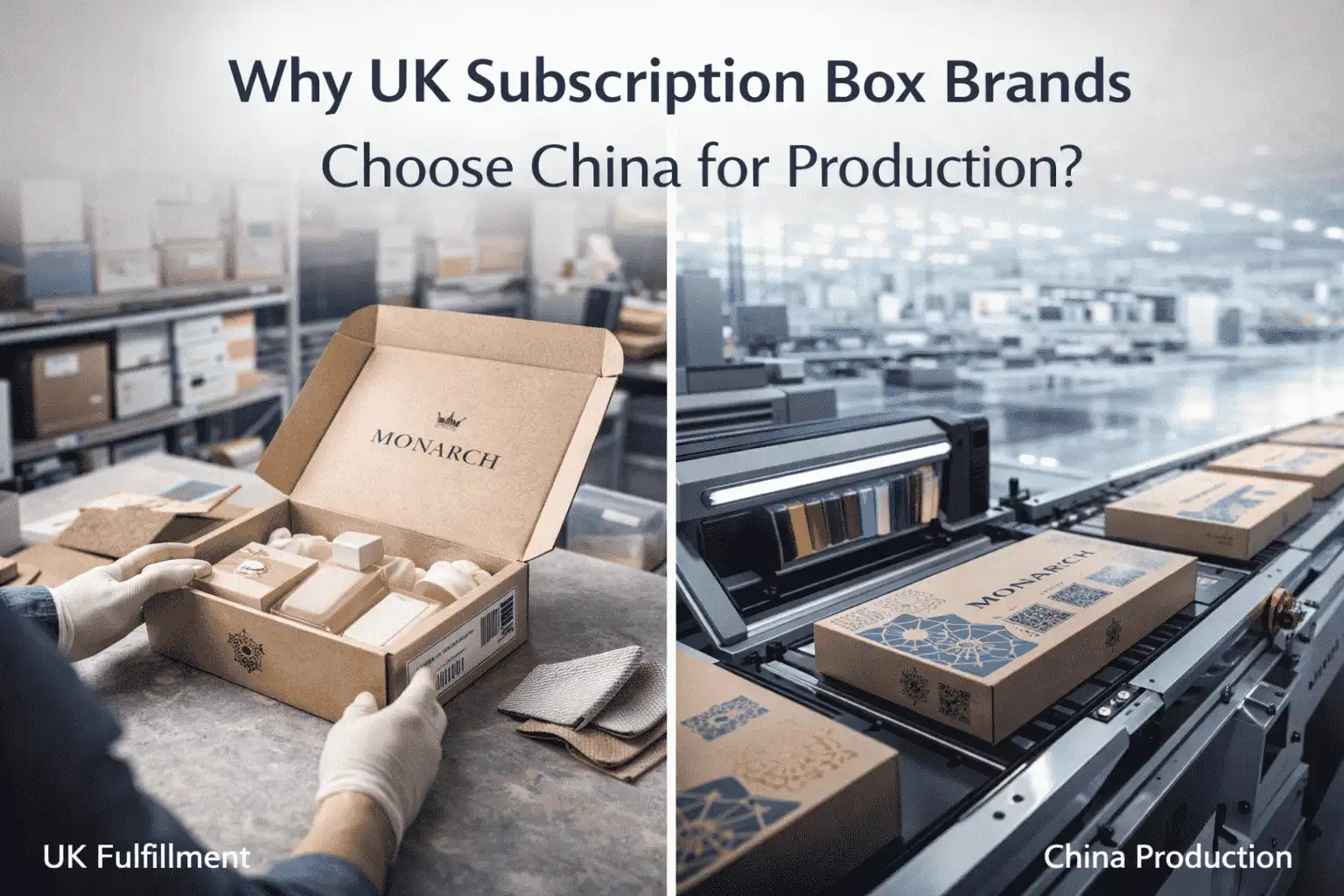
Why UK Subscription Box Brands Choose China for Production?
Due to China's unmatched cost advantages, wide range of customisation options, and strong supply chain infrastructure, UK subscription box firms are rapidly turning to China for manufacture. Chinese producers provide economies of scale that drastically lower prices per unit while maintaining the quality requirements necessary for regular delivery. Brands may obtain numerous subscription box contents from a single location thanks to the developed manufacturing ecosystem, which covers a variety of product categories from electronics to cosmetic products. Furthermore, China's sophisticated logistics networks guarantee dependable international shipment, which is essential for preserving subscriber retention and satisfaction levels.
Understanding the Demand Landscape of UK Subscription Box Brands
The subscription commerce market in the UK has grown remarkably, with industry statistics showing growth rates of over 15% per year in a number of areas. Consumer preferences are dominated by beauty boxes, fitness supplements, artisanal foods, and lifestyle items, which means that firms in this market have a variety of procurement needs.
Personalized experiences that go beyond simple product selection are what modern subscribers need. They look for high-quality packaging, eco-friendly materials, and distinctive unpacking experiences that provide moments fit for social media. Brands are under a lot of pressure to maintain competitive price structures while striking a balance between cost control and quality standards.
Operational Challenges Facing UK Brands
When growing their businesses, UK subscription firms face a number of significant obstacles. Since companies need to maintain healthy margins while providing subscribers with appealing value propositions, cost minimization is still crucial. Because these services are recurrent, even modest unit cost reductions might result in significant yearly savings.
Another significant challenge for subscription box providers is quality consistency. Subscription models need constant quality control, in contrast to conventional retail where buyers assess things before making a purchase. Long-term growth potential might be impacted by a single poor delivery, which can lead to unfavorable reviews and subscription cancellations.
During peak seasons or viral marketing initiatives, scalability issues become more pressing. Production partners that can quickly boost output without sacrificing quality or delivery schedules must be available to brands. Conventional manufacturing in the UK often lacks the adaptability to meet these erratic demand trends.
Market Dynamics Driving Production Decisions
UK brands are forced by the competitive environment to consistently innovate while preserving operational effectiveness. Successful businesses use data analytics to reduce waste, forecast subscriber preferences, and improve product mix. Manufacturing partners that can swiftly adjust to shifting specifications and volume needs are necessary for this data-driven strategy.
Eco-friendly packaging has gone from being a desirable feature to a competitive requirement as a result of consumer knowledge of environmental problems. Manufacturers that can provide certified sustainable materials without substantial cost surcharges or lengthy lead times are becoming more and more sought after by brands.
Why China Is the Go-To Production Hub for UK Subscription Box Brands
The core advantages of China's manufacturing supremacy in the subscription box sector fully match the particular needs of this business model. In order to facilitate high-volume, customisable manufacturing in almost every product category pertinent to subscription commerce, the nation's industrial infrastructure has developed particularly.
Cost Efficiency and Economies of Scale
Mature supply networks that have grown over decades of export-oriented manufacturing are advantageous to Chinese enterprises. Because of the close proximity to suppliers and effective transportation systems, raw material prices continue to be much cheaper. Even if labor expenses are on the rise, they are still far less than those in Europe.
Costs are further decreased by the synergistic benefits created by the concentration of related sectors. Subscription box firms may source a variety of product categories with little coordination difficulty by locating textile manufacturers, electronics assemblers, cosmetics makers, and packaging experts in one area.
Because subscription businesses have consistent, recurrent order patterns, volume benefits are more noticeable. Long-term agreements that provide steady production quantities all year long might result in favorable pricing from Chinese manufacturers.
Advanced Manufacturing Capabilities and Customization
China's manufacturing industry has made significant investments in adaptable production systems that can meet the expectations of subscription services in terms of customisation. Multiple SKUs, different package configurations, and quick product changes are all possible in modern facilities, allowing businesses to provide individualized experiences.
The technological know-how ranges from simple assembly tasks to complex product development services for subscription boxes. Many manufacturers assist subscription brands throughout their product lifecycle management processes by keeping in-house design teams, quality labs, and prototyping capabilities.
Leading Chinese plants have advanced their automation integration to sophisticated levels, allowing for constant quality while preserving cost benefits. Subscription box manufacturers that need dependable, repeatable procedures to satisfy subscriber expectations especially profit from these technology expenditures.
Supply Chain and Logistics Infrastructure
With a focus on small-package international shipping, China's logistics infrastructure has developed to serve international e-commerce activities. From production completion to worldwide distribution, coordination is made easy by the integration of transportation networks and industrial zones.
Subscription brands may optimize delivery times and prices depending on product attributes and subscriber locations thanks to the variety of shipping alternatives provided by port facilities and air cargo capacity. When it comes to managing the mixed-cargo shipments that are characteristic of subscription box contents, the infrastructure performs very well.
Time-sensitive subscription deliveries benefit from discounted prices and priority handling thanks to established ties with foreign shipping companies. During times of high subscriber traffic or promotional efforts that cause volume surges, these logistical benefits become critical.
Evaluating Quality, Compliance, and Sustainability in China Production
Leading Chinese manufacturers have achieved worldwide standards in quality assurance after decades of meeting the exacting demands of global brands. Many facilities service a variety of markets, including the highly regulated UK and EU areas, by concurrently maintaining different certification requirements.
International Standards and Certifications
In addition to industry-specific standards pertinent to their production categories, top-tier Chinese firms usually possess ISO 9001 quality management certificates. While electronics manufacturers adhere to CE marking regulations for European markets, food-grade facilities uphold HACCP and BRC certifications.
Manufacturers of cosmetics and personal care products have made significant investments in GMP-certified facilities that adhere to EU and FDA regulations. These certificates lower compliance risks for UK companies by guaranteeing that subscription box contents adhere to safety regulations regardless of their intended market.
Established manufacturers now routinely implement third-party audit processes, and several sites are subject to routine inspections by global certification organizations. UK businesses are able to validate competency claims and uphold their own quality standards thanks to the openness these audit findings bring.
Sustainability Initiatives and Eco-Friendly Practices
Among Chinese enterprises catering to foreign markets, environmental sensitivity has emerged as a competitive differentiation. Prominent establishments have put in place extensive sustainability initiatives that include topics like material selection, trash minimization, and energy use.
In China's industrial zones, the use of renewable energy has increased, and solar and wind power installations are becoming more widespread. These expenditures show a sustained dedication to sustainable methods and may eventually lower operating expenses.
Innovative bio-based substitutes and closed-loop recycling systems are now part of sustainable material sourcing, which has progressed beyond simple recycled content. Subscription companies may now satisfy customer sustainability expectations without sacrificing functionality because to the wide range of eco-friendly solutions offered by many manufacturers.
How UK Brands Navigate the Production Partnership with China
Structured strategies that handle cultural variations, communication difficulties, and operational coordination across time zones and physical distances are necessary for successful collaborations between Chinese producers and UK subscription companies.
Strategic Supplier Selection and Onboarding
For Chinese suppliers, due diligence procedures usually include many rounds of verification, such as facility audits, capacity evaluations, and reference checks with current foreign customers. Prominent UK brands often use third-party inspection services to verify supplier statements and conduct in-person assessments of manufacturing facilities.
Time zone variations and linguistic issues make communication procedures especially crucial. Project management technologies that provide real-time insight into production progress are implemented, frequent check-in schedules are established, and both parties appoint dedicated project managers.
Before committing to large-scale collaborations, brands may assess supplier skills under realistic circumstances via pilot production runs. For continued relationship management, these trials provide the chance to pinpoint possible problems, improve quality standards, and set baseline performance measures.
Managing Customization and Scalability Requirements
needs for subscription box customisation can include intricate coordination between several product categories, packaging needs, and assembly procedures. Successful Chinese manufacturers in this field usually have specialized customer support departments that are knowledgeable with the needs of subscription commerce.
Coordination of inventory management becomes essential for subscription box services that need exact product availability and timeliness. Leading manufacturers help UK companies manage stock levels while lowering carrying costs by offering demand forecasting assistance and inventory monitoring technologies.
Manufacturers must maintain flexible capacity that can handle large volume swings in order to meet seasonal scaling requirements. Provisions for capacity reservations at peak times and quick scaling procedures for unforeseen demand spikes are among the most successful collaborations.
Risk Management and Intellectual Property Protection
Strategies for protecting intellectual property should be put into place from the first conversations about a cooperation to the continuous supervision of production. Prominent UK companies usually need manufacturers to sign extensive non-disclosure agreements when registering trademarks and design patents in China.
Diversification of the supply chain reduces the risks brought on by reliance on a single source, natural calamities, and geopolitical unpredictability. Many companies keep up connections with many reliable suppliers or have backup production schedules that they may use as required.
Performance metrics tracking, surprise inspections, and routine monitoring are all important components of quality assurance procedures. These solutions guarantee constant output quality during the course of the relationship while offering early notice of any problems.
Future Trends and Opportunities in China-Based Production for UK Subscription Boxes
Chinese manufacturing capabilities are being reshaped by technological advancements in ways that are especially advantageous for applications involving subscription commerce. Predictive maintenance, quality tracking, and real-time production monitoring are made possible by Internet of Things connectivity, which improves consistency and dependability.
Technology Integration and Automation
In Chinese industrial settings, artificial intelligence applications are become more complex, especially for production efficiency, quality assurance, and demand forecasting. These features help manufacturers better meet the intricate planning and customization needs of subscription companies.
Subscription businesses can now see quality measurements, cost optimization potential, and supply chain performance like never before thanks to data analytics integration. Leading manufacturers now provide dashboard access that allows for real-time monitoring of quality indicators and manufacturing progress.
Beyond basic assembly, robotic automation is now being used for packaging, quality control, and logistics management. For high-volume subscription services, these expenditures increase consistency while perhaps lowering long-term production costs.
Emerging Market Opportunities
Opportunities for specialized manufacturing partnerships centered on supplements, workout equipment, and wellness items are being created by the fast rise of health and wellness subscription categories. To cater to both home and foreign markets, Chinese manufacturers have advanced their skills in these areas.
As consumer knowledge of environmental issues continues to rise, sustainable product categories provide yet another avenue for expansion. Manufacturers are positioning themselves to gain market share in this growing category by investing in sustainable material procurement and eco-friendly manufacturing capabilities.
In contrast to consumer-focused services, B2B subscription services are a rapidly expanding market with distinct production capabilities and quality requirements. In order to provide this changing market sector with the right capabilities and service standards, Chinese manufacturers are modifying their products.
Conclusion
Due to strong benefits that complement their operational needs and expansion goals, UK subscription box companies decide to manufacture in China. Although cost effectiveness is still the fundamental factor, supply chain dependability, production complexity, and customisation potential are all taken into account. In order to successfully service demanding international clientele, Chinese manufacturers have made significant investments in quality systems, environmental efforts, and technical innovation. Competitive pricing, technological prowess, and logistical infrastructure come together to provide a value offer that meets customer expectations and boosts subscription companies' profitability. In order to stay competitive, Chinese manufacturing capabilities are developing concurrently with the ongoing evolution of the subscription commerce business.
FAQs
1. What are the typical lead times for subscription box production in China?
Production lead times for subscription boxes typically range from 15-30 days depending on product complexity, customization requirements, and order volumes. Simple packaging and assembly operations can often be completed within two weeks, while complex custom products or first-time orders may require extended timelines for tooling and quality validation. Rush orders may be accommodated for premium pricing, though advance planning generally provides better cost efficiency and quality outcomes.
2. How do Chinese manufacturers ensure product quality for subscription boxes?
Leading Chinese manufacturers implement multi-stage quality control systems including incoming material inspection, in-process monitoring, and final product verification before shipping. Many facilities maintain ISO certification and employ international quality standards specifically developed for export markets. Third-party inspection services are widely available to provide additional verification, while manufacturers typically offer product samples and pilot runs to establish quality standards before full production begins.
3. What minimum order quantities should UK brands expect when working with Chinese suppliers?
Minimum order quantities vary significantly based on product categories and customization requirements, typically ranging from 1,000 to 10,000 units for standard subscription box contents. Custom packaging or specialized products may require higher minimums to justify tooling costs, while established products often have more flexible quantity requirements. Many manufacturers offer graduated pricing tiers that reward higher volumes while accommodating smaller brands' growth trajectories.
Partner with Fetching Printing for Your Subscription Box Manufacturing Needs
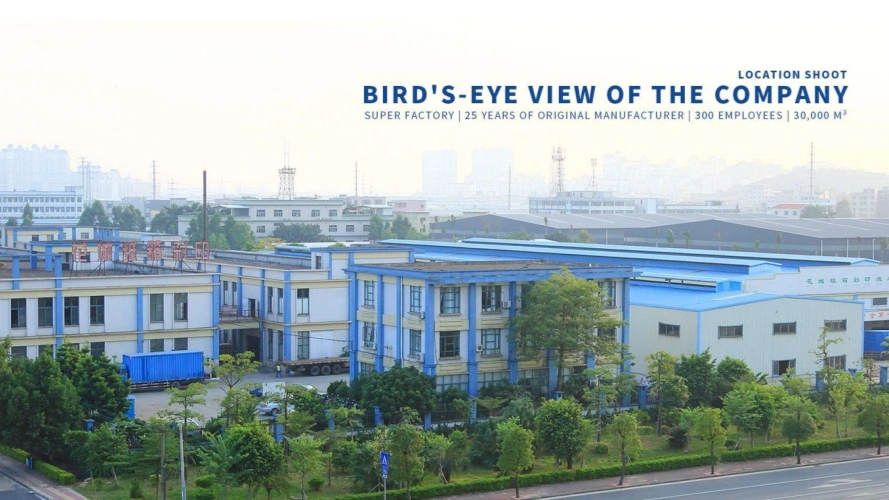
UK subscription box brands seeking a reliable manufacturing partner will find comprehensive solutions at Fetching Printing. Our facility spans 50,000 square meters with over 300 skilled employees and cutting-edge production equipment designed to meet diverse packaging requirements. We specialize in creating custom packaging solutions that enhance the unboxing experience crucial to subscription box success. Our team of experienced packaging engineers provides end-to-end support from initial design concepts through final delivery, ensuring your subscription box packaging meets both functional requirements and brand aesthetic standards. With certifications including ISO9001-2015, FSC, and Disney authorization, we maintain the quality standards essential for international subscription commerce. Contact our team at support@fetchingprinting.com to discuss how we can support your subscription box supplier requirements and help scale your business efficiently.
References
1. Chen, L. & Williams, M. (2023). Global Subscription Commerce Market Analysis: Regional Production Trends and Strategic Partnerships. International Journal of Supply Chain Management, 15(3), 78-94.
2. Thompson, R., Zhang, W. & Davies, S. (2024). Quality Assurance in Cross-Border Manufacturing: Best Practices for UK-China Production Partnerships. Manufacturing Strategy Review, 28(2), 156-173.
3. UK Subscription Box Association. (2024). Annual Industry Report: Market Growth and Manufacturing Trends. London: UKSBA Publications.
4. Anderson, K. & Liu, H. (2023). Sustainable Manufacturing Practices in Chinese Export Industries: Environmental Compliance and International Standards. Journal of International Business Strategy, 41(4), 203-221.
5. Roberts, J., Wang, P. & Mitchell, A. (2024). Technology Integration in Chinese Manufacturing: Implications for Global Supply Chain Partners. Supply Chain Innovation Quarterly, 12(1), 45-62.
6. European Subscription Commerce Council. (2023). Cross-Border Production Risk Management: Guidelines for European Brands Operating in Asian Markets. Brussels: ESCC Research Division.