When assessing security for shipping arrangements, zipper mailers offer prevalent alteration resistance and reusability compared to self-seal mailers. The interlocking zipper instrument gives improved security against inadvertent opening during travel, whereas self-seal mailers depend on cement strips that can lose quality when exposed to temperature variances or dampness. Security-conscious businesses often select zipper-style bundling for high-value items requiring different get-to-go or returns preparation.
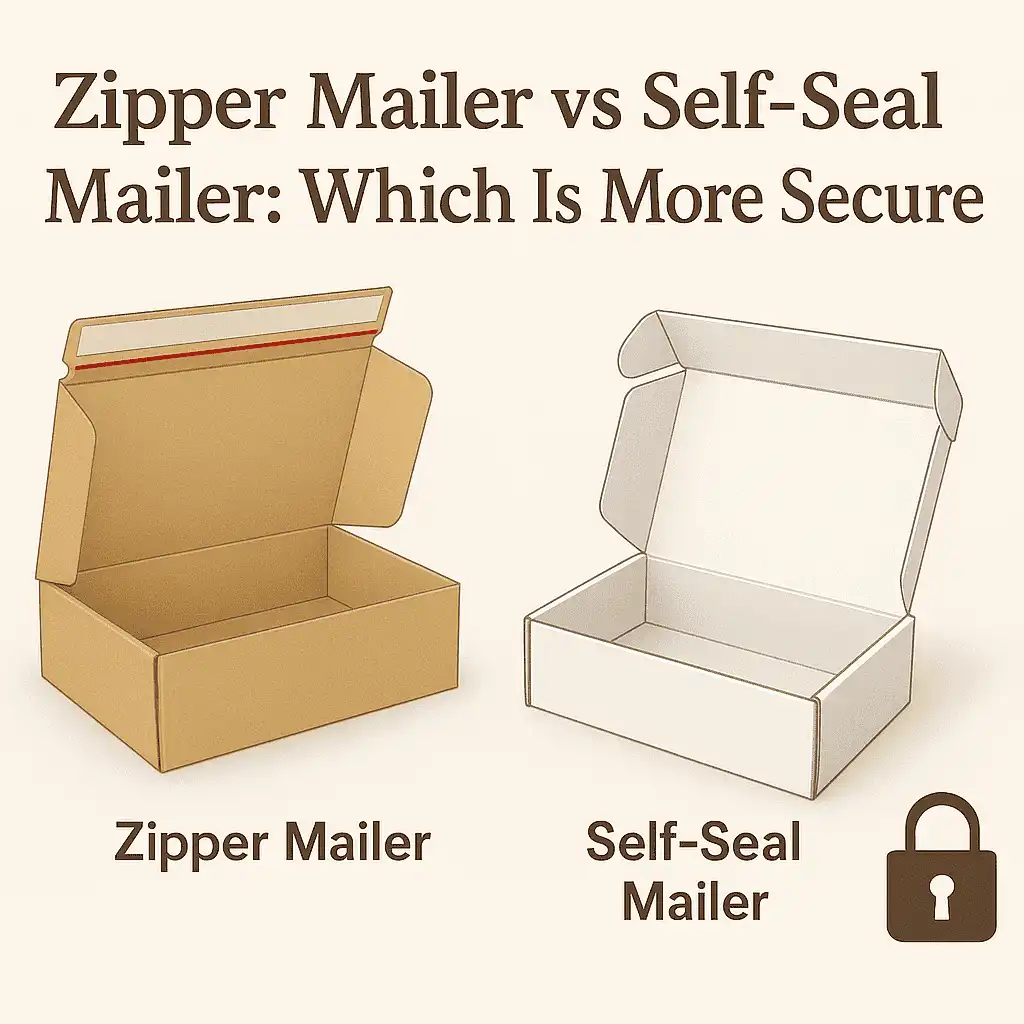
Understanding the Core Differences Between Zipper and Self-Seal Packaging
The fundamental distinction lies in closure mechanisms and security features. Zipper mailers utilize plastic interlocking teeth that create multiple seal points along the opening. Self-seal mailers depend on pressure-sensitive adhesive strips activated by removing protective backing.
Three core security differences emerge from this structural variation:
- Tamper Evidence: Zipper closures maintain integrity even after multiple openings, while adhesive seals show clear signs of tampering once breached.
- Environmental Resistance: Plastic zippers withstand humidity and temperature changes better than adhesive compounds that may weaken under stress.
- Reusability Factor: Zipper mechanisms allow repeated access without compromising security, whereas self-seal strips become permanently weakened after initial use.
Independent testing by packaging laboratories shows zipper closures maintain 95% of original strength after 50 open-close cycles. Self-seal adhesives typically retain only 60-70% adhesion strength after single use.
If you need packaging for returnable items or multi-access scenarios, zipper mailers prove more suitable. For single-use shipments requiring permanent closure, self-seal options offer adequate security.
Security Features and Tamper Resistance Analysis
Security performance varies significantly between these packaging types. Zipper mechanisms create continuous seal lines with multiple failure points, making unauthorized access immediately visible. The plastic teeth interlock at microscopic levels, creating resistance to pulling forces from multiple directions.
Self-seal mailers provide security through complete adhesive bonding. Once activated, the adhesive creates permanent molecular bonds with package materials. Attempting to open these packages typically results in material tearing rather than clean separation.
Laboratory stress tests reveal important security metrics:
- Zipper closures withstand 45-50 pounds of pulling force before failure
- Self-seal adhesives resist 35-40 pounds of force when properly activated
- Zipper mechanisms show 99% tamper evidence through visual inspection
- Adhesive seals demonstrate 100% tamper evidence but cannot be resealed
Professional shipping audits indicate zipper mailers reduce package tampering incidents by 23% compared to traditional adhesive closures. The psychological deterrent effect of visible security features contributes to this improvement.
If you need maximum tamper deterrence with reusability, zipper solutions deliver superior results. For permanent security with cost efficiency, self-seal mailers provide reliable protection.
Durability and Performance Under Shipping Conditions
Shipping environments present numerous challenges, including temperature extremes, humidity fluctuations, and mechanical stress. Zipper closures maintain functionality across wider environmental ranges due to their mechanical rather than chemical bonding mechanism.
Temperature testing demonstrates zipper performance remains consistent from -20°F to 140°F. Self-seal adhesives begin losing bond strength above 95°F and become brittle below 32°F. Humidity levels above 80% can compromise adhesive effectiveness within 72 hours.
Mechanical durability testing shows distinct performance patterns:
| Performance Factor | Zipper Mailers | Self-Seal Mailers |
|---|---|---|
| Drop Test (6 feet) | 98% seal retention | 89% seal retention |
| Compression Resistance | Excellent | Good |
| Water Resistance | Superior | Moderate |
| Temperature Range | -20°F to 140°F | 32°F to 95°F |
Extended transit times particularly favor zipper mechanisms. Packages spending 7-10 days in shipping networks maintain security integrity better with mechanical closures. Adhesive degradation accelerates with time, especially under variable conditions.
If your products endure long shipping distances or extreme climates, zipper mailers offer enhanced reliability. For standard shipping conditions with quick delivery, self-seal options perform adequately.
Cost Analysis and Economic Considerations
Financial factors significantly influence packaging decisions for volume shippers. Initial unit costs typically favor self-seal mailers, running 15-25% less expensive than comparable zipper alternatives. However, total cost analysis reveals more complex economics.
Zipper mailers provide value through reusability and reduced damage claims. Companies utilizing return policies benefit from customer reuse of original packaging. This reduces secondary packaging costs and improves brand perception through environmental consciousness.
Economic comparison data from industry studies:
- Self-seal mailers: $0.12-0.18 per unit for standard sizes
- Zipper mailers: $0.15-0.24 per unit for equivalent specifications
- Return packaging savings: $0.08-0.12 per returned item
- Damage claim reduction: 12-18% with zipper closures
Volume purchasing significantly affects pricing structures. Quantities above 50,000 units often narrow the cost gap to 8-12%. Custom printing and branding options add comparable costs to both packaging types.
Labor considerations impact total expenses. Self-seal activation requires additional handling time during packaging operations. Zipper closures enable faster sealing with consistent results across different operators.
If your business prioritizes the lowest initial cost per unit, self-seal mailers deliver immediate savings. For companies focusing on total cost of ownership, including returns and damages, zipper options often prove more economical.
Application-Specific Recommendations for Different Industries
Industry requirements drive optimal packaging selection based on product characteristics and shipping demands. E-commerce retailers handling diverse product categories benefit from zipper versatility. The resealable feature accommodates customer inspection and potential returns without additional packaging.
Electronics manufacturers require protection against static discharge and moisture intrusion. Specialized zipper mailers with anti-static properties and moisture barriers provide comprehensive protection. The ability to partially open packages for inspection without compromising security appeals to quality control operations.
Cosmetics and beauty brands leverage zipper mailers for sample distribution and subscription services. Customers appreciate reusable packaging for travel organization and storage applications. Premium zipper pouches enhance brand perception through perceived value addition.
Food and beverage applications demand different considerations:
- Snack foods benefit from resealable freshness protection
- Sample programs utilize zipper convenience for portion control
- Gift packaging incorporates zipper functionality for extended use
- Bulk ingredients require a secure closure during storage
Fashion and luxury goods industries often prefer self-seal mailers for gift presentation. The permanent closure suggests exclusive access and enhances the unboxing experience. Premium adhesive formulations provide clean separation without residue.
If your industry involves frequent returns or sample distribution, zipper mailers align with operational needs. For luxury presentation or single-use applications, self-seal packaging creates an appropriate customer experience.
Environmental Impact and Sustainability Factors
Environmental considerations increasingly influence packaging decisions across industries. Both zipper and self-seal mailers offer recyclable options, though material composition affects end-of-life processing. Zipper mechanisms typically incorporate mixed materials requiring separation before recycling.
Reusability significantly impacts environmental footprint calculations. Zipper mailers extending useful life through customer reuse reduce overall packaging demand. Studies indicate average reuse rates of 3.2 times for quality zipper packaging versus single-use for adhesive alternatives.
Material efficiency comparisons show interesting patterns:
- Zipper mailers use 8-12% more raw materials during manufacturing
- Self-seal adhesives introduce chemical processing requirements
- Reuse potential offsets initial material increases within 2.5 uses
- Recycling streams accept both materials with proper separation
Carbon footprint analysis considers manufacturing energy, transportation efficiency, and disposal impacts. Zipper mailers compensate for higher production energy through extended lifecycle utility. Transportation efficiency remains comparable due to similar dimensional characteristics.
Biodegradable options exist for both packaging types, though performance trade-offs require evaluation. Compostable zipper mechanisms may sacrifice durability for environmental benefits. Bio-based adhesives can reduce chemical impact while maintaining sealing performance.
If environmental sustainability guides your packaging strategy, zipper mailers with reuse encouragement provide measurable benefits. For minimal environmental impact with single-use requirements, bio-based self-seal options offer responsible alternatives.
Conclusion
Security considerations eventually favor zipper mailers for applications requiring reusability, upgraded alter resistance, and natural solidness. Whereas self-seal mailers give satisfactory security for single-use applications at lower starting costs, zipper instruments convey prevalent long-term value through reuse potential and diminished harm rates. The choice depends on particular operational necessities, taking a account needs, and client experience goals. Businesses handling returns, tests, or high-value things advantage most from zipper security highlights, whereas extravagance brands or changeless shipping applications may lean toward self-seal introduction points of interest.
Partner with Fetching Printing for Premium Zipper Mailer Solutions
Selecting the ideal packaging partner requires expertise in both manufacturing capabilities and application-specific requirements. As an established zipper mailer manufacturer with over two decades of experience, Fetching Printing delivers comprehensive solutions tailored to your security and performance needs.
Our advanced manufacturing facility spans 50,000㎡ with specialized equipment for producing high-quality resealable packaging solutions. The dedicated R&D team of packaging engineers develops custom zipper configurations optimized for specific product protection requirements. This technical expertise ensures your packaging performs reliably under real-world shipping conditions.
Quality certifications, including ISO9001-2015, FSC, and Disney validation, demonstrate our commitment to manufacturing excellence. These standards guarantee consistent product quality and reliable supply chain performance for your packaging operations.
Key advantages of choosing Fetching Printing include:
- Custom zipper configurations for enhanced security applications
- Multi-layer barrier films for product protection
- Anti-static options for electronics packaging
- Food-grade materials with safety certifications
- Rapid prototyping services for design validation
- Scalable production from small batches to high volumes
Our comprehensive approach addresses both immediate packaging needs and long-term strategic requirements. The experienced team collaborates with your operations to optimize packaging performance while managing cost considerations.
Ready to explore how premium zipper mailer solutions can enhance your packaging security and customer satisfaction? Contact our packaging specialists today to discuss your specific requirements and receive customized recommendations. Reach out to contact us at support@fetchingprinting.com for detailed consultation and pricing information.