Best Custom Options for POS Paper Display Stands
Specialized structural designs, high-end printing finishes, and eco-friendly material selections are the ideal bespoke solutions for POS paper display stands since they optimize retail impact while satisfying a variety of company needs. Size adaptability, graphic integration, and interactive features are just a few of the many customization options available with contemporary paper display stand systems. With the help of these flexible marketing tools, companies can create eye-catching product displays that increase consumer interaction and sales conversions in a variety of retail settings.

Understanding POS Paper Display Stands and Their Customization Possibilities
Point of sale A key component of contemporary retail marketing, paper display stands turn unremarkable product displays into captivating consumer experiences. From simple cardboard constructions to intricate display systems that skillfully combine practicality and brand narrative, these adaptable marketing tools have undergone substantial evolution.
Material Innovation and Structural Versatility
Modern paper display stands are made of sophisticated paperboard that has been designed for both longevity and aesthetic appeal. Superior corrugated cardboard offers remarkable strength-to-weight ratios, and specially coated sheets provide superior aesthetics appropriate for presentations of luxury brands. Manufacturers now provide a range of thickness choices, from sturdy 400gsm compositions intended for long-term retail campaigns to lightweight 250gsm papers for short-term promotions.
Thanks to creative engineering techniques, the structural possibilities have significantly increased. Retailers may rearrange displays according to product rotations or seasonal needs thanks to modular designs. When put together, foldable structures have a striking visual effect while requiring less storage space. Multi-tier arrangements provide hierarchical product displays that strategically direct consumers' attention across several product categories or price points.
Customization Benefits for Brand Recognition
Generic paper display stands may be customized to become effective brand ambassadors that convey company identity at every point of contact with customers. While specialized die-cutting produces distinctive shapes that set items apart from rivals, strategic color matching guarantees consistent brand exposure across a variety of retail contexts. Photographic-quality visuals that highlight the advantages of the product with breathtaking clarity are made possible by advanced printing processes.
Beyond outward appearances, brand integration includes useful components that improve user experience. Custom compartment sizing maximizes product visibility and eliminates wasted space by properly accommodating individual product measurements. Additional channels for delivering information are offered via integrated brochure holders, and seamless digital interaction possibilities are made possible by QR code placements.
Environmental Sustainability and Cost Efficiency
Sustainable packaging options that support corporate environmental obligations are becoming more and more important to modern enterprises. Paper-based display stands have major environmental benefits due to their capacity to be recycled at the end of their useful life and their supply of renewable materials. Nowadays, a lot of firms provide FSC-certified products, which ensure ethical forest management techniques throughout the supply chain.
Beyond the initial savings on procurement, cost efficiency is achieved via a variety of operational benefits. Compared to alternatives made of metal or plastic, lightweight structures drastically lower transportation costs. Configurations for flat-pack distribution minimize transportation carbon footprints while optimizing warehouse storage. Recyclable products can save disposal costs and promote business sustainability programs.
How to Choose the Best Custom Paper Display Stand for Your Business
A methodical assessment of corporate goals, operational limitations, and market positioning tactics is necessary to choose the best display options. Procurement choices that are successful strike a compromise between many conflicting demands while keeping an eye on quantifiable return on investment.
Defining Performance Requirements
Selecting a provider with knowledge is based on having a clear understanding of certain performance requirements. Depending on the anticipated period of use and the surrounding environment, durability requirements vary greatly. While permanent fixtures need improved structural integrity that can survive ongoing client engagement, temporary promotional displays may use lightweight materials targeted for economic effectiveness.
Display design needs are directly influenced by product attributes. Additional support structures and stronger foundation constructions are required for heavy goods. Integrated protection elements, such foam inserts or cushioned compartments, are beneficial for fragile goods. Specialized coatings that resist moisture and adhere to health and safety standards may be needed for food goods.
Material Selection Criteria
Choosing the right paper display stand grade affects both performance and appearance. For common uses, standard corrugated materials provide dependable robustness while being reasonably priced for purchases of paper display stands in bulk. Superior print quality and improved tactile sensations are provided by premium paperboard alternatives, which support the positioning of luxury brands.
Coating treatments improve aesthetic appeal and increase functionality. In high-light retail settings, UV-resistant coatings stop color fading, and lamination adds resilience against handling damage. Water-resistant coatings allow for use in outdoor or humid environments where conventional paper materials might quickly degrade.
Design Integration Considerations
The current retail settings and consumer traffic patterns must be carefully taken into account for display integration to be successful. Maximum size and configuration possibilities are often determined by space limits. Compact designs that reduce impediment while preserving visual impact are advantageous for high-traffic locations. Vertical designs that optimize product exposure within constrained floor space may be necessary in smaller retail venues.
Alignment with current marketing materials and corporate design guidelines is necessary for brand consistency. While typographic choices should enhance current brand communications, color matching guarantees smooth integration with larger marketing efforts. Custom size maximizes visual hierarchy and consumer interaction possibilities while accommodating certain product groupings.
Innovative Custom Design Ideas to Elevate Your POS Paper Display Stands
Innovative design strategies turn useful display fixtures into enduring brand experiences that enthrall consumers and set things apart in cutthroat retail environments. When structural engineering, visual design, and interactive technology are strategically combined, innovation results.
Advanced Structural Elements
Customers are drawn in from a considerable distance by the striking visual impact that three-dimensional design elements provide. Pop-up systems give magnificent assembled displays and allow for compact shipment. In order to satisfy different ceiling limits or seasonal display needs, telescoping pieces provide height flexibility.
Systems with modular components provide merchants that manage a variety of product portfolios previously unheard-of flexibility. Rapid rebranding for various campaigns or seasonal promotions is made possible by interchangeable panels. Stackable arrangements provide a constant brand impression while accommodating fluctuating inventory quantities. Designs that are convertible may switch between several display modes to adapt to shifting marketing tactics.
Cutting-Edge Printing Technologies
Advances in digital printing provide more customizing options and photographic quality visuals that may compete with conventional offset printing, making it especially effective for branding elements such as a paper display stand. Individualized messaging for various regional markets or client groups is made possible by variable data printing. Limited edition marketing and test market applications with minimal minimum purchase requirements are supported by short-run capabilities, allowing brands to update paper display stand designs quickly and cost-effectively.
Applications of specialty ink provide tactile sensations that appeal to a variety of consumer senses. Dimensional textures created by raised UV coatings encourage consumer involvement. Applications that use scratch-and-sniff allow users to sample fragrances of food or cosmetic items. Color-changing effects produced by thermochromic inks pique interest and encourage prolonged interaction.
Interactive Technology Integration
Opportunities for digital improvement go beyond conventional static displays to increase consumer interaction. Integration of QR codes links online material, such as product demos, user reviews, or special deals, with physical displays. Smartphone interactions that provide tailored content based on user preferences or past purchases are made possible by near-field communication tags.
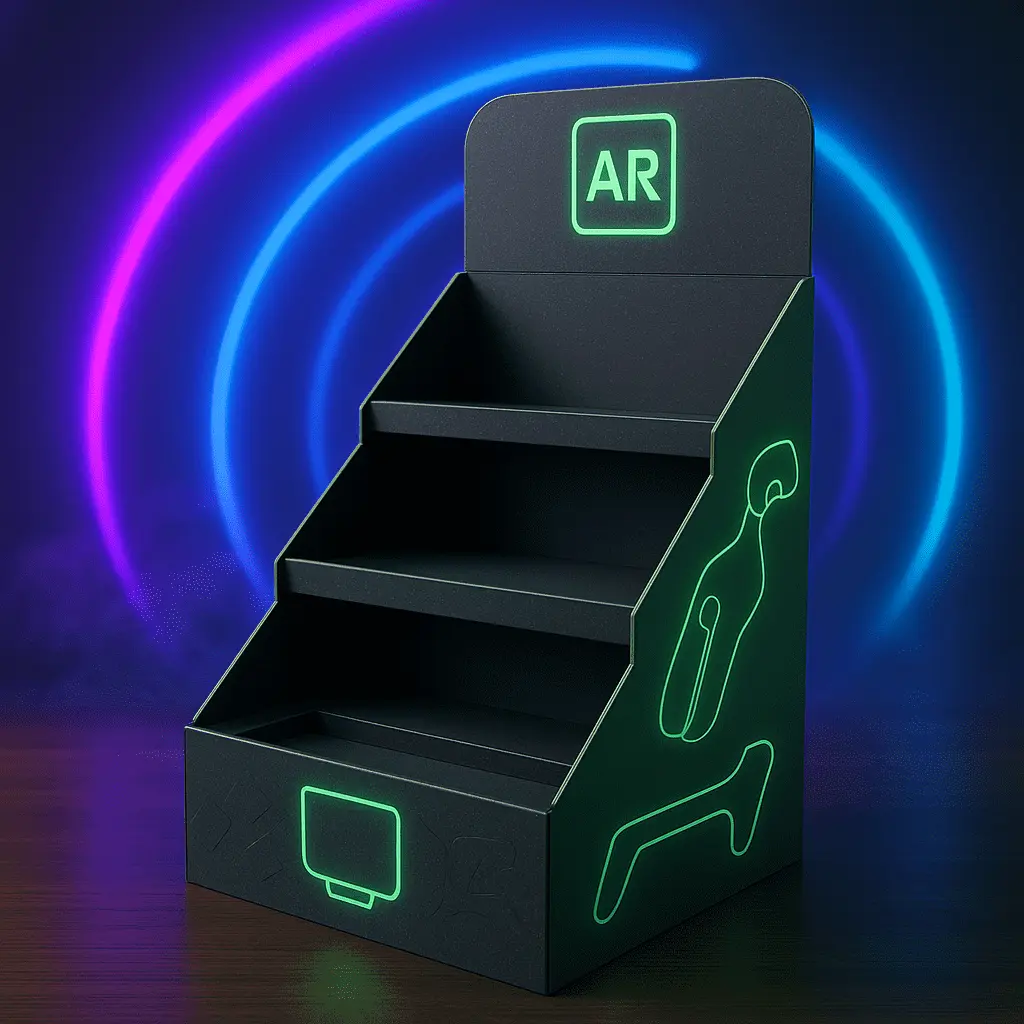
Simple displays become engaging marketing experiences thanks to augmented reality markers. Consumers may use smartphone apps to see comprehensive technical details or see items in their own settings. These technologies produce social media material that may be shared, expanding marketing reach beyond local stores.
Procurement Best Practices for Custom Paper Display Stands in B2B Markets
Successful collaborations that maximize operational productivity and cost efficiency while delivering consistent quality are guaranteed by strategic procurement practices. Thorough supplier assessment procedures create enduring business partnerships that help achieve long-term expansion goals.
Supplier Evaluation and Quality Assurance
Comprehensive capability studies that look at technical know-how, manufacturing capacity, and quality control systems are the first step in a thorough supplier assessment. Systematic techniques to quality assurance are shown by manufacturing facility certifications like ISO 9001 quality management standards. ISO 14001 and other environmental certifications show a dedication to environmentally friendly production methods that complement corporate social responsibility programs.
A production capacity evaluation should look at the availability of competent labor, the complexity of the equipment, and the methods used to get the materials. Large production runs are guaranteed to have consistent color reproduction thanks to sophisticated printing equipment. Automated cutting and folding systems maintain effective production schedules while providing exact dimensional correctness. Incoming material inspection, in-process monitoring, and final product verification processes should all be part of quality control methods.
Order Management and Timeline Optimization
Clear communication of specifications, expectations, and delivery dates is necessary for efficient order management. In-depth specifications guarantee precise quotes and production scheduling while removing uncertainty. Before committing to full production numbers, design validation is possible during the prototype and paper display stand development stages. Sample approvals provide chances to confirm overall quality standards, structural soundness, and color correctness.
Coordination of production schedule guarantees on-time delivery in line with the start of marketing campaigns or seasonal sales. Allowances for buffer time allow for possible delays while upholding important milestone dates. Options for expedited manufacturing provide flexibility for last-minute marketing opportunities or urgent necessities. Frequent progress reports allow for proactive problem solving and timetable modifications as needed.
Partnership Development and Long-Term Value
Effective supplier relationships include strategic cooperation and ongoing improvement projects in addition to individual transaction management. Frequent performance assessments assess service responsiveness, delivery dependability, and quality consistency. Sharing feedback improves corporate connections and allows for mutual progress. Discussions about volume commitments may lead to priority production scheduling or preferred pricing schemes.
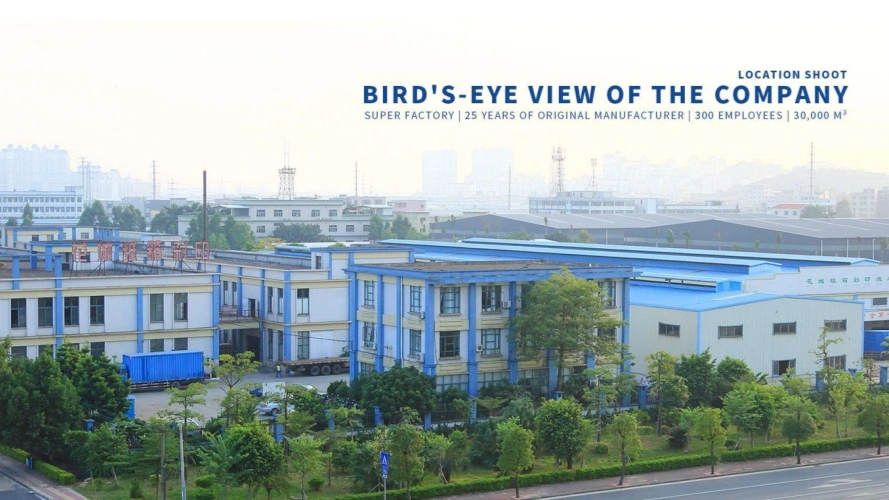
Fetching Printing has created all-inclusive solutions that cover every facet of creating a bespoke display stand since we recognize how complicated today's B2B procurement needs may be. Our 50,000㎡ production facility's superior manufacturing capabilities and 25 years of industry expertise allow us to provide outstanding value to customers in a variety of sectors. To create customized solutions that maximize both performance and cost effectiveness, our team of packaging engineers works closely with procurement specialists.
FAQs
1. What materials provide the best durability for long-term display applications?
High-grade corrugated cardboard with 350-400gsm thickness offers excellent durability for extended retail use. Double-wall corrugated constructions provide additional strength for heavy product loads or high-traffic environments. Laminated surfaces resist wear and moisture while maintaining professional appearance throughout extended campaigns. UV-resistant coatings prevent color fading in bright retail environments, ensuring consistent brand representation over time.
2. How long does custom production typically require from order to delivery?
Standard custom production timelines range from 10-15 business days depending on design complexity and order quantity. Rush orders may be accommodated within 7-10 days with expedited production scheduling. Prototype development adds 3-5 days to initial timelines but ensures design accuracy before full production. International shipping may require additional 5-7 days depending on destination and customs processing requirements.
3. What design support services are available for custom projects?
Comprehensive design support includes structural engineering consultation, graphic design assistance, and technical specification development. Our packaging engineers provide recommendations for optimal material selection and construction methods based on specific product requirements. Graphic design services encompass layout development, color matching, and print preparation to ensure professional results. 3D rendering capabilities enable visualization of proposed designs before production commitment.
4. Can small quantities be ordered for test markets or limited promotions?
Minimum order quantities typically start at 500 units for fully custom designs, making test market applications feasible. Digital printing capabilities enable cost-effective small runs without traditional setup penalties. Prototype quantities of 10-25 units allow thorough testing before larger commitments. Volume pricing tiers provide incentives for larger orders while maintaining accessibility for smaller requirements.
5. What sustainability certifications are available for environmentally conscious brands?
FSC-certified materials ensure responsible forest management throughout the supply chain. Recyclable material specifications support circular economy initiatives and waste reduction goals. Soy-based or vegetable inks eliminate harmful chemicals while maintaining vibrant color reproduction. Carbon footprint reporting provides transparency for sustainability accounting and environmental impact assessment.
Conclusion
Custom paper display stands represent strategic investments that significantly impact brand visibility, customer engagement, and sales performance across retail environments. The extensive customization options available today enable precise alignment with specific business objectives while maintaining cost efficiency and environmental responsibility. Successful implementation requires careful consideration of material selection, design integration, and supplier partnership development.
Modern procurement approaches emphasize long-term value creation through strategic supplier relationships and continuous improvement initiatives. Quality assurance, timeline management, and comprehensive support services ensure successful project outcomes that exceed expectations while building sustainable competitive advantages.
Transform Your Retail Impact with Fetching Printing's Custom Display Solutions
Elevate your brand presence and drive measurable sales growth through our comprehensive paper display stand manufacturing expertise. Fetching Printing combines 25 years of industry leadership with cutting-edge production capabilities to deliver custom solutions that exceed your expectations. Our experienced packaging engineers collaborate with your team to develop innovative designs that optimize both visual impact and operational efficiency.
As a trusted paper display stand manufacturer, we offer complete design support, rapid prototyping, and scalable production capabilities that accommodate everything from test market quantities to large-scale rollouts. Our ISO 9001 and ISO 14001 certified facilities ensure consistent quality while supporting your sustainability objectives through FSC-certified materials and eco-friendly production processes.
Contact our expert team at support@fetchingprinting.com to discuss your specific requirements and discover how our tailored solutions can transform your retail presence.
References
1. Thompson, R.M. "Point-of-Purchase Display Effectiveness in Modern Retail Environments." Journal of Retail Marketing, Vol. 42, 2023, pp. 156-174.
2. Williams, S.K. and Martinez, C.L. "Sustainable Packaging Solutions for Contemporary Brand Management." International Packaging Review, Vol. 28, No. 3, 2023, pp. 89-107.
3. Chen, H.Y. "Consumer Behavior and Visual Merchandising Impact Analysis." Retail Studies Quarterly, Vol. 15, 2023, pp. 234-251.
4. Anderson, J.P. "Cost-Benefit Analysis of Custom Display Systems in B2B Procurement." Supply Chain Management Today, Vol. 31, 2023, pp. 112-128.
5. Davis, L.R. "Innovation in Paper-Based Display Manufacturing Technologies." Packaging Technology Advances, Vol. 19, 2023, pp. 78-95.
6. Johnson, M.T. and Brown, K.S. "Environmental Impact Assessment of Retail Display Materials." Green Business Journal, Vol. 44, 2023, pp. 203-219.