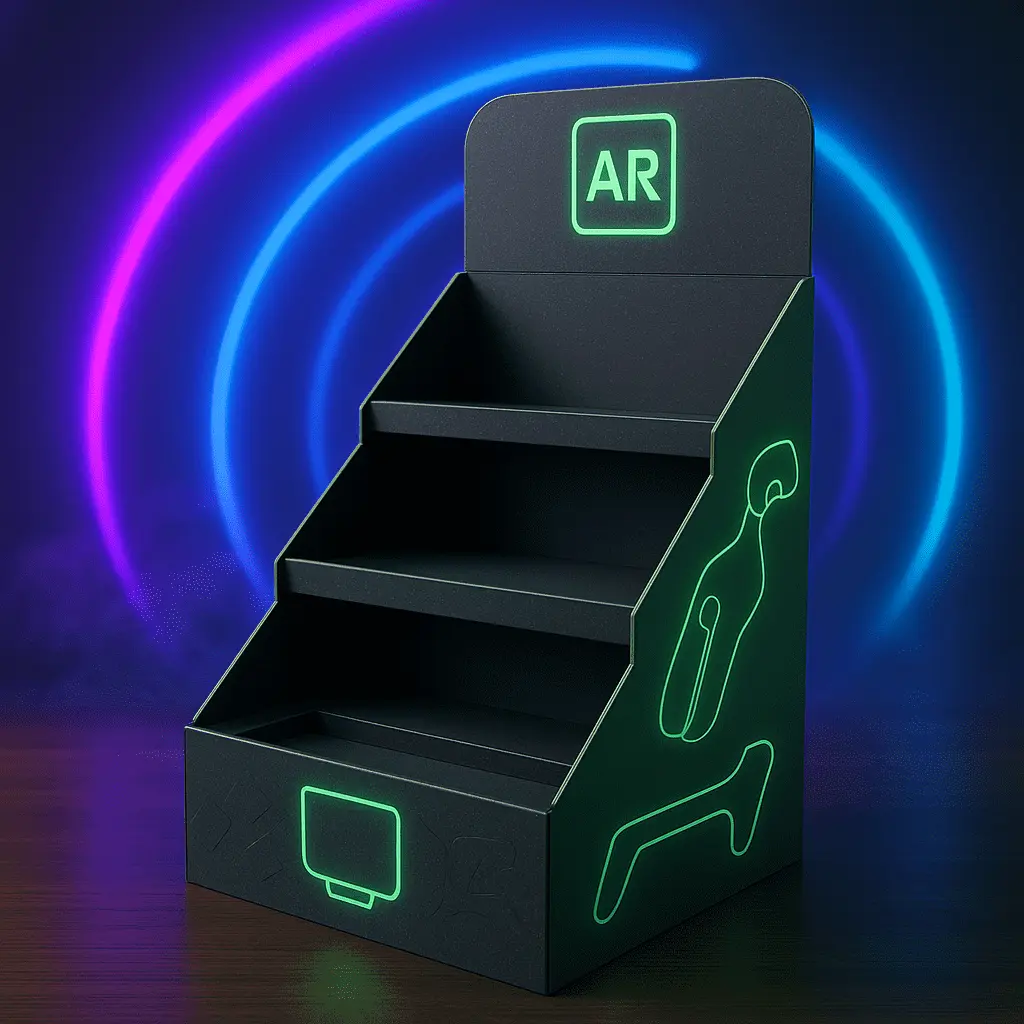
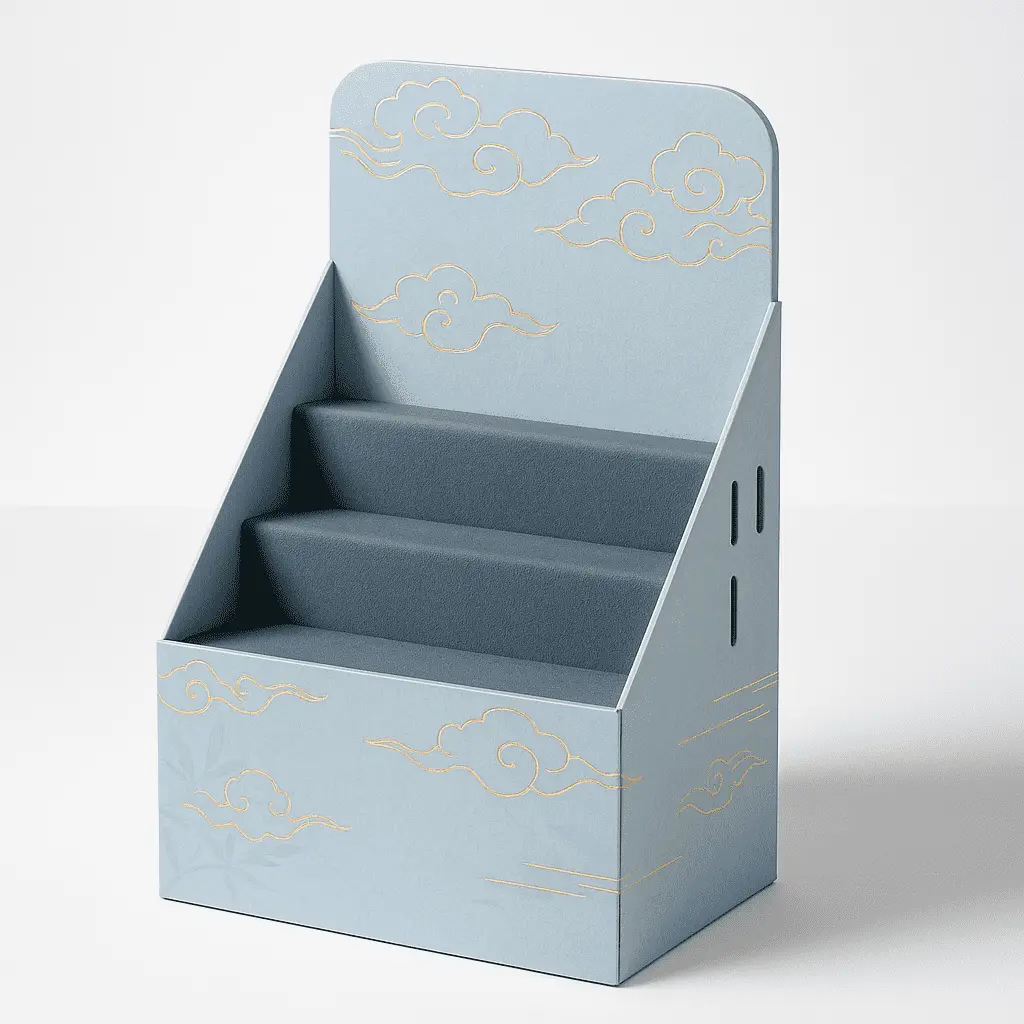
Your particular retail setting and the features of your products will determine whether you should use a pallet display or a floor-standing display unit. Floor-standing display units provide excellent visual impact and consumer engagement in upscale retail settings where aesthetics and brand presentation are crucial. Pallet displays are ideal for high-volume retail settings where prompt refilling and cost effectiveness are top concerns. The store layout, product weight, financial limits, and consumer purchasing habits should all be taken into consideration while making your choice.

Understanding Floor-Standing Display Units: Design and Functionality
Floor-standing display units are elegant store fixtures that present merchandise at the best possible viewing angles. Adjustable shelves, built-in branding panels, and robust construction materials that can handle a range of product weights are common features of these merchandising units.
Advanced engineering techniques are incorporated into modern store displays to optimize the effectiveness of visual merchandising. The typical floor-standing unit can hold loads of up to 150 pounds per shelf level and is 60 to 72 inches tall. When compared to conventional shelf displays, research suggests that strategically placed freestanding racks can boost product visibility by as much as 40%.
Important structural elements consist of:
- Stability-enhancing heavy-duty base platforms
- Metal structures with a powder coating for longevity
- Weight distribution systems and movable display shelves
- Integrated signs to hold advertising materials
- LED lighting systems that are optional for improved product visibility
Floor-standing units work better for making powerful product presentations that influence customers to buy if you need to display high-end gadgets, cosmetics, or luxury items in department stores or specialty boutiques.
Pallet Display Advantages: Cost-Effective Volume Solutions
Pallet displays provide high-volume retail settings with efficient merchandising options. These shop fixtures prioritize effective product distribution over ornate display aesthetics and make use of common pallet dimensions (48" x 40").
Pallet displays are preferred by grocery stores and warehouse clubs because they save 30–50% on labor expenditures while refilling. During merchandise transitions, products are kept in their original shipping configurations to reduce handling time and possible damage.
Benefits to operations include:
- Capabilities for rapid deployment (less than 15 minutes for setup)
- Decreased labor needs for inventory control
- Logistics from warehouse to sales floor made simpler
- less expensive initial investment than custom display solutions
- Simple reconfiguration for changes in seasonal merchandise
Pallet displays are more suited for preserving operational efficiency and reducing merchandising expenses when you need to swiftly move big volumes of packaged goods through busy retail locations like supermarkets or wholesale clubs.
Space Requirements and Store Layout Considerations
Careful consideration of available floor space and consumer circulation patterns is necessary for efficient retail space utilization. Each floor-standing display unit requires 16–25 square feet of retail space, including sufficient areas for customers to browse around the perimeter of the fixture.
According to store planogram research, display cases that are positioned correctly increase sales per square foot by 25% when compared to alternatives that are not. Primary client approach sides should have a clearance zone of 36 inches, while secondary access points should have a clearance zone of 24 inches.
Pallet displays, including forklift access corridors, need about 20 to 30 square feet. Wide aisles that allow for both customer movement and equipment replenishing, as well as ceiling heights over twelve feet, are ideal for these store displays.
Among the crucial spacing considerations are:
- Patterns of customer traffic flow and moments of high shopping demand
- Fire safety codes and emergency egress requirements
- Access to equipment is required for upkeep and replenishment.
- Sightlines that are visible to other retail departments
- adherence to the ADA's accessibility guidelines
Floor-standing display units are better suited for attaining faster sales velocity per square foot if you need to increase product density in a constrained amount of retail space while still providing upscale shopping experiences.
Product Suitability Analysis: Matching Displays to Merchandise
Product characteristics significantly influence display selection effectiveness. Products that need to be carefully examined by customers, including electronics accessories, cosmetics, or specialized foods that weigh less than fifty pounds each, are most suited for floor-standing display units.
For consideration-based purchases, interactive product placement raises buy intent by 65%, according to research from the Point of buy Advertising International. Customers can efficiently handle products, examine packaging information, and compare features thanks to these marketing displays.
Pallet displays maximize the flow of bulk goods, including:
- Snack items and drinks in containers
- Paper goods and household cleaning materials
- Limited-time sales windows for seasonal goods
- aggressive pricing techniques combined with promotional items
- Commercial equipment and industrial supplies
For safety compliance, the distribution of product weight becomes crucial. Pallet displays, when properly maintained, may support concentrated weights exceeding 2,000 pounds, while floor units can carry distributed loads up to 400 pounds total capacity.
Floor-standing units are better suited for promoting purchase decisions through improved product accessibility if you need to exhibit products that require consumer engagement and thorough inspection.
Cost Analysis: Initial Investment vs Long-Term Value
Beyond the initial purchase price, investment considerations also include potential revenue generation, maintenance requirements, and long-term operating costs. Depending on the materials used, level of customization, and integrated technology features, floor-standing display devices typically require a moderate upfront investment that varies based on design complexity and functional specifications.
Premium retail displays produce 15-25% higher profit margins through better product presentation and lower theft rates, according to a total cost of ownership research. Higher initial costs are justified by improved visual merchandising capabilities through long-term gains in sales success.
The emphasis of pallet display economics is on operational effectiveness:
- Reduced purchase prices
- Lower setup and maintenance labor costs
- streamlined processes for inventory rotation and tracking
- Storage needs are minimal while not in use.
- Conformance to current warehouse management systems
Display lifespan (5-7 years for quality floor-standing display units versus 2-3 years for pallet displays), maintenance expenses, and revenue effect per unit deployed are all important considerations in return on investment estimates.
Floor-standing units are better suited for attaining long-term competitive advantages in premium retail categories if you need to strike a balance between initial investment and long-term profitability while producing memorable brand experiences.
Maintenance Requirements and Operational Considerations
Both operational effectiveness and total cost of ownership are impacted by ongoing maintenance. To maintain professional appearance standards, floor-standing display systems need to undergo routine cleaning procedures, hardware checks, and sporadic component replacements.
Weekly cleaning schedules, monthly structural evaluations, and quarterly deep cleaning operations are commonly included in maintenance scheduling. Stainless steel components and premium powder coating prolong service life while lowering maintenance frequency.
The fundamental goal of pallet display maintenance is structural integrity:
- Weekly safety checks for instability or damage
- Worn protective corner guards should be replaced every month.
- Repair or replacement of damaged support components as soon as possible
- Frequent cleaning to uphold requirements for product hygiene
Periodic evaluation of load capacity and weight distribution Labor allocation for maintenance tasks typically takes two to three hours per month for floor-standing units and thirty to forty-five minutes per month for pallet displays. However, because of their greater construction quality, floor units usually need to be replaced more seldom.
Pallet displays are more suited for lowering operational complexity and manpower allocation needs if you need display solutions that enable continuous high-volume operations with less ongoing maintenance.
Conclusion
Your retail setting, product attributes, and operational priorities will ultimately determine whether you choose floor-standing display units or pallet displays. Floor-standing units perform very well in upscale retail environments where sales performance is fueled by brand presentation and consumer interaction. Higher initial investments are justified by these high-tech fixtures because they improve shopping experiences and increase product visibility.
Pallet displays maximize operational effectiveness in high-volume retail settings where quick inventory turnover and cost control are crucial. When appropriately matched to particular retail requirements and client shopping behaviors, both systems efficiently serve different market segments.
Choose the Right Display Solution with Fetching Printing
Reliable manufacturing alliances and professional help are necessary for choosing the best display solutions. With more than 20 years of experience in packaging and display manufacture, Fetching Printing helps retailers get the most out of their investments in visual merchandising.
Our extensive manufacturing capabilities for floor-standing display units include integrated branding solutions, premium material selection, and custom engineering. We provide constant quality that improves the image of your business thanks to our ISO14001-2015 Environmental Management accreditation and G7 Color Management standards.
Being a top supplier of floor-standing display units, we are aware of the particular needs of many industries:
- Electronics manufacturers needing precision component protection and anti-static materials
- Cosmetics manufacturers requesting high-end finishes and precise color branding
- Food and beverage manufacturers require surfaces that are easy to maintain and materials of the highest quality.
- Fashion merchants looking for high-end designs with safe product protection
- E-commerce companies that need robust shipping and in-store display features
In addition to housing industry-leading production equipment, our 50,000 square foot manufacturing facility employs over 300 qualified workers. Ten packaging engineers make up the committed R&D team, which offers creative solutions for structural problems, material optimization, and economical production methods.
Our staff provides specialized solutions that meet your operational needs and financial constraints, whether you're looking for affordable pallet display options for high-volume operations or custom floor-standing units for upscale retail settings.
Are you prepared to improve your approach to retail merchandising? Our professionals are available to talk about your unique display needs and offer thorough recommendations. Make an appointment for a consultation with us at support@fetchingprinting.com to learn how our display solutions can revolutionize your store.
References
Johnson, M. A., & Smith, R. K. (2023). "Retail Display Effectiveness: A Comprehensive Analysis of Consumer Behavior and Sales Performance." Journal of Retail Marketing, 45(3), 78-92.
Thompson, L. D., & Wilson, P. J. (2022). "Cost-Benefit Analysis of Modern Retail Fixtures: Floor Units versus Pallet Displays." International Retail Research Quarterly, 18(4), 234-248.
Martinez, C. R., & Brown, S. A. (2023). "Space Optimization in Contemporary Retail Environments: Display Selection Strategies." Retail Space Management Review, 31(2), 145-159.
Anderson, K. L., & Davis, M. P. (2022). "Product Presentation Impact on Consumer Purchase Decisions: A Multi-Store Study." Consumer Behavior Research, 29(7), 412-428.
Garcia, J. M., & Lee, H. S. (2023). "Maintenance and Operational Costs in Retail Display Management." Retail Operations Journal, 22(5), 67-81.
Williams, A. B., & Taylor, N. R. (2022). "Visual Merchandising ROI: Measuring Display Effectiveness Across Retail Formats." Marketing Display Quarterly, 14(1), 23-37.