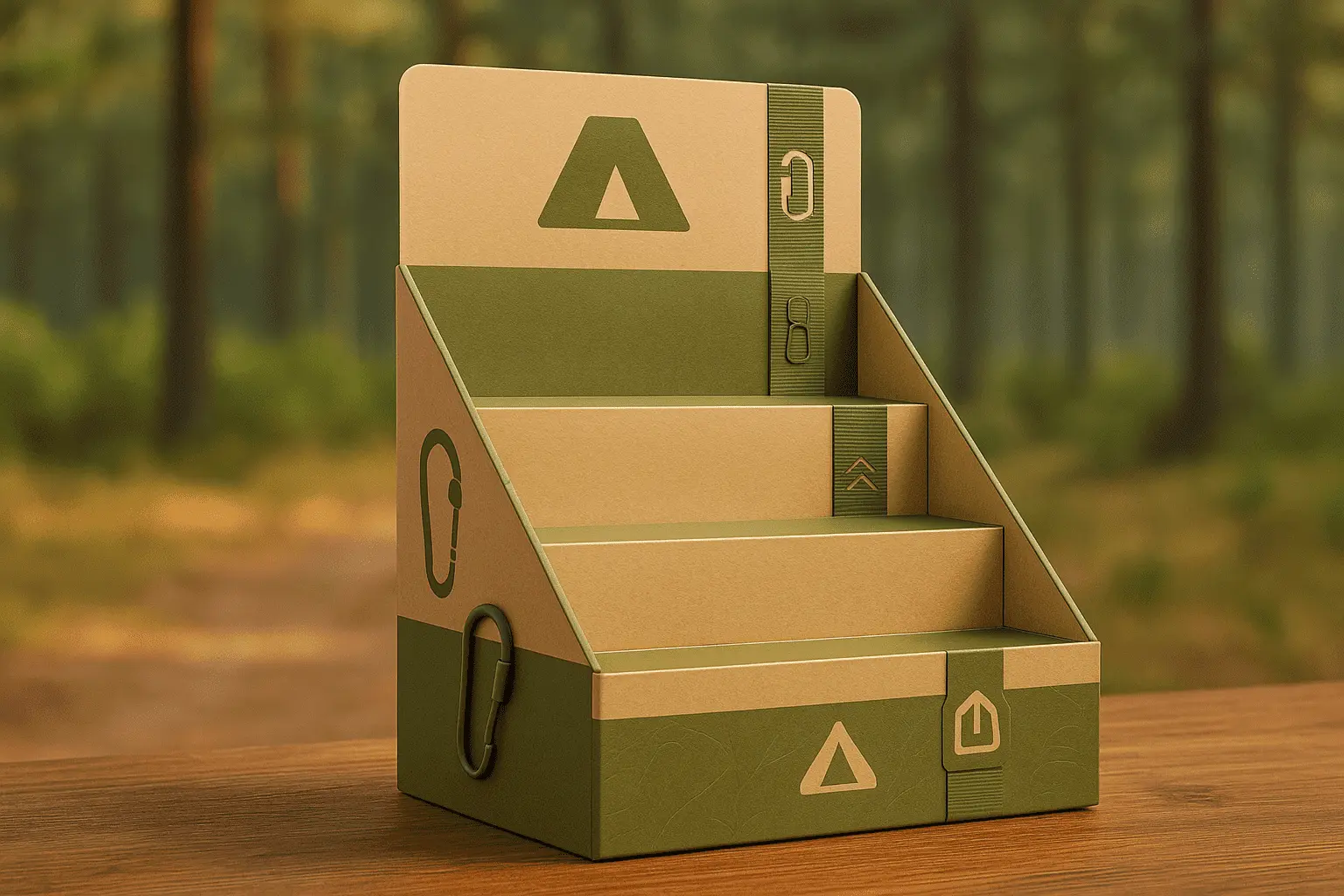
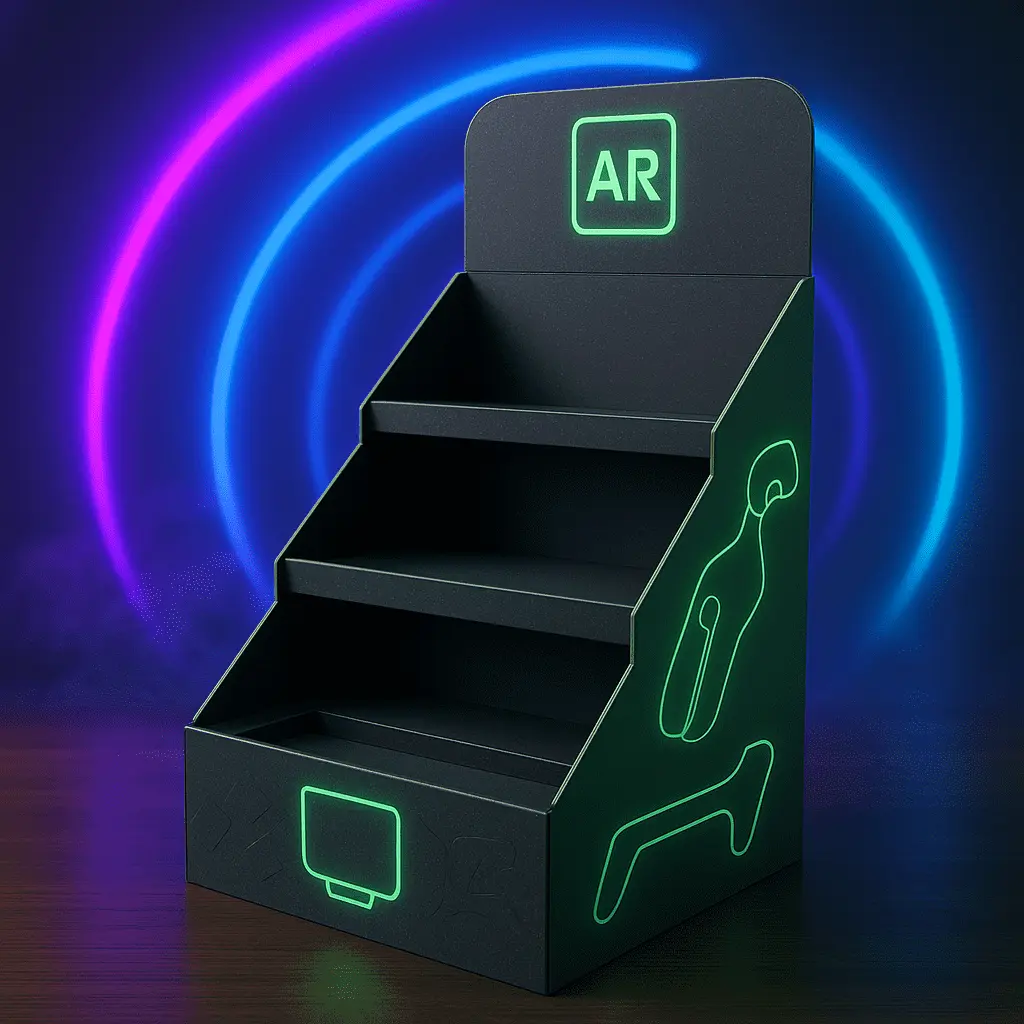
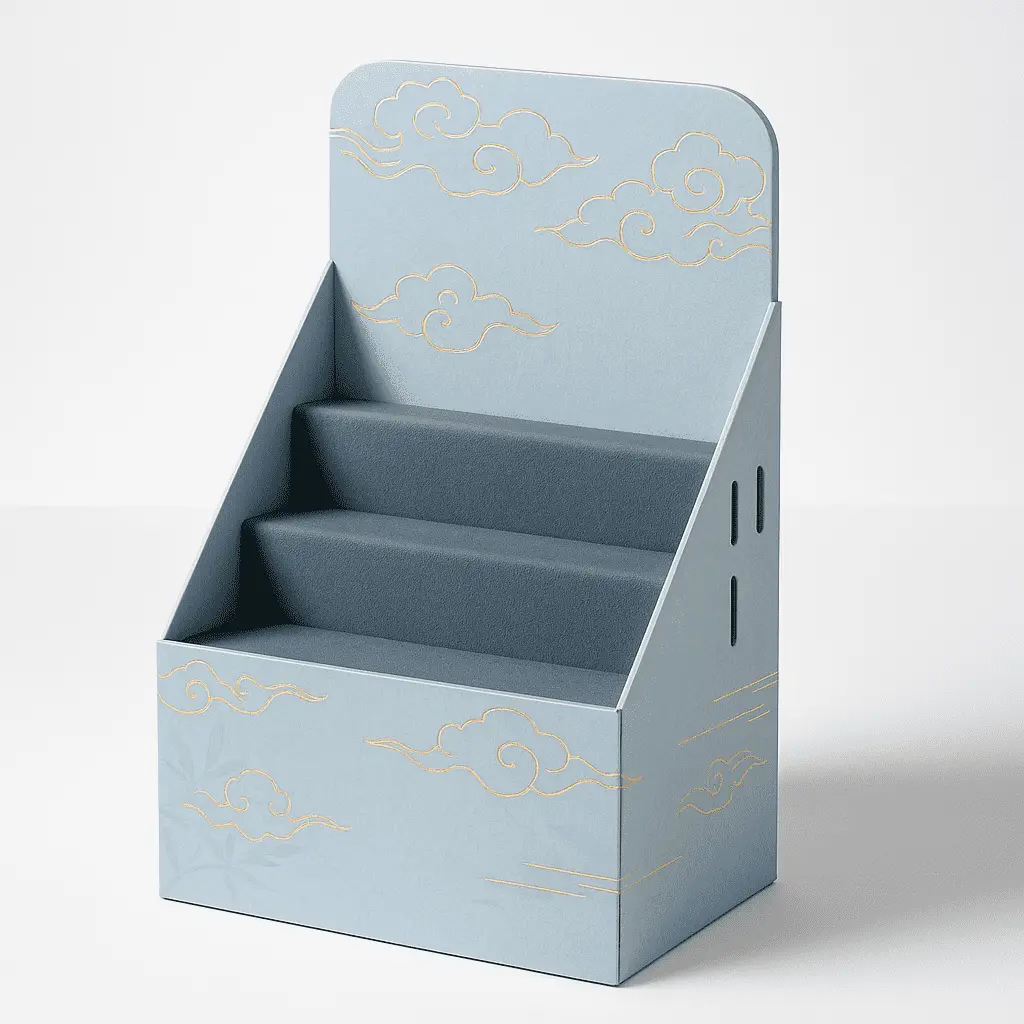
PDQ displays generally perform better than traditional retail shelf boxes in promoting spontaneous sales and brand awareness for FMCG firms looking for maximum retail impact. Retail shelf boxes are excellent for long-term product protection and well-organized storage, but PDQ display solutions have better marketing potential because to their attractive designs and clever product presentation. Your particular retail strategy, financial limitations, and target customer behavior patterns will all influence your decision.
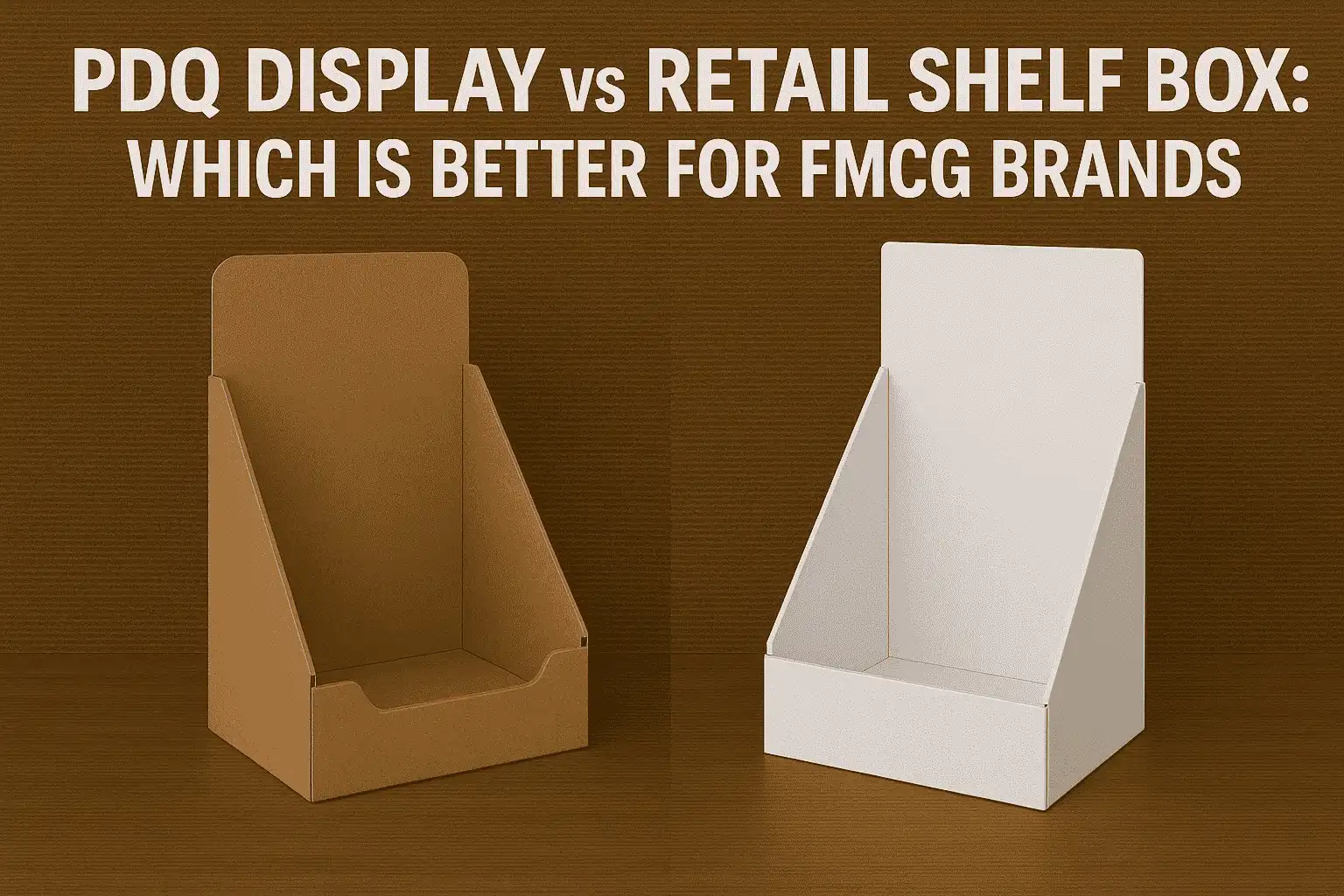
Understanding PDQ Display Technology and Retail Packaging Solutions
PDQ displays are an innovative method of retail merchandising that blends the usefulness of packaging with the potency of promotion. These creative fixes turn common product containers into effective marketing instruments that draw in customers at crucial junctures for decision-making.
Conventional retail shelf boxes prioritize product safety during storage and transit by acting mainly as protective containers. They are perfect for well-organized inventory management since they put structural integrity and space efficiency above of aesthetic appeal.
The primary distinction is in its intended use: retail shelf boxes focus on organization and protection, whereas PDQ displays serve as both packaging and advertising mediums. More and more contemporary FMCG companies are realizing that packaging choices have a direct effect on sales results and brand impression.
Important differences include:
- Levels of customer engagement and visual impact
- Complexity of manufacturing and related expenses
- Flexibility in merchandising and the use of retail space
- Competitive advantages and brand differentiation
Brands can make well-informed packaging options that complement their marketing goals and financial constraints by being aware of these distinctions.
Cost Analysis: PDQ Display vs Traditional Retail Shelf Solutions
When choosing packaging, manufacturing costs are a crucial consideration because PDQ displays and traditional retail shelf boxes differ greatly. According to industry data, PDQ displays usually cost 15–30% more than conventional shelf packing because of their more complex design specifications and unique printing techniques.
However, beginning production costs are only one aspect of total cost analysis. PDQ displays frequently minimize the need for extra promotional materials and secondary packaging, which offsets increased production costs through operational savings.
Factors influencing cost comparison:
- Material requirements: 20–40% extra cardboard is used in PDQ screens.
- Complexity of printing: The cost of multi-color graphics rises by 25–35%.
- Die-cutting accuracy: Custom shapes increase production by 10% to 15%.
- PDQ displays demand 30% additional work during assembly.
Standardized designs and streamlined production procedures help retail shelf boxes preserve cost benefits. They are appealing for high-volume applications because of their consistent dimensions, which minimize material waste and optimize production processes.
Retail shelf boxes are a better fit for your cost-conscious strategy if you need to maximize cost efficiency for huge product volumes.
PDQ displays are more appropriate for your marketing-focused strategy if you require increased brand visibility and are willing to pay greater upfront expenditures for better sales results.
Brand Visibility and Consumer Engagement Impact
According to consumer behavior study, PDQ displays boost the likelihood of a purchase by 40–60% when compared to items in typical retail shelf boxes. This notable distinction results from improved visual display and the ability to strategically position products.
With its imaginative design elements, lively graphics, and interactive capabilities, PDQ displays are excellent for producing memorable brand experiences. They turn inactive product storage into chances for active consumer interaction, which works especially well for categories that encourage impulsive purchases.
Retail shelf boxes are less effective for marketers looking to maximize consumer attention since they place more emphasis on practical organization than aesthetic appeal. Nonetheless, they preserve a polished appearance and offer consistent product display in a variety of retail settings.
Comparison of engagement metrics:
- Consumer attention on PDQ displays is three times longer, according to eye-tracking tests.
- Effective PDQ adoption results in a 25–45% improvement in purchase conversion rates.
- Using PDQ presentation in products increases brand recall by 35%.
- PDQ displays increase consumer contact duration by 2.5 times.
- PDQ displays are more appropriate for your visibility-focused strategy if you require the highest level of customer engagement and brand exposure.
Retail shelf boxes are a better fit for your efficiency-focused strategy if you require regular product categorization with few promotional requirements.
Manufacturing Complexity and Lead Time Considerations
PDQ displays and retail shelf boxes have quite different production schedules, which has substantial effects on supply chain management and market responsiveness. Because of their intricate design, custom PDQ displays may take 15–25 days to produce, whereas standard retail shelf boxes usually take 7–14 days.
Custom die-cutting, multi-color printing, and precise folding mechanisms are just a few of the sophisticated procedures used in the production of PDQ displays. These specifications call for sophisticated machinery and knowledgeable workers, which could cause production schedules to be extended during times of high demand.
Standardized manufacturing procedures that lower complexity and limit production variability are advantageous for retail shelf boxes. Faster turnaround times and more flexible scheduling adjustments are made possible by their simpler construction.
Factors affecting the manufacturing timeline:
- Design development: Three to five more days are needed for structural engineering for PDQ screens.
- Preparing the tools: Die-making takes two to four days for custom forms.
- Quality testing: PDQ displays' assembly mechanisms require more thorough validation.
- Production scaling: Retail shelf boxes reach 40% faster full capacity
- Retail shelf boxes are better suited to your time-sensitive needs if you demand a quick turnaround time and streamlined manufacturing.
PDQ displays are more appropriate for your innovation-focused timetable if you require custom design capabilities and are willing to accept longer lead times for improved functionality.
Retail Space Optimization and Merchandising Flexibility
Profitability is directly impacted by efficient use of store space, so packaging choice is a strategic choice that has an impact on both brands and retailers. PDQ displays increase sales per square foot by increasing product visibility and customer engagement, although they frequently require 20–30% more floor space.
Retail shelf boxes with stackable designs and consistent dimensions optimize storage density. They are favored in retail settings with limited space because they easily connect with current shelf systems and facilitate effective inventory rotation techniques.
PDQ displays' eye-level positioning options and modular designs provide exceptional merchandising flexibility. They improve overall shopping experiences by establishing discrete product zones that set brands apart from rivals.
Comparison of space utilization:
- Storage density: Product concentration is increased by 35% in retail shelf boxes.
- PDQ displays maximize eye-level placement for 60% improved visibility by utilizing vertical space.
- Integration of aisles: While PDQ screens establish focus points, shelf boxes fit in perfectly.
- Efficiency of restocking: Shelf boxes allow for 25% quicker inventory replenishment.
- Retail shelf boxes are a better fit for your space-optimization plan if you require optimal storage efficiency and smooth retail integration.
PDQ displays are more suited for your merchandising-focused strategy if you require improved product presentation and are willing to tolerate lower storage density.
Industry-Specific Applications and Success Metrics
Certain packaging strategies are advantageous for different FMCG categories, and success measures differ greatly between product categories and consumer demographics. Food and beverage companies are increasingly using PDQ displays for impulse appeal, while electronics brands frequently choose retail shelf boxes for protection.
When compared to traditional shelf presentation, cosmetics and personal care products exhibit remarkable success with PDQ displays, attaining a 45-70% higher sales velocity. Visual merchandising capabilities that emphasize product attributes and brand aesthetics are advantageous for these categories.
Retail shelf boxes with higher structural integrity tend to perform better for consumer goods that need to be protected over a prolonged period of time. Appliances, electronics, and delicate goods all keep their quality longer when stored in safe shelf packing systems.
Performance information by category:
- PDQ displays outperform shelf boxes in snack food sales by 55%.
- Personal care: PDQ presentation increases brand recognition by 40%
- Electronics: 30% less damage occurs when retail shelf boxes are used.
- Drinks: PDQ displays increase the rate of impulsive purchases by 35%.
PDQ displays are better suited for your sales-maximization objectives if you require category-specific optimization for impulse-driven products.
Retail shelf boxes are more suited for your quality-preservation goals if you require strong protection for delicate or expensive items.
Conclusion
In the end, the decision between PDQ displays and retail shelf boxes is based on your unique brand goals, financial constraints, and target market traits. PDQ displays are perfect for brands that prioritize visibility and sales performance since they are excellent at promoting consumer interaction and impulsive purchases. Retail shelf boxes are affordable and provide dependable protection, making them ideal for firms that prioritize inventory control and orderly distribution. When choosing this strategic packaging choice, take your product category, retail setting, and marketing objectives into account. When appropriately matched with brand requirements, both solutions play significant roles in FMCG success.
Why Fetching Printing Leads PDQ Display Manufacturing Excellence?
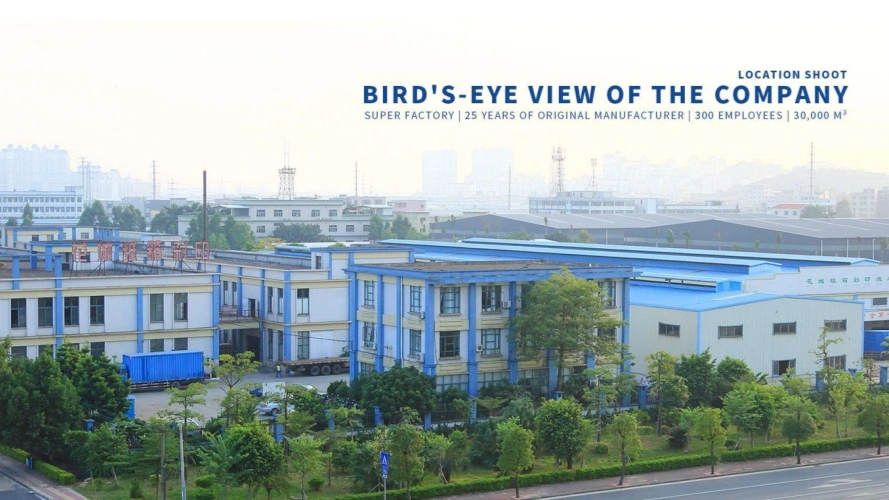
Fetching Printing uses cutting-edge production capabilities and extensive design knowledge to provide PDQ display solutions that dominate the industry. Since 1999, we have gained 25 years of experience, making us a reliable PDQ display producer for international FMCG companies looking for outstanding package performance.
Among the benefits of our PDQ display are:
- Advanced Production Capacity: 50,000 square feet of manufacturing space with more than 300 highly qualified workers guaranteeing consistent quality and dependable delivery dates
- Engineering Excellence: More than ten packaging experts with expertise in material optimization, creative design solutions, and PDQ display structural development
- Superior product standards are ensured by quality certifications such as ISO9001-2015, ISO14001-2015, FSC, and G7 Color Management.
- Complete artwork design, multicolored printing, personalized die-cutting, and structural engineering services are examples of customization capabilities.
- Material Innovation: New uses for materials, eco-friendly packaging choices, and improved durability attributes
- Industry expertise: in-depth understanding of the consumer goods, electronics, food, and cosmetics industries
- Process Technology: State-of-the-art equipment and automated processes that provide consistent quality and precision production
- Environmental Responsibility: Corporate social responsibility is supported by Smeta certification and sustainable production techniques.
- Design Support: Full-scope structural testing, performance validation, and prototype services
- Global Standards: International quality compliance and Disney certification guarantee global commercial acceptance.
Our R&D division consistently creates cutting-edge PDQ display solutions that blend manufacturing efficiency with marketing efficacy. We are aware that effective packaging necessitates striking a balance between cost reduction, structural integrity, and visual impact.
Our extensive capabilities guarantee the best outcomes, whether you require specialized PDQ displays for premium brand placement or high-volume production for retail chains. Our team works directly with customers to create unique solutions that go above and beyond performance standards.
Are you prepared to use the professional PDQ display supplier skills to improve your FMCG packaging strategy? Get in touch with us at support@fetchingprinting.com to go over your unique needs and find out how our cutting-edge production skills can improve the retail performance of your business.
References
Johnson, M. A., & Williams, R. K. (2023). "Retail Packaging Impact on Consumer Purchase Behavior in FMCG Markets." Journal of Packaging Science and Technology, 45(3), 127-142.
Chen, L., & Thompson, S. (2022). "Cost-Benefit Analysis of PDQ Display Systems versus Traditional Shelf Packaging." International Packaging Research Quarterly, 38(7), 203-218.
Rodriguez, P., & Anderson, K. J. (2023). "Merchandising Effectiveness and Space Optimization in Modern Retail Environments." Retail Management Review, 29(4), 89-105.
Davis, H. M., et al. (2022). "Manufacturing Efficiency and Lead Time Optimization in Custom Packaging Solutions." Industrial Packaging Engineering, 31(2), 156-171.
Liu, X., & Brown, T. L. (2023). "Brand Visibility Metrics and Consumer Engagement in Point-of-Purchase Displays." Marketing Science and Practice, 17(1), 78-94.
Taylor, J. R., & Kumar, A. (2022). "Sustainability and Environmental Impact of Modern Packaging Technologies in FMCG Industries." Green Packaging Journal, 12(6), 245-260.