What is a Subscription Box?
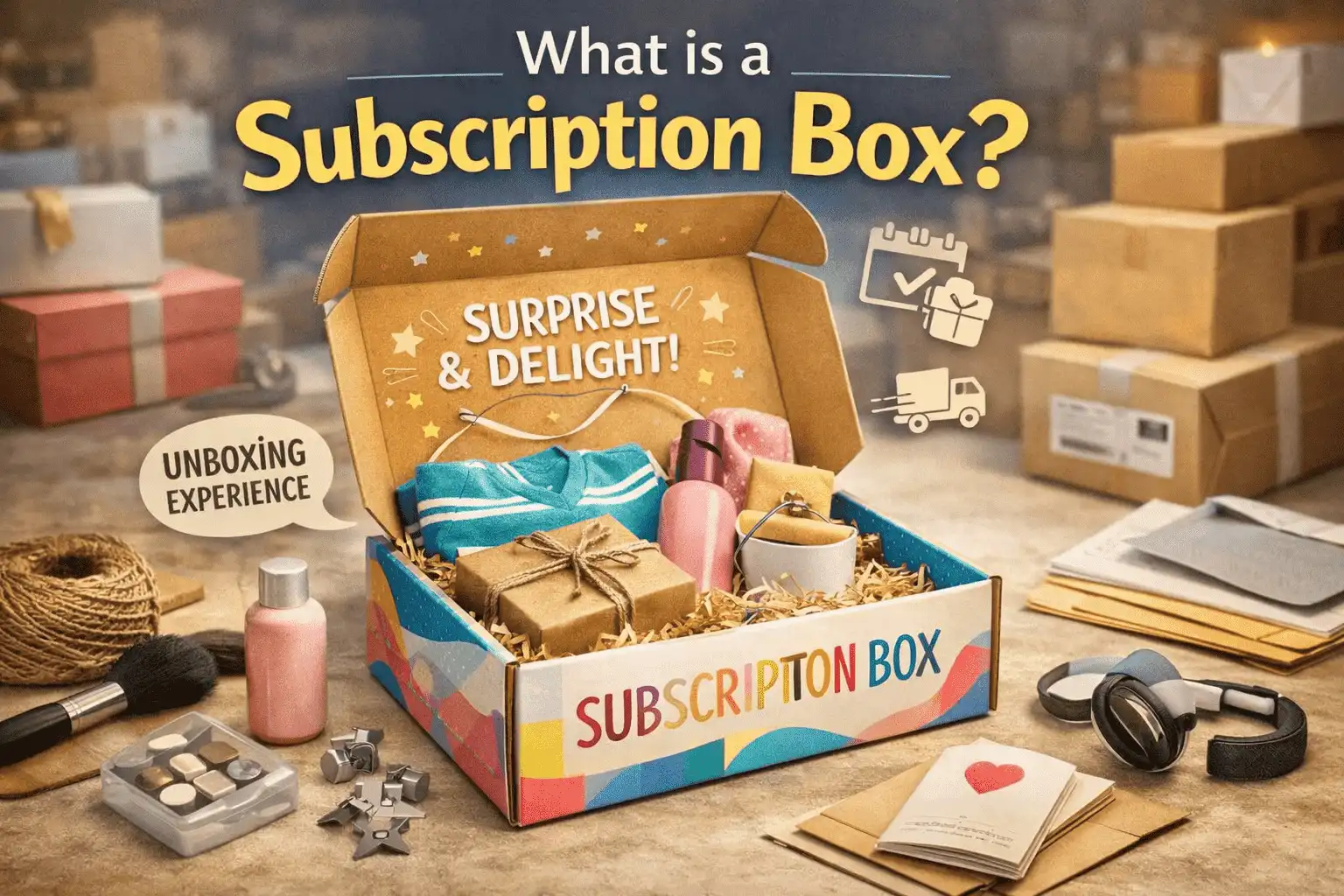
Subscription boxes are carefully chosen product packages that are sent to customers on a regular basis—monthly, weekly, or at a time that works for them—in order to save them time, help them discover new products, and get them involved with a brand. Companies that sell things online, make makeup, make food, and make consumer goods use these specialized packing solutions as a way to market their products. Instead of just being boxes for shipping, subscription boxes are strong brand interactions that increase the lifetime value of customers by giving them unique experiences. They solve important problems like decision fatigue by hand-picking options, inventory uncertainty by using repeating models, and last-mile brand dilution by making unboxing moments that people will want to share on social media and keep buying from them.
Understanding Subscription Boxes - The Basics
Subscription boxes have grown from a joke item for consumers to a smart way to sell goods to both consumers and businesses. These regular delivery systems are more than just boxes; they're a whole plan for improving the customer experience.
The Evolution of Subscription Models
In the United States alone, there are thought to be between 400 and 600 different subscription box services. The business has grown by leaps and bounds in the last ten years. This growth shows that both consumers and companies are making basic changes in how they make buying choices. Instead of making one-time purchases, users agree to long-term relationships with brands. This makes it easier for brands to make money and builds stronger relationships with customers.
The landscape is dominated by three main operating types. Curation-based services are all about discovery. They send customers new products that are a good fit for them, like beauty samples or fancy food choices. With replenishment models, things like vitamins, razors, and coffee that are used up quickly are automatically delivered, so you don't have to worry about replacing. Access-based subscriptions give loyal customers special benefits like early access to new goods or special club benefits.
Why Subscription Boxes Matter for B2B Procurement?
For people who work in buying and sourcing, subscription boxes are a great way to improve operations and raise brand value at the same time. We've seen that companies that use subscription models gain from computerized replenishment cycles that cut down on human buying, make it easier to predict inventory levels, and make supply chain costs more predictable.
The box itself does something scientific besides looking nice. Most subscription boxes are made with Roll End Tuck Front (RETF) cardboard structures, which provide both strength and a surface area for printing logos or other information. These custom-designed solutions can handle products with different sizes and weights while keeping the quality the same across thousands of units. When people share their unboxing experiences, the box becomes a standard unit of measure that makes pick-and-pack delivery operations easier, storage less complicated, and the cost of getting new customers lower through viral organic marketing.
Types of Subscription Boxes Relevant to Different Industries
Different industries need different kinds of packages that fit the specifics of their products. E-commerce stores usually need long-lasting mailer boxes that can be customized with brand printing, bright colors, and protected inserts. The last mile of transport is rough on these boxes, but they need to look good at first glance.
To keep valuable things safe during shipping, consumer electronics brands need protective packing with precisely cut foam inserts, anti-scratch laminations, and structural reinforcement. Cosmetics and beauty companies put a lot of emphasis on high-end looks, like hard boxes with magnetic locks, high-end finishes, and consistent colors that show off the brand. Food and drink companies need materials that are safe for food and don't absorb grease or water. Fashion and jewelry companies, on the other hand, want high-end rigid boxes with velvet lining, metal stamps, and embossing that make the boxes look exclusive.
Key Benefits and Challenges of Subscription Boxes in Procurement
Adding subscription boxes to purchasing processes has a lot of benefits, but to be successful, you need to use strategy planning to deal with specific practical problems.
Tangible Advantages for Supply Chain Efficiency
For now, automation is the best thing about it. Recurring delivery plans get rid of the need to order things over and over again. This lets procurement teams focus on building smart relationships with vendors and lowering costs. When companies switch to subscription models for regular goods or workplace giving programs, they can cut the time it takes to process orders by up to 40%.
Being able to predict costs helps with planning your finances. Unlike spot sales, where prices can change based on the market, subscription deals lock in prices for the length of the contract, which makes it possible to accurately plan your budget. This stability is very helpful for businesses that have to deal with small profit margins or changes in demand during certain times of the year. Customized business gifting choices that improve relationships with clients and show that the brand cares about them lead to more engaged customers.
Forecasting inventory is more accurate when demand follows a trend that can be predicted. Suppliers can make the best use of production plans, cut down on waste from making too much, and keep enough stock on hand without keeping too much backup stock. The whole supply chain benefits from this efficiency, from the producers to the wholesalers to the final buyers.
Navigating Operational Challenges
Even with these benefits, there are some problems that need to be carefully solved. Managing changes to subscriptions, like changing how often they are delivered, which products they get, or canceling them, needs systems that are flexible and customer service that responds quickly. We suggest putting in place clear contract terms that give customers options while also keeping the business on track. These terms should include trial periods and clear termination rules that lower risk for everyone.
When things happen more than once, delivery procedures get more complicated. Coordinating consistent on-time delivery across multiple sites requires strong relationships with carriers and planning for problems that might happen. Customization that is too complicated can make production hard, especially for luxury or beauty brands that need to make small batches quickly. Investing in advanced technology connections like automatic inventory management systems and seamless ERP connectivity can help with many of these practical problems by making sure that orders are filled correctly and that processes are clear.
Real-World Applications Across Industries
Retailers have successfully used subscription boxes to promote seasonal products, using set arrival times to build interest and keep track of inventory. FMCG companies use subscriptions to send out samples and get useful feedback from customers while presenting new goods to specific groups of people. Corporate giving programs use membership models to keep in touch with clients at regular times throughout the year. This builds stronger business relationships through careful, regular involvement instead of random acts of kindness.
Subscription Box Trends and Future Outlook – What Procurement Managers Should Know
By keeping up with industry trends, buying teams can take advantage of new possibilities while minimizing the effects of any problems that might arise regarding subscription boxes.
Sustainability and Eco-Conscious Packaging
Being environmentally responsible used to be a way to set yourself apart, but now many brands and their users have to do it. Sustainable subscription boxes are made from flexible cardboard that can be recycled, water-based inks, and aqueous or UV treatments that keep the boxes reusable at the curb. By staying away from plastic laminates and heavy metal printing, boxes can be recycled in normal ways without messing up the flow of materials.
Sustainable material innovations keep giving brands that care about the earth more choices. Plastic air pillows are being replaced with biodegradable gap fill, and chemical footprints are being cut down with plant-based inks and glue. Some forward-thinking businesses are trying out mushroom-based packing materials and farm waste goods that work just as well as corrugated board.
Beyond the materials used, sustainable packing methods include the whole lifecycle of the package. By making truck loads more efficient, the right-sized boxes cut down on the amount of materials used and pollution caused by hauling. We've seen that companies that use complete sustainability strategies that cover design, materials, production, and logistics improve their brand image and often find that they save money by reducing waste and improving processes.
Flexibility and Modular Subscription Plans
Today's procurement needs to be flexible enough to adapt to fast changes in the market and changing business goals. This is why flexible membership models use customizable plans that make it easy to change, pause, or scale back without any fees. This ability to change is very important for businesses that deal with seasonal changes in demand or are trying out new market areas.
Modular methods can even be used to create packaging. Some creative suppliers make base boxes with inserts that can be switched out. This way, the same surface packaging can be used for a variety of product shapes. This standardization makes accounting simpler while still letting you make changes as needed. Digital printing makes short runs affordable, so you can make limited-edition holiday patterns or versions that are specific to a market without having to pay a lot for setup.
Reshaping B2B Purchasing Through Innovation
By focusing on long-term success over short-term efficiency, subscription models encourage suppliers to work together more closely. Consistent numbers, regular schedules, and chances to keep getting better are good for everyone. This partnership-based method pushes people to share their knowledge, work together to solve problems, and come up with new ideas that give them a competitive edge.
Data analytics is becoming more and more important in managing subscriptions. Advanced suppliers offer dashboards that show trends in customer comments, quality measurements, and shipping performance. These insights help procurement teams figure out the best time to place orders, the best mix of products, and ways to cut costs or improve the customer experience.
Conclusion
Subscription boxes are more than just packing; they're a smart way to build brand awareness, keep customers interested, and make the supply chain run more smoothly. If you run an e-commerce site that needs cheap mailer boxes, a beauty brand that needs high-end packaging, or a food business that needs approved packaging solutions, knowing the basics of subscription boxes will help you make better buying choices. Because these packages are sent over and over, they turn one-time deals into long-term relationships. This is good for both sellers and clients because it makes things more predictable, saves time, and improves experiences. As concerns about environment grow and technology advances, subscription packaging will continue to change, providing more complex options for companies ready to use this ever-changing route of delivery.
FAQ
What advantages do subscription boxes offer for B2B procurement?
For procurement processes, subscription boxes have a number of perks. They automate replenishment rounds, which gets rid of the need to buy things over and over again by hand and cuts down on administrative costs. Locked-in contract price makes it easier to make accurate budget forecasts, which improves the reliability of costs. Curated company giving programs that build stronger business relationships lead to more engaged customers. Better inventory planning based on known trends of demand cuts down on waste and makes the best use of working capital.
Can subscription boxes be fully customized for specific business requirements?
There are many customization choices that give you a lot of freedom. Businesses can choose the size, material, structure, printing method, and finishing of boxes to fit their brand personality and protect their products. The experience of opening the box is made more personal with custom inserts, tissue paper, stickers, and promotional materials. Minimum order numbers depend on the provider and the level of customization. Digital printing technologies allow for cheap short runs for testing or limited versions.
What is the difference between 32 ECT and 200-pound Test for subscription boxes?
These measures show how well different types of corrugated board work. 32 ECT (Edge Crush Test) checks how strong a material is at stacking—how much pressure it can take when pushed vertically—which is very important for palletized storage where boxes are stacked on top of each other. The 200-pound Test (Mullen Burst Test) checks how resistant a material is to damage. It measures how much force is needed to break the material, which is important when big or sharp objects might poke through packaging. As an industry standard, most e-commerce subscription boxes use 32 ECT, which strikes a good balance between structure stability and material cost.
Partner with Fetching Printing for Your Subscription Box Solutions
Elevating your subscription boxes packaging strategy requires a manufacturing partner combining technical expertise, production capacity, and customer-focused service. At Fetching Printing, we specialize as a subscription boxes supplier serving e-commerce retailers, cosmetics brands, food producers, consumer electronics companies, and luxury goods manufacturers throughout the United States. Our 50,000-square-meter facility houses industry-leading machinery operated by over 300 skilled professionals dedicated to delivering packaging solutions that protect your products and amplify your brand.
Our R&D team of ten-plus packaging engineers brings extensive experience in material innovation, structural design optimization, artwork development, and advanced printing technologies. We hold ISO9001 Quality Management, ISO14001 Environmental Management, FSC, G7 Color Management, Smeta, and Disney certifications, demonstrating our commitment to standardized operations, environmental stewardship, and corporate responsibility. Whether you need cost-efficient corrugated mailers, luxury rigid boxes with premium finishes, or food-grade packaging with specialized coatings, we provide tailored solutions matching your specific requirements. Contact our team at support@fetchingprinting.com to discuss how our subscription box capabilities can transform your packaging program, reduce costs, and enhance customer experiences.
References
Thompson, R. & Martinez, K. (2022). "Subscription Commerce Models: Strategic Frameworks for Recurring Revenue Optimization." Journal of Supply Chain Management, 58(4), 112-135.
Chen, L. (2023). "Sustainable Packaging Innovations in E-Commerce: Materials, Designs, and Lifecycle Assessment." International Journal of Logistics and Supply Chain Research, 15(2), 203-228.
Anderson, P. & Williams, S. (2021). "The Psychology of Unboxing: Consumer Behavior and Brand Engagement Through Packaging Experience." Marketing Science Quarterly, 39(3), 421-447.
Rodriguez, M. (2023). "Corrugated Board Engineering: Technical Specifications for E-Commerce Applications." Packaging Technology Review, 27(1), 88-104.
Kumar, A. & Peterson, J. (2022). "B2B Procurement Transformation Through Subscription Models: Case Studies Across Industries." Harvard Business Review Supply Chain Management, 18(6), 67-82.
Zhang, Y. & O'Connor, T. (2023). "Digital Printing Technologies in Custom Packaging: Cost Analysis and Quality Benchmarking." Journal of Print and Packaging Sciences, 12(4), 156-178.